
Does Coffee Break Your Fast? The Complete Science-Backed Guide for 2026
If there’s one question that comes up in every fasting community, forum, and Reddit thread — it’s this one. You’re 14 hours into your fast, the morning hits, and that familiar craving kicks in. Can you have your coffee without ruining everything you’ve worked toward?
The short answer? Black coffee does not significantly break your fast for most fasting goals. But the full answer is more nuanced, and getting it wrong can undermine your results — whether you’re fasting for weight loss, autophagy, or metabolic health.
This guide covers every angle: what the science actually says, which coffee drinks are safe, which ones will absolutely wreck your fast, and how to optimize your morning brew for the best fasting results.
What Happens in Your Body During a Fast
Before we can answer whether coffee breaks a fast, we need to understand what breaks a fast in the first place. Fasting triggers several metabolic switches:
- Insulin suppression: When you stop eating, insulin levels drop, allowing your body to access stored fat for energy.
- Glycogen depletion: Your liver burns through its stored glucose (glycogen) within 12-18 hours of fasting.
- Ketosis: Once glycogen is depleted, your body shifts to burning fat and producing ketones.
- Autophagy: After roughly 16-24 hours of fasting, your cells initiate a cellular cleanup process called autophagy, breaking down damaged proteins and organelles.
- Reduced inflammation: Fasting lowers inflammatory markers like CRP and IL-6.
The key question is: does a cup of coffee interfere with any of these processes? Let’s break it down.
Black Coffee: What the Research Shows
Here’s where the science is reassuring. Multiple studies have examined the metabolic effects of black coffee during fasting:
Insulin response: Black coffee (without sugar, milk, or cream) contains virtually zero calories — roughly 2-3 calories per cup from trace compounds. This negligible amount does not trigger a meaningful insulin response. A 2020 study published in the British Journal of Nutrition found that black coffee consumed during a fast did not significantly affect glucose or insulin levels in healthy adults.
Autophagy: This is where the debate gets interesting. Some animal studies suggest that certain polyphenols in coffee may actually enhance autophagy. A 2014 study in Cell Cycle found that coffee polyphenols activated autophagy in vitro. However, research on humans is limited, and the concentration needed to see meaningful effects may differ from a standard cup.
Fat burning: Caffeine is a well-documented thermogenic compound. It stimulates the release of norepinephrine, which increases metabolic rate and fat oxidation. A cup of black coffee during your fast may actually accelerate fat burning rather than slow it down. Research in the American Journal of Clinical Nutrition shows caffeine can increase metabolic rate by 3-11%.
The verdict on black coffee: For intermittent fasting (16:8 or 18:6), black coffee is perfectly fine. For extended fasts aimed at deep autophagy, the evidence suggests minimal interference, though purists may choose to skip it.
Coffee Add-ins: What You Can and Cannot Have
This is where most people slip up. Here’s a clear breakdown of what’s safe and what breaks your fast:
| Add-in | Breaks Fast? | Why |
|---|---|---|
| Black coffee | No | <3 calories, no insulin spike |
| Stevia / Monk fruit | No | Zero-calorie, non-insulinogenic sweeteners |
| Cinnamon | No | Negligible calories, may improve insulin sensitivity |
| Heavy cream (1 tbsp) | Technically yes | ~50 calories, triggers mild insulin response |
| Half-and-half (1 tbsp) | Yes | ~20 calories, small insulin response |
| Whole milk (2 tbsp) | Yes | ~18 calories, contains lactose (sugar) |
| Sugar / Honey / Agave | Absolutely | 52+ calories per tbsp, significant insulin spike |
| MCT oil / Butter (Bulletproof) | Yes | 100-200+ calories, triggers metabolic fed state |
| Protein powder | Yes | Breaks fast due to amino acid (mTOR) signaling |
| Collagen peptides | Yes | Contains amino acids that trigger insulin response |
The “small amount” crowd will tell you that a splash of cream is fine. And for weight loss, they might be right — 50 calories won’t undo your caloric deficit. But if your goal is autophagy or gut rest, even small amounts of dairy or fat can trigger metabolic responses that pause these processes.
How to Make Fasting-Friendly Coffee That Actually Tastes Good
Drinking straight black coffee is an acquired taste. If you’re struggling, here are proven ways to make it more enjoyable without breaking your fast:
1. Upgrade Your Coffee Quality
The number one reason people hate black coffee is that they’re drinking bad coffee. Low-quality, over-roasted beans taste bitter and harsh. Switching to a high-quality, medium-roast single-origin coffee makes an enormous difference. Freshly ground beans from a quality burr grinder unlock flavors you never knew coffee could have — chocolate, fruit, caramel notes that don’t need milk or sugar to taste good.
2. Try Cinnamon or Nutmeg
A dash of cinnamon in your coffee adds natural sweetness without calories. Ceylon cinnamon (often called “true cinnamon”) has a sweeter, more delicate flavor than the common Cassia variety. Ground nutmeg adds a warm, almost dessert-like quality to your morning cup.
3. Use a Zero-Calorie Sweetener
Stevia and monk fruit sweeteners are the safest choices for fasting. Both are natural, zero-calorie, and don’t trigger an insulin response. If you’re used to sugar in your coffee, start with a slightly higher amount of stevia and gradually reduce it over a couple of weeks. Your palate will adjust.
4. Brew Method Matters
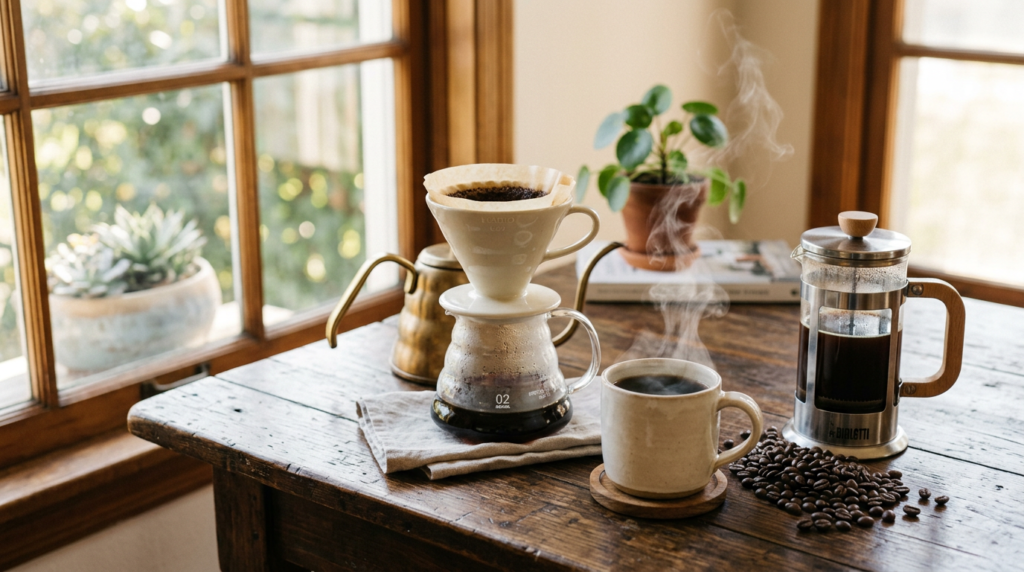
The way you brew affects bitterness significantly. Cold brew produces a naturally sweeter, less acidic coffee that’s much easier to drink black. French press and pour-over methods give you more control over extraction. Avoid over-extracting (brewing too long or with water that’s too hot) — this is the primary cause of bitter coffee.
5. Add Salt
Adding a tiny pinch of high-quality sea salt to your coffee may sound weird, but it’s a game-changer. Salt reduces perceived bitterness and can enhance the coffee’s natural sweetness. This is especially useful during extended fasts when electrolyte balance is important.
Caffeine Timing and Fasting: Best Practices
When you drink your coffee matters almost as much as what you put in it. Here are the key timing considerations:
- Wait 1-2 hours after waking: Your cortisol naturally peaks in the morning. Consuming caffeine during this peak blunts your body’s natural cortisol rhythm and can lead to afternoon energy crashes. The ideal window is 90-120 minutes after waking.
- Stop caffeine 10+ hours before bed: Caffeine’s half-life is 5-6 hours, meaning half the caffeine from your morning coffee is still in your system at 2 PM. For quality sleep — which is crucial for fasting results — cut off caffeine by early afternoon.
- Limit to 2-3 cups per day: During extended fasts, excessive caffeine can increase cortisol too much, potentially raising blood sugar through gluconeogenesis. Keep it moderate.
- Stay hydrated: Coffee is a mild diuretic. For every cup of coffee, drink an extra glass of water. This is especially important during extended fasts when dehydration is a real risk.
Does Decaf Coffee Break a Fast?
Decaf coffee contains only 2-15 mg of caffeine per cup (compared to 95-200 mg in regular coffee). For most fasting purposes, decaf is completely fine during a fast. It won’t stimulate cortisol or interfere with sleep.
However, be aware of two things: First, decaf still contains the same polyphenols and antioxidants as regular coffee. While this is generally a good thing, some fasting purists believe any compound that triggers cellular responses technically “breaks” the absolute state of fasting. Second, most commercial decaf coffees are processed using chemical solvents. If you want to avoid trace chemical exposure, look for Swiss Water Process or CO2-extracted decaf coffee.
The Bottom Line: Coffee and Fasting Can Absolutely Coexist
For the vast majority of fasters, black coffee is not only acceptable — it’s beneficial. The caffeine boosts fat oxidation, the polyphenols may enhance autophagy, and the ritual of a morning cup makes fasting far more sustainable.
The key rules to remember:
- Black coffee is safe for intermittent fasting and most extended fasts
- Avoid calories — no sugar, cream, milk, MCT oil, or collagen
- Stevia, monk fruit, and cinnamon are your best fasting-friendly add-ins
- Timing matters — wait 90+ minutes after waking, stop by early afternoon
- Quality matters — better beans mean you won’t need cream or sugar
- Stay hydrated — coffee is a diuretic, drink extra water
If you’re serious about making black coffee enjoyable during your fasts, investing in quality beans and a good brewing setup will pay for itself in the first week. Your taste buds will adapt faster than you think — most people report preferring black coffee within 7-14 days of cutting out add-ins.
Frequently Asked Questions
Can I put almond milk in my coffee during a fast?
Commercial almond milk typically contains 2-3 grams of sugar and additives per serving, plus ~30 calories. While a tiny splash won’t derail weight loss, it will trigger a mild insulin response and potentially pause autophagy. For strict fasting, skip it. If you must, unsweetened almond milk is the least offensive option.
Does coffee count as breaking a water fast?
Purists argue that anything other than water breaks a “true” water fast. If your goal is maximum autophagy and complete gut rest, stick to water only. However, for weight loss and metabolic health, black coffee is widely accepted as compatible with fasting, even by most fasting researchers and clinicians.
How many cups of coffee can I drink while fasting?
For intermittent fasting, 2-3 cups of black coffee is generally safe and may even enhance results. For extended fasts (48+ hours), limit to 1-2 cups to avoid excessive cortisol elevation and potential digestive discomfort. Listen to your body — if you feel jittery, anxious, or notice your heart racing, cut back.
Does iced coffee break a fast?
Iced black coffee is identical to hot black coffee in terms of its fasting impact — zero significant calories, no insulin spike. Just make sure it’s truly black with no sweetener or cream. Many coffee shop iced coffees contain hidden sugar in the form of simple syrup or flavored ice cubes.
Will coffee interfere with my fasting weight loss results?
On the contrary, black coffee is more likely to help your weight loss during fasting. Caffeine increases metabolic rate, enhances fat oxidation, and suppresses appetite — all beneficial effects during a fast. Just keep it black and limit consumption to avoid sleep disruption, which can negatively impact weight loss hormones like leptin and ghrelin.
As an Amazon Associate, I earn from qualifying purchases.
Related posts:
 How to Break a Fast Safely: Complete Guide for 2026
 Best Electrolytes for Extended Fasting in 2026 — Top 5 Reviewed
 Best Appetite Suppressant Supplements for Fasting in 2026 — Top 5 Compared
 The Role of Probiotics in Fasting: A Complete Guide
 Unlock Health: A Review of ‘The Complete Guide to Dry Fasting’ for Weight Loss and Wellness