
Autophagy is the buzzword that transformed fasting from a simple weight-loss tool into a frontier of anti-aging science. But here’s the question everyone asks — and almost nobody answers accurately: how long do you actually need to fast before autophagy kicks in?
The answer isn’t as simple as “16 hours” or “72 hours.” It depends on your metabolism, what you ate before the fast, your activity level, and whether you’re truly reaching the metabolic switch that triggers cellular cleanup. In this guide, I’m cutting through the confusion with the latest research and giving you a clear, evidence-based timeline.
What Is Autophagy, Exactly?
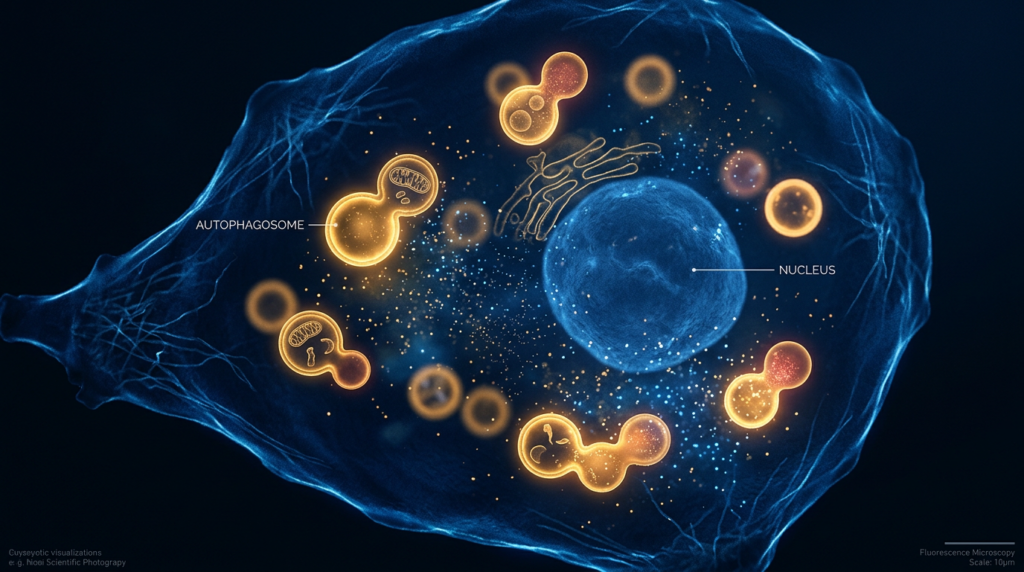
Autophagy literally means “self-eating” in Greek. It’s your body’s cellular recycling program — damaged proteins, broken organelles, and cellular debris get broken down into building blocks that your cells can reuse. Think of it as a microscopic Marie Kondo process happening inside every cell in your body.
Japanese researcher Yoshinori Ohsumi won the 2016 Nobel Prize in Medicine for discovering the mechanisms behind autophagy. Since then, research has exploded, connecting autophagy to everything from longevity and cancer prevention to improved brain function and skin health.
There are three main types of autophagy:
- Macroautophagy: The primary pathway — damaged cell components are engulfed in double-membrane vesicles called autophagosomes and delivered to lysosomes for breakdown.
- Microautophagy: Direct engulfment of cytoplasmic material by lysosomes.
- Chaperone-mediated autophagy: Specific proteins are selectively targeted and transported into lysosomes.
When we talk about fasting and autophagy, we’re primarily focused on macroautophagy — the pathway most responsive to nutrient deprivation.
The Science Behind the Autophagy Timeline
Your body operates on two metabolic states: fed and fasted. After you eat, insulin rises, mTOR (mechanistic target of rapamycin) activates, and autophagy is suppressed. Your body is in “building mode” — storing nutrients, growing, and repairing.
When you stop eating, the reverse happens: insulin drops, AMPK activates, mTOR is inhibited, and autophagy genes switch on. Your body shifts from growth mode to cleanup mode.
Here’s what research tells us about the timeline:
12-16 Hours: Glycogen Depletion Phase
During the first 12-16 hours of fasting, your body is primarily burning through stored glycogen in your liver and muscles. Blood glucose gradually decreases, insulin levels drop, and your body begins transitioning to fat metabolism. Some very mild autophagy signaling may begin, but this is primarily a depletion and transition phase.
This is the range where most intermittent fasting protocols (16:8, 14:10) operate. You get metabolic benefits — improved insulin sensitivity, mild fat burning — but you’re not yet in significant autophagy territory.
18-24 Hours: The Autophagy Threshold
This is where things get interesting. Around 18 hours of fasting, glycogen stores are largely depleted. Your body has shifted to primarily burning fat for fuel (ketosis), and AMPK signaling significantly increases. Research from animal studies shows that measurable autophagy markers (like LC3-II accumulation and decreased p62 levels) begin rising notably in this window.
A landmark 2010 study published in Cell Research found that short-term fasting (18-24 hours) induced widespread autophagy in mouse liver cells. While mouse metabolism doesn’t perfectly map to humans, the cellular mechanisms are remarkably similar.
For most people, the 18-24 hour window is where meaningful autophagy begins. This means that OMAD (one meal a day) practitioners, who typically fast 23-24 hours, are hitting the autophagy threshold daily.
24-48 Hours: Autophagy Acceleration
Between 24 and 48 hours, autophagy activity ramps up significantly. Multiple studies in both animals and humans show that markers of autophagy increase dramatically in this range. Growth hormone surges (up to 300-500% above baseline), further suppressing mTOR and amplifying the autophagic signal.
Research published in Aging Cell demonstrated that 48-hour fasting in humans produced significant increases in autophagy-related gene expression. Another study in Cell Metabolism showed that prolonged fasting (48+ hours) triggered stem-cell-based regeneration in mice.
This is where fasting starts to feel genuinely challenging for most people. Having the right zero-calorie electrolytes becomes essential for making it through this window safely and comfortably.
48-72 Hours: Peak Autophagy
The current scientific consensus suggests that autophagy reaches its peak somewhere in the 48-72 hour window of fasting. This is the deep-cleaning phase — your body is aggressively recycling damaged cellular components, clearing out misfolded proteins (associated with neurodegenerative diseases), and triggering cellular rejuvenation.
Research from the University of Southern California’s Valter Longo has shown that 72-hour fasts can regenerate the immune system, reduce IGF-1 (a marker associated with aging), and promote the clearing of damaged cells. These are profound effects that simply don’t happen with shorter fasts.
Beyond 72 Hours: Diminishing Returns
While autophagy remains elevated beyond 72 hours, the marginal benefits begin to plateau, and the risks (muscle loss, electrolyte imbalances, refeeding syndrome) increase substantially. For most people, the 48-72 hour window offers the optimal balance of autophagy benefits and manageable risk — provided you approach it with proper preparation and electrolyte support.
What Affects Your Personal Autophagy Timeline?
The timelines above are averages. Your individual experience depends on several key factors:
Diet Before the Fast
If you’ve been eating a high-carbohydrate diet, your glycogen stores are full, and it will take longer to deplete them and reach the autophagy threshold. If you’ve been following a low-carb or ketogenic diet, your body is already fat-adapted and will transition to autophagy faster — potentially 2-4 hours earlier than the standard timeline.
Activity Level
Exercise accelerates glycogen depletion and activates AMPK through an independent pathway. A workout during your fast can trigger autophagy signaling even before you hit the 18-hour mark. However, intense exercise in a fasted state also increases oxidative stress, so moderate activity is generally recommended over HIIT during extended fasts.
Age and Metabolism
Basal autophagy naturally declines with age, which is one reason aging is associated with cellular damage accumulation. Older individuals may need slightly longer fasts to achieve the same autophagy response as younger people. Conversely, a faster metabolic rate may deplete glycogen stores more quickly.
What You Consume During the Fast
This is where most people sabotage their autophagy without realizing it. Even small amounts of protein or carbohydrates can spike insulin enough to suppress autophagy. Here’s what breaks a fast (for autophagy purposes):
- Bone broth — contains protein (collagen), raises insulin
- MCT oil or cream in coffee — calories suppress fasting state
- Branched-chain amino acids (BCAAs) — directly activate mTOR
- Artificial sweeteners — may trigger insulin response in some people
What’s generally safe for autophagy:
- Plain black coffee (unsweetened) — may actually enhance autophagy
- Green tea or herbal tea — polyphenols support autophagy signaling
- Water and electrolytes — zero calories, essential for safety
Supplements That May Support Autophagy
While fasting is the most powerful autophagy trigger, certain compounds have shown promise in supporting or mimicking autophagy pathways. Note that none of these replace fasting — but they can potentially enhance the process.
Spermidine
Spermidine is a polyamine compound that has been shown to induce autophagy independently of nutrient signaling. A 2018 study in Nature Medicine found that higher spermidine intake was associated with reduced cardiovascular mortality and increased autophagy markers. Spermidine supplements are gaining popularity in the longevity community for this reason.
Resveratrol
Found in red wine, grapes, and Japanese knotweed, resveratrol activates SIRT1, a protein that promotes autophagy. It works through a pathway similar to caloric restriction. Trans-resveratrol supplements are the most bioavailable form.
NAD+ Precursors (NMN/NR)
NAD+ is a coenzyme critical for cellular energy and sirtuin activation. NAD+ levels decline with age, and boosting them through NMN or NR supplements has been shown to enhance sirtuin-mediated autophagy in animal studies. This is one of the most actively researched areas in longevity science.
Polyphenol-Rich Teas
Green tea (especially matcha) and specific fasting teas contain EGCG and other polyphenols that support autophagy. Some teas are specifically formulated for fasting support — Brew102 Organic Fasting Tea, for example, combines several autophagy-supportive herbs in a zero-calorie blend designed for use during fasts.
How to Know If Autophagy Is Happening
Unfortunately, you can’t feel autophagy directly. But there are several indicators that suggest it’s occurring:
- Ketone breath (acetone) — indicates fat burning and likely autophagy
- Reduced hunger — many people report hunger disappearing after 18-24 hours as ketones suppress appetite
- Mental clarity — the “fasting high” is real, linked to increased BDNF and ketone-based brain fuel
- Changes in skin — some people notice improved skin during extended fasts, possibly related to autophagy clearing damaged skin cells
The only definitive way to measure autophagy is through blood markers (LC3, p62, beclin-1) or tissue biopsies — not practical for everyday fasters. However, if you’re fasting 18+ hours with zero calorie intake, autophagy is almost certainly happening at some level.
Practical Fasting Protocols for Autophagy
Beginner: Daily 18:6 Fasting
Fast for 18 hours, eat within a 6-hour window. This gets you into the early autophagy zone daily. Have your last meal at 6 PM and first meal at noon the next day. Black coffee and water are fine during the fast.
Intermediate: Weekly 24-Hour Fast
Once a week, extend your fast to a full 24 hours (dinner to dinner works well). This provides a solid autophagy session with manageable difficulty. Many people find that the first 18 hours are the hardest — once you cross that threshold, it gets easier.
Advanced: Monthly 48-72 Hour Fast
Once or twice a month, attempt a 48-72 hour fast for peak autophagy benefits. This requires preparation: proper electrolytes, adequate hydration, and a planned refeeding protocol. Always consult a healthcare provider before attempting extended fasts, especially if you have any medical conditions.
How to Break Your Fast After Extended Autophagy Fasting
Breaking a long fast properly is crucial. After 48+ hours of autophagy, your digestive system is dormant, and your body is sensitive. A heavy meal can cause refeeding syndrome in extreme cases.
The recommended approach:
- Break with bone broth or a small amount of watermelon
- 30 minutes later, have a small portion of easily digestible protein
- Wait another 30 minutes before eating a normal-sized meal
- Avoid heavy carbs, sugar, or processed foods for the first meal
Check out our complete guide on how to break a fast safely for a detailed refeeding protocol.
Frequently Asked Questions
Does coffee break autophagy?
Black coffee (no sugar, no cream, no sweeteners) does not appear to suppress autophagy. In fact, the polyphenols in coffee may support it. However, adding any calories — cream, sugar, MCT oil, butter — will likely reduce or halt autophagy by activating mTOR.
Can I take supplements during a fast for autophagy?
Most pure supplements (capsules without fillers) won’t significantly impact autophagy. However, protein-based supplements (collagen, BCAAs, whey) will. Electrolyte supplements with zero calories are safe and actually recommended during extended fasts to prevent dangerous imbalances.
Is autophagy the same as ketosis?
No, but they’re related. Ketosis is a metabolic state where your body burns fat for fuel instead of glucose. Autophagy is a cellular recycling process. Both are triggered by fasting, and both are inhibited by insulin/mTOR. Ketosis typically begins before significant autophagy (around 12-16 hours vs. 18+ hours), but they overlap significantly during extended fasts.
How often should I fast for autophagy?
For maintenance, daily 16-18 hour fasts provide mild, consistent autophagy benefits. For deeper autophagy, weekly 24-hour fasts or monthly 48-72 hour fasts are ideal. The key is consistency — autophagy is a cumulative process, and regular fasting builds on itself over time.
Can exercise trigger autophagy without fasting?
Yes, exercise — particularly endurance exercise and HIIT — can induce autophagy through AMPK activation. However, the effect is typically less pronounced than fasting-induced autophagy. Combining exercise with fasting (especially moderate exercise during the 16-24 hour window) creates a synergistic autophagy effect.
Conclusion
Autophagy is one of the most powerful tools your body has for cellular renewal, and fasting is the most effective way to trigger it. While the exact timeline varies by individual, the evidence is clear: meaningful autophagy begins around 18-24 hours of fasting, accelerates through 48 hours, and peaks in the 48-72 hour window.
You don’t need to fast for days to benefit. Even regular 18-hour daily fasts provide consistent autophagy activity. For deeper cellular cleanup, work up to weekly 24-hour fasts or monthly extended fasts — always with proper electrolyte support and a sensible refeeding plan.
Start where you are, be consistent, and let your body’s ancient recycling system do what it does best. The cells you clean up today are the ones that keep you healthier tomorrow.
As an Amazon Associate, I earn from qualifying purchases.
Related posts:
 How to Break a Fast Safely: Complete Guide for 2026
 Does Coffee Break Your Fast? The Complete Science-Backed Guide for 2026
 How Long Until Fasting Becomes Unhealthy?
 Unlock Wellness: Your Ultimate Review of the Complete Guide To Fasting
 Unlock Health: A Review of ‘The Complete Guide to Dry Fasting’ for Weight Loss and Wellness