
Why Tea Is a Fasting Game-Changer
If you’re fasting and only drinking plain water, you’re missing out. The right teas can suppress hunger, boost autophagy, enhance mental clarity, and even accelerate fat burning — all without breaking your fast. The wrong teas, however, can spike insulin or add hidden calories that kick you out of your fasting state.
In this guide, we break down the 7 best teas for fasting in 2026, explain the science behind why each one works, and help you choose the right tea for your specific fasting goals. Whether you’re doing a 16:8 intermittent fast or pushing through a 3-day water fast, these teas will make the journey easier and more effective.
What Makes a Tea “Fast-Friendly”?
Before we dive into the list, let’s establish the rules. A tea is safe during a fast if it meets these criteria:
- Zero calories — No added sugars, honey, milk, or caloric sweeteners
- No insulin response — The tea should not trigger a meaningful insulin spike
- Pure ingredients — No hidden fillers, maltodextrin, or artificial creamers
Stick to pure loose-leaf teas or plain tea bags. Avoid pre-sweetened bottled teas, matcha lattes, and any “tea latte” blends. When in doubt, read the ingredient label — if it has more than one ingredient (the tea itself), skip it during your fasting window.
1. Green Tea — The Autophagy Activator
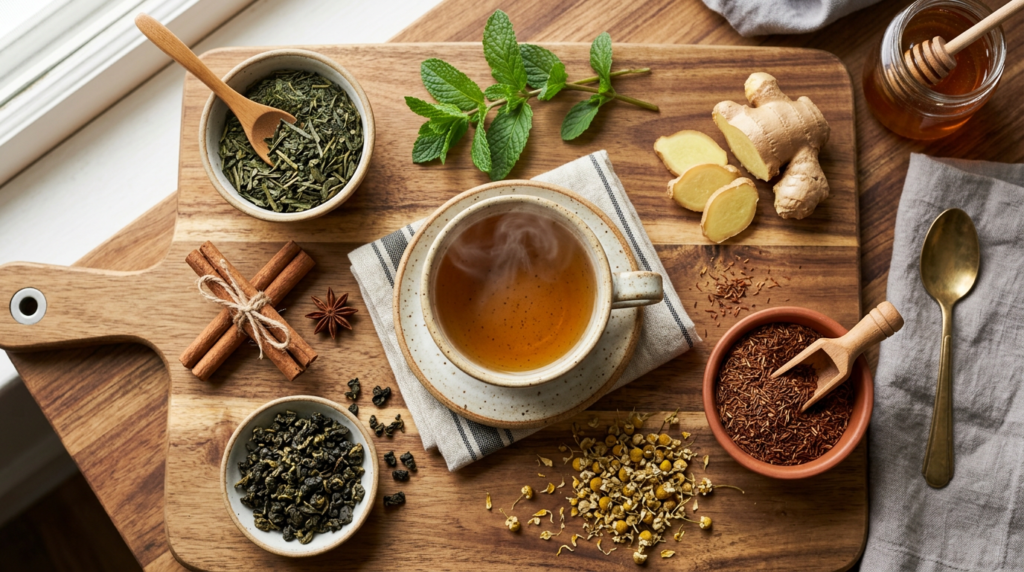
Green tea is arguably the single best tea you can drink while fasting. It’s packed with epigallocatechin gallate (EGCG), a catechin that has been shown in multiple studies to stimulate autophagy — the cellular cleanup process that’s one of the main benefits of fasting.
A 2018 study published in Autophagy found that EGCG enhances autophagy even beyond what fasting alone achieves. Green tea also contains L-theanine, an amino acid that promotes calm, focused alertness without the jitters — perfect for those difficult fasting hours when energy dips.
Best for: Intermittent fasting, autophagy enhancement, mental clarity
How to drink: Steep 2-3 grams of loose-leaf green tea at 175°F for 2-3 minutes. Don’t over-steep or it becomes bitter. Drink 2-4 cups throughout your fasting window.
Check latest prices on organic green tea →
2. Peppermint Tea — The Hunger Crusher
When fasting gets tough and hunger pangs hit hard, peppermint tea is your best friend. The menthol in peppermint has been shown to reduce appetite and suppress cravings, making it easier to push through those difficult fasting hours.
A study in the journal Appetite found that peppermint scent alone reduced hunger and food cravings. Drinking peppermint tea delivers this effect directly while also soothing your digestive tract — a common concern during extended fasts when your gut needs a break.
Best for: Hunger suppression, digestive comfort, extended fasting
How to drink: Steep 1-2 tea bags for 5-7 minutes in boiling water. The longer steep extracts more menthol. Drink whenever hunger strikes during your fast.
Check latest prices on organic peppermint tea →
3. Ginger Tea — The Anti-Nausea Powerhouse
Nausea is one of the most common complaints during extended fasting, especially in the first 24-48 hours. Ginger tea is a proven anti-nausea remedy that’s been used for thousands of years — and modern science confirms it works.
The active compounds gingerol and shogaol stimulate digestion (when you do eat) and reduce the queasy feeling that can accompany fasting. Ginger also has mild thermogenic properties, meaning it slightly increases your body temperature and metabolic rate — a small but real boost to fat burning during your fast.
Best for: Nausea relief, digestion support, mild thermogenic effect
How to drink: Steep fresh ginger slices (1-2 inches, thinly sliced) in boiling water for 10 minutes. Strain and drink. You can also use high-quality ginger tea bags.
4. Rooibos Tea — The Caffeine-Free Mineral Boost
Most fasting teas contain caffeine, which is great for energy but can cause issues if you’re fasting late into the evening or doing multi-day fasts where sleep quality matters. Rooibos tea (also called red bush tea) is naturally caffeine-free and rich in minerals that fasters desperately need.
Rooibos contains significant amounts of magnesium, calcium, and potassium — three electrolytes that deplete during fasting. While it won’t replace a dedicated electrolyte supplement, rooibos provides a gentle mineral top-up that can help prevent the headaches, muscle cramps, and fatigue that come from electrolyte depletion.
Best for: Evening fasting, caffeine sensitivity, gentle electrolyte support
How to drink: Steep for 5-10 minutes in boiling water. Rooibos doesn’t get bitter with longer steeping, so you can steep it as long as you like for a stronger flavor.
Check latest prices on organic rooibos tea →
5. Chamomile Tea — The Fasting Sleep Aid
Sleep disruption is the silent enemy of fasting. Poor sleep increases cortisol, triggers hunger hormones (ghrelin), and makes every fasting hour feel twice as long. Chamomile tea is one of the most effective natural sleep aids available, and it’s completely fasting-safe.
Chamomile contains apigenin, a flavonoid that binds to GABA receptors in the brain — the same receptors targeted by prescription sleep aids, but without the side effects. A 2016 study in Phytomedicine found that chamomile extract significantly improved sleep quality in elderly patients. For fasters dealing with insomnia or restless nights, a warm cup of chamomile before bed can make all the difference.
Best for: Sleep quality, stress reduction, anxiety during extended fasts
How to drink: Steep 2-3 tea bags in boiling water for 5-7 minutes. Drink 30-60 minutes before your target bedtime.
Check latest prices on organic chamomile tea →
6. Oolong Tea — The Fat-Burning Booster
Oolong sits between green tea and black tea in terms of oxidation, and it offers a unique combination of benefits for fasters. The polyphenols in oolong tea have been shown to increase fat oxidation by 12-19% compared to water alone, according to a study in the Chinese Journal of Integrative Medicine.
Unlike green tea, oolong has a richer, more robust flavor that many people find more satisfying during a fast when taste buds are craving stimulation. It also provides a moderate caffeine boost (about half the caffeine of coffee) that supports mental focus without the crash.
Best for: Fat burning enhancement, flavor variety, moderate caffeine
How to drink: Steep 3-5 grams of loose-leaf oolong at 195°F for 3-5 minutes. Oolong can be resteeped 3-5 times, making it one of the most economical teas for fasting.
7. Cinnamon Tea — The Blood Sugar Stabilizer
Blood sugar crashes are one of the hardest parts of fasting, especially for beginners transitioning from a high-carb diet. Cinnamon tea helps stabilize blood sugar by improving insulin sensitivity, making your fasting hours feel dramatically easier.
Research published in Diabetes Care showed that cinnamon reduces fasting blood glucose by 18-29% and improves insulin sensitivity. While this data comes from non-fasting contexts, the mechanism — cinnamaldehyde activating insulin receptor signaling — directly benefits fasters who struggle with blood sugar volatility during their fasting window.
Best for: Blood sugar stability, beginners transitioning to fasting, insulin sensitivity
How to drink: Steep Ceylon cinnamon sticks (not Cassia) in boiling water for 10-15 minutes. Ceylon cinnamon is safer for daily use because it contains much lower levels of coumarin than Cassia cinnamon.
Check latest prices on Ceylon cinnamon tea →
Comparison: Best Tea for Your Fasting Goal
| Fasting Goal | Best Tea | Why |
|---|---|---|
| Autophagy | Green Tea | EGCG activates autophagy pathways |
| Hunger Suppression | Peppermint Tea | Menthol reduces appetite and cravings |
| Nausea Relief | Ginger Tea | Gingerol proven anti-nausea compound |
| Sleep Quality | Chamomile Tea | Apigenin promotes GABA activity |
| Fat Burning | Oolong Tea | Increases fat oxidation 12-19% |
| Blood Sugar | Cinnamon Tea | Improves insulin sensitivity |
| Electrolytes (no caffeine) | Rooibos Tea | Contains Mg, Ca, K naturally |
Teas to AVOID While Fasting
Not all teas belong in your fasting window. Here are the teas that will break your fast:
- Chai tea lattes — The milk and sugar in chai lattes will immediately break your fast with 200+ calories
- Matcha lattes — Pure matcha powder in water is fine, but any latte version contains milk and sugar
- Sweetened iced teas — Bottled teas like Arizona or Snapple contain 20-40g of sugar per serving
- Herbal tea blends with fruit pieces — Dried fruit pieces can release sugars into your tea during steeping
- Boba tea — The tapioca pearls and sweeteners are a caloric disaster during fasting
- Yerba mate with added herbs — Some mate blends include caloric herbs; pure yerba mate is fine
Tips for Maximizing Tea Benefits During Fasts
- Rotate your teas — Don’t stick to just one. Different teas offer different compounds. A green tea morning, peppermint midday, and chamomile evening gives you the best of all worlds.
- Invest in loose-leaf tea — Loose-leaf teas contain more active compounds than bag teas because the leaves are less processed and larger. The flavor is also significantly better.
- Use the right water temperature — Boiling water destroys delicate compounds in green and white teas. Use 175°F for green tea, 195°F for oolong, and boiling for black, peppermint, and ginger.
- Don’t add anything — No honey, no lemon (it’s borderline), no milk, no stevia. Pure tea and water only.
- Stay hydrated — Tea counts toward your daily water intake, but the caffeine in some teas acts as a mild diuretic. Balance with plain water.
Conclusion
Tea is one of the most powerful tools in a faster’s toolkit — if you choose the right ones. Green tea activates autophagy, peppermint crushes hunger, ginger fights nausea, rooibos replenishes minerals, chamomile restores sleep, oolong burns fat, and cinnamon stabilizes blood sugar. Together, these seven teas cover every challenge you’ll face during a fast.
The best approach? Build a fasting tea rotation that matches your daily schedule: green or oolong tea for morning energy, peppermint or ginger for afternoon hunger, rooibos for a caffeine-free afternoon break, and chamomile to wind down before bed. This simple routine can transform your fasting experience from a grueling test of willpower into something genuinely enjoyable.
Ready to upgrade your fasting routine? Start with a quality loose-leaf green tea for autophagy benefits, and add peppermint for those tough hunger moments. Check the latest prices on Amazon →
As an Amazon Associate, I earn from qualifying purchases.
Frequently Asked Questions
Does tea break a fast?
Pure, unsweetened tea does not break a fast. Green tea, black tea, herbal teas, and oolong tea are all fasting-safe as long as you don’t add sugar, milk, honey, or any caloric sweetener. The key rule: if your tea has zero calories and doesn’t trigger an insulin response, it won’t break your fast.
Can I drink tea during a water fast?
Strict water fasting means only water. However, most practitioners allow pure tea during “water fasts” because tea provides negligible calories (less than 2 calories per cup) and significant benefits. If you’re fasting for religious reasons, check your tradition’s guidelines. For health and weight loss fasting, tea is widely accepted.
How much tea is too much during a fast?
4-6 cups of tea per day is a safe range for most fasters. Going beyond 8 cups of caffeinated tea can cause jitteriness, anxiety, and disrupted sleep. Listen to your body — if you feel wired or your heart races, cut back. Caffeine-free options like rooibos and chamomile have no practical upper limit.
Is matcha okay during fasting?
Pure matcha powder whisked into hot water is fasting-safe and may actually be superior to regular green tea for autophagy due to its higher EGCG concentration. However, matcha lattes, matcha smoothies, or any matcha drink with added milk or sugar will break your fast.
Can I add lemon to my tea while fasting?
A thin slice of lemon adds negligible calories (about 1-2 calories) and won’t meaningfully affect insulin levels for most people. However, strict fasters avoid even lemon. If you’re fasting for weight loss, a squeeze of lemon is fine. If you’re fasting for deep autophagy, stick to plain tea.
Related posts:
 How to Break a Fast Safely: Complete Guide for 2026
 Does Coffee Break Your Fast? The Complete Science-Backed Guide for 2026
 How to Break a Fast With Bone Broth: The Complete 2026 Guide
 Unlock Your Fast: Prolon Fast Bars Review – Keto-Friendly Delights That Won’t Break Your Fast!
 Refeeding After a Fast: How to Avoid Weight Gain and Refeeding Syndrome in 2026