
Best Smart Body Composition Scales for Fasting and Keto 2026
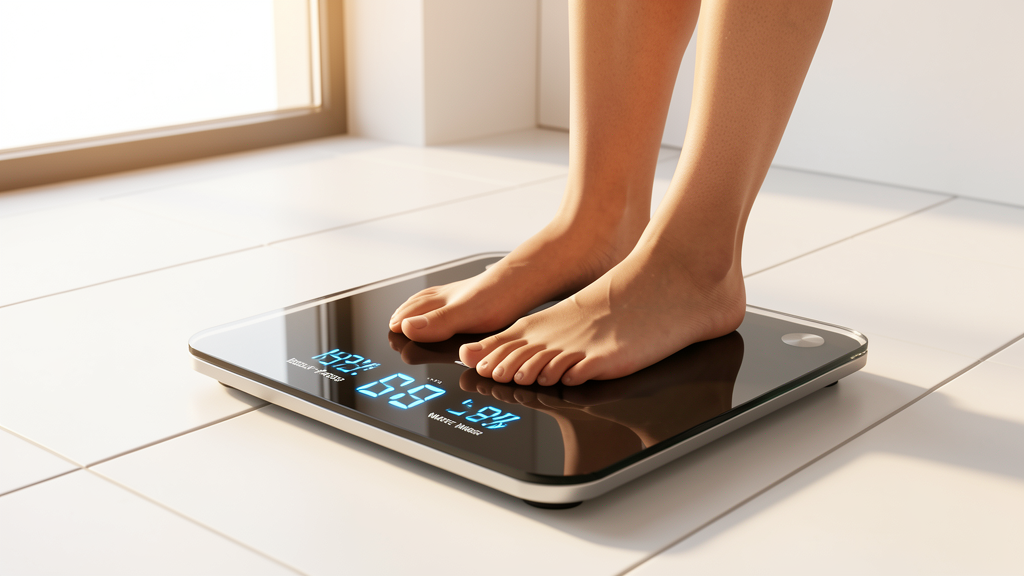
Tracking your body composition during fasting isn’t just about the number on the scale — it’s about understanding what’s happening underneath. The best smart scales reveal muscle mass, body fat percentage, water weight, and metabolic changes that a regular scale simply can’t see.
If you’re doing intermittent fasting, extended water fasts, or following a ketogenic diet, you already know that the scale can be misleading. During a fast, you can lose 3-5 pounds of water weight in the first 24 hours alone — and a basic scale will make it look like you’ve had an incredible fat-loss day when most of that drop is glycogen and water depletion.
Smart body composition scales solve this problem by tracking multiple metrics simultaneously: body fat percentage, skeletal muscle mass, visceral fat, bone density, body water percentage, and metabolic age. For fasters and keto dieters, these insights are invaluable — they show you whether you’re actually burning fat, preserving muscle, and staying properly hydrated.
We tested 7 of the most popular smart scales available on Amazon in 2026 and ranked them for accuracy, app quality, fasting-specific features, and overall value. Here are our top picks.
What to Look for in a Smart Scale for Fasting
Not all smart scales are created equal, and the needs of someone practicing intermittent fasting are different from someone who just wants to track their daily weight. Here’s what matters most:
BIA Accuracy (Bioelectrical Impedance Analysis): All smart scales use a mild electrical current to estimate body composition. Dual-frequency BIA tends to be more accurate than single-frequency. For fasting purposes, consistency matters more than absolute accuracy — you want a scale that gives you reliable trends over time.
Body Water Percentage: This is arguably the most important metric for fasters. When you’re in a fasted state, your body depletes glycogen stores (which hold water), leading to significant water weight fluctuations. A scale that tracks body water percentage helps you distinguish between fat loss and water loss — crucial for knowing whether your fast is actually reducing body fat.
Muscle Mass Tracking: One of the biggest concerns during extended fasting is muscle catabolism. A scale that tracks skeletal muscle mass over time lets you monitor whether your fasting protocol is preserving lean tissue. If you’re doing prolonged fasts (48+ hours), this metric is essential.
App Ecosystem: The best scales integrate with Apple Health, Google Fit, Fitbit, and other health platforms. Having all your data in one place gives you a more complete picture of how fasting affects your overall health.
Best Smart Body Composition Scales for Fasting: Our Top 5 Picks
1. Best Overall: Withings Body+ Wi-Fi Smart Scale
The Withings Body+ Wi-Fi Smart Scale is our top recommendation for fasters in 2026. It delivers the most comprehensive body composition data of any scale in its price range, with exceptional accuracy and a beautifully designed app.
Key Specs: Weight, body fat percentage, body water percentage, muscle mass, bone mass, and visceral fat. Uses dual-frequency BIA technology. Supports up to 8 user profiles with automatic recognition. Syncs with Apple Health, Google Fit, Fitbit, Samsung Health, and dozens of other apps.
Why It’s Great for Fasting: The body water percentage tracking is remarkably consistent, making it easy to see exactly how much of your daily weight fluctuation is water versus fat. During a 24-48 hour fast, you’ll typically see body water drop 1-3% while body fat percentage adjusts proportionally. The Withings app shows all these metrics on a single timeline, so you can correlate your fasting windows with body composition changes.
Faster’s Pro Tip: Weigh yourself at the same time every day (morning, after using the bathroom, before eating) and the Withings app will calculate your weight trends and smooth out daily fluctuations. After 2-3 weeks, you’ll have a clear picture of whether your fasting protocol is reducing body fat or just water weight.
Price Range: $80-$100
2. Best Budget Pick: Renpho Smart Scale
The Renpho Smart Scale punches well above its weight class. At roughly a third of the price of the Withings Body+, it tracks 13 different body metrics and integrates with all major health platforms.
Key Specs: Weight, BMI, body fat, body water, skeletal muscle, bone mass, protein, visceral fat, basal metabolism, metabolic age, subcutaneous fat, and body age. Single-frequency BIA. Supports unlimited users. Works with Apple Health, Google Fit, Fitbit, and Samsung Health.
Why It’s Great for Fasting: The sheer number of metrics tracked gives you a 360-degree view of your fasting progress. The metabolic age metric is particularly interesting for fasters — it estimates how your metabolism compares to your chronological age, and many people report seeing their metabolic age decrease after consistent fasting protocols.
The Trade-off: BIA accuracy is slightly less consistent than the Withings Body+. We recommend weighing yourself 2-3 times per session and taking the average for the most reliable reading. For trend tracking over weeks and months, the Renpho is perfectly adequate.
Price Range: $25-$35
3. Best for Keto Dieters: Eufy Smart Scale P2 Pro
The Eufy Smart Scale P2 Pro stands out for its exceptional app design and comprehensive tracking features. If you’re combining fasting with a ketogenic diet, this scale gives you the most relevant data.
Key Specs: 16 measurement types including weight, body fat, BMI, muscle mass, bone mass, body water, visceral fat, and basal metabolism. Dual-frequency BIA. Heart rate measurement built in. Supports Apple Health and Google Fit.
Why It’s Great for Keto: The combination of body water tracking and muscle mass measurement is critical for keto dieters. When you first enter ketosis, you lose significant water weight (often 5-10 pounds in the first week). The Eufy P2 Pro clearly separates water loss from fat loss, so you know your keto diet is actually reducing body fat, not just depleting glycogen.
Bonus Feature: The built-in heart rate sensor is a nice addition. Heart rate variability (HRV) is increasingly used as a marker of recovery and autonomic nervous system balance — both of which can be affected by fasting.
Price Range: $55-$70
4. Best Premium Pick: Garmin Index S2
For serious athletes and fitness enthusiasts who practice time-restricted eating, the Garmin Index S2 Smart Scale offers the best integration with the Garmin ecosystem. If you’re already using a Garmin watch to track your fasting workouts, this scale completes the picture.
Key Specs: Weight (accurate to 0.1 lb), body fat, muscle mass, bone mass, body water percentage, and BMI. Wi-Fi and Bluetooth connectivity. Supports up to 16 user profiles. Integrates with Garmin Connect, Apple Health, and Google Fit.
Why It’s Great for Fasting: If you’re tracking your fasting with a Garmin watch (fasting timer, workout data, sleep quality), the Index S2 adds body composition data directly to Garmin Connect. This creates a unified dashboard where you can see your fasting window, calories burned, steps, sleep stages, and body composition all in one place.
The Trade-off: At $130-$150, it’s the most expensive option on this list. You’re paying for the Garmin ecosystem integration, not additional measurement types.
Price Range: $130-$150
5. Best for Families: Wyze Scale X
The Wyze Scale X offers impressive accuracy and an unlimited user limit at an aggressive price point, making it the best choice for households where multiple people are tracking their health.
Key Specs: Weight, body fat percentage, muscle mass, heart rate, body water, lean body mass, bone mass, protein, basal metabolism, visceral fat, and body age. Uses dual-frequency BIA for improved accuracy. Unlimited user profiles.
Why It’s Great for Fasting: The unlimited user profiles mean your entire family can track their body composition without extra cost. Despite its low price, the Wyze Scale X uses the same dual-frequency BIA technology found in scales costing 3-4 times more.
Price Range: $35-$45
How to Use a Body Composition Scale During Fasting
Getting the most out of your smart scale during fasting requires a consistent routine and an understanding of what the numbers actually mean during different fasting states.
The Morning Weigh-In Protocol: Weigh yourself first thing in the morning, after using the bathroom, before drinking water, and wearing minimal clothing (or the same clothing each time). This eliminates variables that can skew your readings. Smart scales are most accurate with bare feet on a hard, flat surface — avoid carpet.
Understanding Water Weight Fluctuations: During a fast, your body depletes glycogen stores, which release water. Each gram of glycogen holds approximately 3 grams of water. A typical person stores 400-500 grams of glycogen — that’s potentially 1,200-1,500 grams (2.6-3.3 pounds) of water that can drop in the first 24-48 hours of a fast. Don’t panic when your scale shows rapid weight loss — check your body water percentage to understand what’s really happening.
Post-Fast Refeeding: When you break your fast, expect your weight to jump 2-5 pounds within 24-48 hours as glycogen stores replenish and water weight returns. This is normal and not fat gain. Your body fat percentage reading will give you the true picture. This is exactly why breaking through fasting plateaus requires looking at multiple metrics, not just weight.
Weekly Trend Analysis: Daily fluctuations are noise. The signal is in the weekly averages. Most smart scale apps calculate rolling averages and show trend lines. Focus on the direction of the trend over 2-4 weeks rather than day-to-day changes.
Muscle Mass During Extended Fasts: If you’re doing fasts longer than 48 hours, monitor your skeletal muscle mass reading closely. Some muscle loss is expected during prolonged fasting, but it should be minimal if you’re following proper protocols (adequate electrolytes, light activity). Our guide on supplements for muscle preservation during fasting covers strategies to minimize catabolism.
BIA Accuracy Limitations: Bioelectrical impedance analysis is an estimation method, not a medical-grade measurement. Factors like hydration status, recent food intake, exercise, and even room temperature can affect readings. For the most accurate body composition assessment, BIA scales should be used for trend tracking, not absolute measurements. If you need precise body fat percentage, a DEXA scan (typically $50-$150 at a clinic) is the gold standard.
Correlating with Ketosis: If you’re tracking ketosis alongside body composition, you’ll notice an interesting pattern. As your body enters ketosis and begins burning fat for fuel, your body fat percentage should gradually decrease while your body water percentage stabilizes (after the initial glycogen depletion). Pairing your smart scale with ketone testing strips or a blood ketone meter gives you a complete picture of your metabolic state.
Frequently Asked Questions
Can smart scales detect fat loss during a fast?
Smart scales can estimate body fat changes, but accuracy during an active fast is limited. Bioelectrical impedance analysis works by sending a small electrical current through your body — the current travels differently through fat, muscle, and water. During a fast, your hydration levels change significantly, which can affect BIA readings. For the most reliable fat-loss data during fasting, use your scale for trend tracking over 2-4 week periods rather than relying on single-day readings.
Why does my body fat percentage go UP when I’m fasting?
This is a common and confusing phenomenon. When you lose weight rapidly during a fast (mostly water and glycogen), your total body weight drops but your fat mass stays relatively stable in the short term. Since body fat percentage is calculated as (fat mass ÷ total body weight) × 100, losing non-fat weight can actually increase the percentage temporarily. Don’t panic — this is a mathematical artifact, not actual fat gain. Once your body stabilizes after breaking the fast, the percentage will normalize.
How accurate are smart scales compared to DEXA scans?
Smart scales typically have a margin of error of ±2-5% for body fat percentage compared to DEXA scans (the gold standard). DEXA scans cost $50-$150 per scan and aren’t practical for daily tracking. The value of smart scales lies in consistency — while a single reading might be off, the trends over weeks and months are reliable indicators of progress.
Should I weigh myself during a water fast?
Yes, but with context. Daily weighing during a water fast shows dramatic weight loss — but most of it is water and glycogen, not fat. If you choose to weigh during a fast, focus on the body fat percentage and body water metrics rather than total weight. A more useful approach is to weigh on the day you start your fast, then again 2-3 days after breaking the fast (once rehydration stabilizes). This gives you a clearer picture of actual fat loss.
What’s the best time to weigh myself for the most accurate reading?
The most consistent reading comes from weighing yourself first thing in the morning, after using the bathroom, before consuming any food or water, and wearing minimal clothing. This standardized approach minimizes variables like food volume, hydration status, and clothing weight. For fasters specifically, morning weigh-ins during your fasting window provide the most comparable data day-to-day.
The Bottom Line
A smart body composition scale is one of the most valuable tools for anyone serious about fasting or keto. While a basic scale tells you your total weight, a smart scale reveals the story behind the number — how much of your weight is fat, muscle, water, and bone. For fasters, this means you can finally distinguish between water weight fluctuations and genuine fat loss, track muscle preservation during extended fasts, and monitor the visceral fat reduction that makes fasting so beneficial for metabolic health.
Our top recommendation for most fasters is the Withings Body+ — it offers the best balance of accuracy, app quality, and fasting-relevant features. If you’re on a budget, the Renpho delivers impressive value at a third of the price. And for keto dieters who want the most comprehensive tracking, the Eufy P2 Pro is the one to beat.
Whichever scale you choose, remember: consistency beats accuracy. Weigh yourself at the same time, under the same conditions, and let the trends tell the story. Your body composition is changing — a good smart scale just helps you see it.
As an Amazon Associate, I earn from qualifying purchases. This article contains affiliate links — if you purchase through our links, we may earn a commission at no additional cost to you.
Related posts:
 Best Sugar-Free Snacks for Fasting and Keto in 2026 — Reddit’s Top Picks
 Boost Your Keto Journey: Perfect Keto Exogenous Ketones Powder Review
 Freestyle Libre 3 vs Dexcom G7 for Fasting: Which CGM Is Best in 2026?
 Best Electrolyte Supplements for Fasting in 2026 — Tested & Ranked
 Best Supplements for Fasting and Muscle Preservation in 2026