
How to Use a CGM While Fasting: Complete Guide 2026
Imagine seeing exactly what happens to your blood sugar every minute of your fasting window — no finger pricks, no guessing. That is the power of a continuous glucose monitor (CGM), and it is transforming how thousands of fasters track their metabolic health. Whether you are doing 16:8 intermittent fasting, experimenting with OMAD, or pushing into extended fasts, a CGM gives you real-time data that turns fasting from a guessing game into a precision practice.
In this guide, you will learn what a CGM actually measures, what glucose patterns to expect during different fasting protocols, how to set up your device for fasting tracking, and which CGM products work best for non-diabetic users who want to optimize their fasting results.
What Is a CGM and Why Does It Matter for Fasters?
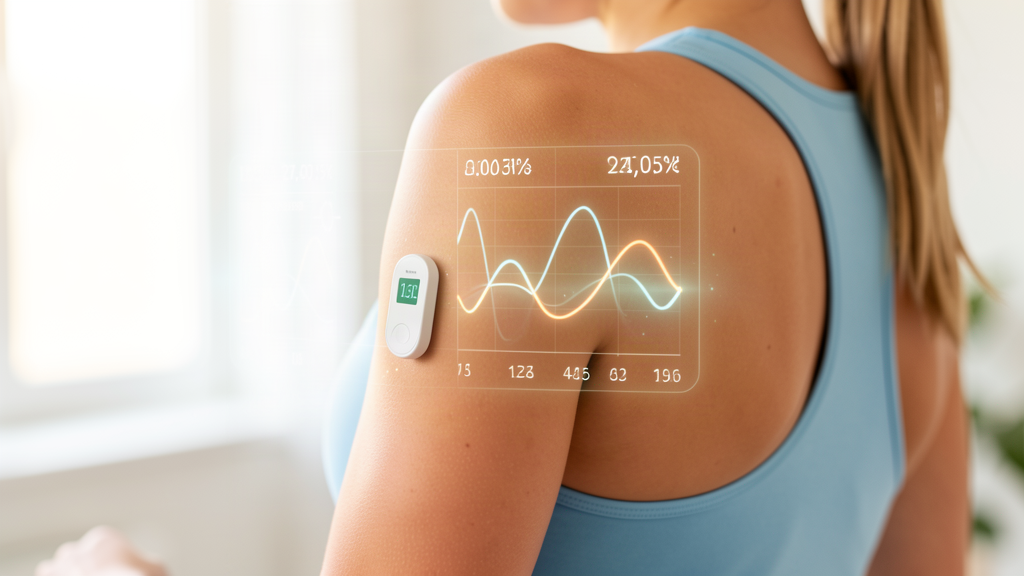
A continuous glucose monitor is a small wearable sensor — typically worn on the back of the upper arm — that measures glucose levels in your interstitial fluid every one to five minutes. Unlike a traditional finger-prick glucometer that gives you a single snapshot, a CGM produces a continuous stream of data that reveals trends, spikes, dips, and patterns throughout the day and night.
For fasters, this matters because glucose behavior is one of the clearest signals of metabolic state. When you stop eating, your body burns through its last meal’s glucose, then taps into stored glycogen, and eventually shifts toward fat burning. A CGM lets you watch this transition happen in real time. You can see exactly when your blood sugar drops into the ranges associated with fat oxidation (typically below 80 mg/dL), how long it takes your body to reach that point after your last meal, and whether your glucose rebounds overnight — a phenomenon called the dawn phenomenon that affects many fasters.
The most popular CGMs for non-diabetic users in 2026 include the Dexcom Stelo, Abbott Lingo, and NutriSense. All three are available over the counter in the United States without a prescription, making them accessible to anyone curious about their metabolic health. If you want to browse current options, check out the best-selling continuous glucose monitors on Amazon to compare prices and availability.
Research from NutriSense shows that users who combine CGM data with intermittent fasting lose an average of 7 to 10 pounds in the first month, primarily because the real-time feedback helps them identify which foods cause glucose spikes that undermine their fasting benefits. A 2025 study published in the Journal of Clinical Endocrinology found that CGM-guided fasting protocols improved time-in-range (the percentage of time glucose stays between 70 and 140 mg/dL) by 23% compared to fasting without monitoring.
What Your CGM Will Show During a Fasting Window
Understanding what normal glucose patterns look like during fasting is essential before you strap on a CGM — otherwise the data can be overwhelming or misleading. Here is what to expect during a typical 16:8 intermittent fasting protocol.
Hours 0 to 4 after your last meal: Your glucose will gradually decline as your body processes the food. A well-balanced meal with protein, healthy fats, and fiber will produce a gentle downward slope. A high-carb meal will show a spike followed by a sharp drop — and that spike-and-crash pattern is exactly what CGM data helps you identify and avoid. Most fasters see glucose drop from their post-meal peak (often 120 to 160 mg/dL) down to the 80 to 100 mg/dL range within three to four hours.
Hours 4 to 8: This is typically when fasting benefits begin. Glucose settles into the 70 to 90 mg/dL range, and your body starts shifting toward fat oxidation. Many fasters report feeling more alert and focused during this phase — the so-called “fasting clarity” — and CGM data confirms that stable glucose in this range correlates with reduced hunger and improved mental performance.
Hours 8 to 16 (deep fasting): Glucose may continue to dip slightly, often reaching 65 to 80 mg/dL. This is the zone where autophagy — your body’s cellular cleanup process — is thought to ramp up. CGM users frequently notice that their lowest glucose readings occur between 4 and 6 AM, which is when the body has gone the longest without food and glycogen stores are most depleted. If you are doing OMAD or extended fasts, you will see glucose stabilize at a low baseline rather than continuing to drop, which is a healthy sign that your body is efficiently switching between fuel sources.
The dawn phenomenon: Between 4 and 8 AM, many fasters see a glucose spike of 10 to 30 mg/dL even though they have not eaten. This is caused by cortisol and growth hormone triggering the liver to release stored glucose. It is completely normal and does not break your fast — but CGM data makes it visible for the first time, which can be alarming if you do not expect it. Understanding this pattern prevents unnecessary worry and helps you distinguish between a hormonal glucose rise and an actual metabolic problem.
Post-meal recovery: After breaking your fast, watch how quickly your glucose returns to baseline. A fast recovery (within two hours) suggests good insulin sensitivity. A prolonged elevated reading (staying above 140 mg/dL for more than two hours) may indicate that your meal was too carb-heavy or that you need to adjust your refeeding strategy. This feedback loop is one of the most practical benefits of CGM fasting — you learn which foods work best for your body during your eating window.
How to Set Up Your CGM for Fasting Tracking
Getting started with a CGM for fasting is straightforward, but a few setup decisions will make the data much more useful.
Step 1: Choose the right device. For fasting without a diabetes diagnosis, the Dexcom Stelo is the most popular choice — it is FDA-cleared for over-the-counter use, costs around $89 to $99 per month, and syncs seamlessly with the Dexcom app. The Abbott Lingo is a newer entrant that bundles CGM with an AI coaching platform for about $99 per month. If you want a complete kit with sensors, readers, and app access, many fasters find it easiest to shop for Dexcom Stelo on Amazon where subscription options and starter kits are often available.
Step 2: Apply the sensor. Clean the back of your upper arm with the provided alcohol swab, remove the adhesive backing, and press the applicator firmly against your skin. The sensor filament inserts painlessly under the skin — most users describe it as a mild pinch that disappears within seconds. The sensor stays in place for 10 to 14 days (depending on the model) and is water-resistant, so you can shower and exercise without removing it.
Step 3: Calibrate your baseline. Most modern CGMs do not require manual calibration with finger-prick tests, but the first 24 to 48 hours can show minor inaccuracies as the sensor settles. During this period, note your glucose readings but do not make major fasting decisions based on them. After two days, the data becomes highly reliable — studies show modern CGMs achieve a mean absolute relative difference (MARD) of less than 10%, meaning readings are within 10% of true blood glucose values.
Step 4: Set up fasting-specific alerts. In your CGM app, configure alerts for glucose levels that matter during fasting. A low alert at 65 mg/dL warns you if glucose drops too far (rare but possible during extended fasts or intense exercise). A high alert at 160 mg/dL helps you catch post-meal spikes that may indicate insulin resistance. Some apps, like NutriSense and Levels, let you set custom “fasting mode” alerts that adjust thresholds based on your fasting schedule.
Step 5: Track your eating window. Most CGM apps let you log meals and mark fasting periods. Use this feature consistently. After two to three weeks, you will have enough data to see clear patterns: which meals cause the biggest spikes, how long your glucose takes to return to baseline, and whether your fasting glucose trends are improving over time. This longitudinal data is far more valuable than any single reading.
Step 6: Pair with a fasting app. Combining CGM data with a dedicated fasting tracker like Zero, Simple, or Fastic gives you a complete picture. The fasting app tracks your window duration and fasting stage, while the CGM shows the metabolic response. Together, they help you optimize both the timing and the content of your meals for maximum fasting benefit.
For the best results, consider pairing your CGM with a quality food scale for nutrition tracking to accurately understand how meal size affects your glucose response.
Choosing the Best CGM for Your Fasting Goals
With several over-the-counter CGMs now available, choosing the right one depends on your budget, how much guidance you want, and what level of data granularity matters to you.
Dexcom Stelo is the best all-around choice for most fasters. It provides glucose readings every five minutes, integrates with Apple Health and Google Fit, and has a clean app interface that makes trend-spotting intuitive. The sensor lasts 10 days, and the monthly subscription runs about $89. The main limitation is that it does not provide ketone data — you will need a separate ketone meter if you want to track both glucose and ketones during fasting.
Abbott Lingo bundles CGM with an AI-powered coaching platform that analyzes your glucose patterns and provides personalized recommendations. If you want actionable insights beyond raw data — like “eat your carbs earlier in the day” or “your glucose recovers faster after protein-heavy meals” — Lingo’s coaching layer adds real value. The sensor is similar in size and wear time to the Stelo, and the $99 monthly cost includes both the device and the coaching.
NutriSense is the premium option for fasters who want human expert guidance. Every subscription includes access to a registered dietitian who reviews your CGM data weekly and provides personalized fasting and nutrition advice. At $199 per month, it is the most expensive option, but the human element makes it ideal for beginners who want to understand what their data means rather than interpreting it alone. NutriSense also tracks additional metabolic markers and provides detailed reports.
Dexcom G7 remains the accuracy king with a MARD of 8.2% — the lowest of any CGM on the market. It requires a prescription and is primarily designed for diabetic users, but many fasters seek it out for its precision. If your doctor is willing to prescribe it and your insurance covers it, the G7 provides the most reliable glucose data available. The sensor lasts 10 days and offers real-time readings every five minutes.
FreeStyle Libre 3 is another prescription option that offers real-time readings — a major upgrade from the Libre 2, which required manual scanning. The Libre 3 is the smallest CGM on the market (about the size of two stacked pennies) and is water-resistant for up to 30 days. Note that certain Libre 3 sensors were recalled in early 2026 due to inaccurate readings, so check that you are using a post-recall batch if you go this route.
Whichever device you choose, the key is consistency. Wear it every day, log your meals, and review your data weekly. Within a month, you will have a personalized map of how your body responds to fasting — and that map is worth far more than any generic fasting advice.
Frequently Asked Questions
Does wearing a CGM break my fast? No. A CGM is a passive monitoring device — it reads glucose from your interstitial fluid without delivering anything into your body. The sensor filament is thinner than a human hair and does not introduce calories, glucose, or any other substance that would affect your fast. Wearing a CGM is purely observational.
What glucose level indicates I am in ketosis? While a CGM measures glucose (not ketones), glucose levels below 80 mg/dL during a fast often correlate with nutritional ketosis. However, glucose alone is not a definitive ketosis indicator — you would need a separate ketone meter (blood or breath) to confirm ketone production. Many fasters use CGM data as a proxy: when glucose stays consistently low during a fast, ketone production is likely occurring.
Can I exercise while wearing a CGM during a fast? Yes, and CGM data reveals something fascinating about exercise and fasting. Light to moderate exercise (walking, yoga, light resistance training) typically keeps glucose stable or causes a slight dip. Intense exercise (HIIT, heavy lifting, long runs) can cause a temporary glucose spike as your liver releases glycogen to fuel the activity — this is normal and does not break your fast. CGM data helps you understand which exercise intensities work best during your fasting window.
How accurate are CGMs compared to finger-prick tests? Modern CGMs measure glucose in interstitial fluid rather than blood, which introduces a 5 to 15 minute lag compared to finger-prick meters. For fasting tracking, this lag is negligible — you are looking at trends over hours, not moment-to-moment precision. Clinical studies show CGMs achieve accuracy within 10% of blood glucose values, which is more than sufficient for fasting optimization.
Is it safe to fast for extended periods while wearing a CGM? CGMs are safe to wear during extended fasts (24 to 72 hours), and the data they provide is especially valuable during longer fasts. If glucose drops below 60 mg/dL, your CGM will alert you — this is a signal to break your fast or consume a small amount of electrolytes. Extended fasting without monitoring carries risks that CGM data helps mitigate by providing early warning of problematic glucose trends.
As an Amazon Associate, I earn from qualifying purchases. This article is for informational purposes only and does not constitute medical advice. Consult your healthcare provider before starting any fasting protocol or using a CGM device.
Related posts:
 Freestyle Libre 3 vs Dexcom G7 for Fasting: Which CGM Is Best in 2026?
 How to Set Up a Fasting Timer System: Complete Guide 2026
 How Long Until Autophagy Starts During Fasting? The Complete 2026 Guide
 Best Continuous Glucose Monitors for Fasting in 2026: Complete Buyer’s Guide
 Best Cold Plunge Tubs for Fasting Recovery in 2026: Complete Buyer’s Guide