

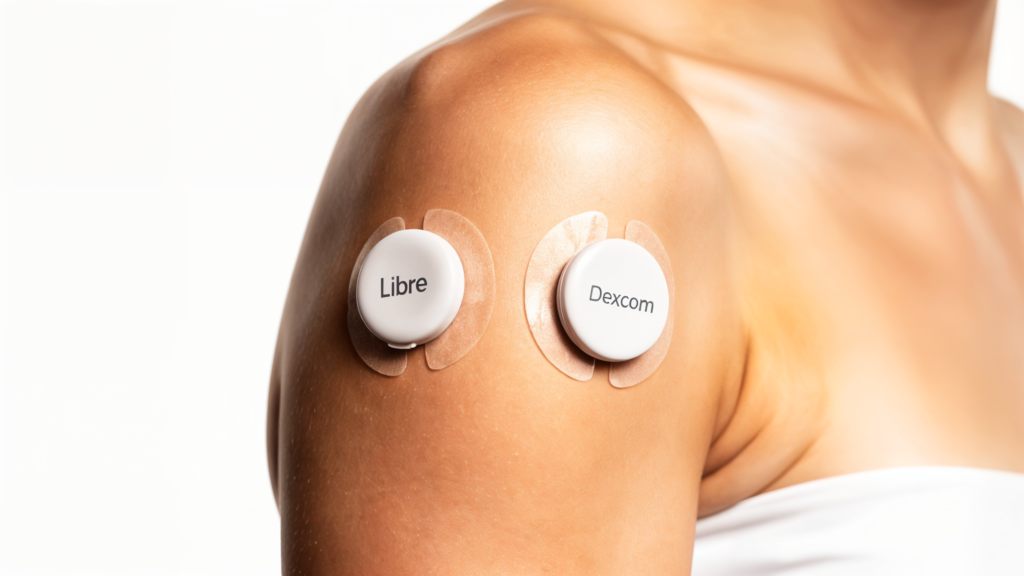
Freestyle Libre 3 vs Dexcom G7 for Fasting: Which Should You Choose?
If you’re serious about fasting — whether intermittent, extended, or OMAD — a continuous glucose monitor (CGM) is one of the most powerful tools you can wear. It shows you exactly what’s happening with your blood sugar in real time, so you can fast with confidence instead of guessing.
But which CGM is better for fasters: the Freestyle Libre 3 or the Dexcom G7? Both are top-tier devices, but they have critical differences that matter when you’re going 16, 24, or even 72+ hours without food.
In this head-to-head comparison, I’ll break down everything fasters need to know — accuracy during low glucose, wear time, comfort, cost, and real-world fasting performance. Let’s settle this once and for all.
As an Amazon Associate, I earn from qualifying purchases.
Quick Comparison: Libre 3 vs Dexcom G7 at a Glance
| Feature | Freestyle Libre 3 | Dexcom G7 |
|---|---|---|
| Sensor Life | 14 days | 10 days |
| Warm-Up Time | 1 hour | 30 minutes |
| Accuracy (MARD) | ~9.2% | ~9.6% |
| Real-Time Alerts | Yes (app-based) | Yes (vibrate + app) |
| Scanning Required | No (automatic) | No (automatic) |
| Low Glucose Alert | Yes | Yes |
| Waterproof | IP27 (showering, swimming) | IP27 (showering, swimming) |
| Sensor Size | Smaller (5mm height) | Slightly larger |
| Compatibility | iOS & Android | iOS & Android |
| Prescription Required | Yes | Yes |
Why Fasters Need a CGM
Before we dive into the comparison, let’s talk about why a CGM matters for fasting at all.
When you fast, your body goes through predictable metabolic shifts: blood sugar drops, insulin decreases, glucagon rises, and eventually you enter ketosis. But everyone’s body responds differently. Some people’s glucose drops dangerously low during extended fasts. Others spike cortisol and see glucose rise even without eating — a phenomenon called “dawn phenomenon” or stress-induced gluconeogenesis.
A CGM takes the guesswork out of fasting by showing you:
- When you actually enter ketosis — glucose dropping below 70 mg/dL is a rough indicator
- Whether your fast is safe — catching hypoglycemia before it becomes dangerous
- How different foods affect you — when you break your fast, you can see the glucose response in real time
- Your metabolic flexibility — how quickly your body switches from glucose to fat burning
For anyone doing extended fasts (48+ hours), a CGM isn’t a luxury — it’s a safety tool. And for intermittent fasters, it’s the fastest way to optimize your eating window and food choices.
Accuracy During Fasting: Libre 3 vs Dexcom G7
Accuracy is the single most important factor for fasters. When your glucose is trending downward during a 48-hour fast, you need to trust the numbers.
Freestyle Libre 3 Accuracy
The Libre 3 has a Mean Absolute Relative Difference (MARD) of approximately 9.2%, which is excellent for a CGM. More importantly for fasters, the Libre 3 performs well in the hypoglycemic range (below 70 mg/dL). In clinical studies, it maintained solid accuracy even at lower glucose levels — exactly where fasters spend the most time.
One quirk: the Libre 3 updates every minute, but there can be a slight lag during rapid glucose changes. If your glucose is dropping fast during an extended fast, the reading might be 5-10 minutes behind your actual blood sugar. This is manageable, but worth knowing.
Dexcom G7 Accuracy
The Dexcom G7 has a MARD of approximately 9.6% — slightly less accurate on paper, though the difference is marginal in practice. Where Dexcom shines is rate-of-change accuracy. Its algorithm is particularly good at predicting where your glucose is heading, which means the trend arrows tend to be more reliable during fasting.
For fasters, this matters: if your glucose is dropping at 2 mg/dL per minute during a water fast, Dexcom’s trend arrows will alert you sooner. The G7 also fires readings every 5 minutes (vs. every minute for Libre 3), which some fasters actually prefer — less noise, clearer trends.
Winner for Fasting Accuracy: Tie
The Libre 3 is slightly more accurate in absolute terms, especially at low glucose levels. The Dexcom G7 has better trend prediction. For fasting specifically, both are excellent. The difference is negligible unless you’re using the data for clinical decision-making.
Sensor Life: The 14-Day Advantage
This is where the Libre 3 pulls ahead for fasters — and it’s not close.
The Freestyle Libre 3 sensor lasts 14 days. The Dexcom G7 lasts 10 days. For someone doing intermittent fasting, that means:
- Libre 3: Apply once, cover nearly two full weeks of fasting cycles
- Dexcom G7: Need to swap sensors mid-cycle if you’re doing extended fasts
For extended fasters, the 14-day lifespan is a game-changer. A 7-day water fast fits comfortably within one Libre 3 sensor. With Dexcom, you’d need to change sensors partway through — and sensor changes on day 5 of a water fast are not fun when you’re already depleted.
The one Dexcom advantage: a 30-minute warm-up vs. the Libre 3’s 1-hour warm-up. But for fasters, this is rarely a deciding factor — you plan your sensor changes in advance.
Winner for Sensor Life: Freestyle Libre 3
Alerts and Safety During Fasting
Low glucose alerts are critical for extended fasters. If you’re 60 hours into a water fast and your glucose drops below 55 mg/dL, you need to know immediately.
Freestyle Libre 3 Alerts
The Libre 3 finally added real-time alerts (previous Libre models required scanning). You can set custom low glucose thresholds, and the app will notify you. However, the alerts are app-dependent — if your phone is on silent or the app crashes, you might miss a critical low.
Dexcom G7 Alerts
Dexcom has always been the gold standard for alerts, and the G7 continues this tradition. The transmitter vibrates on your body when glucose hits your threshold — even if your phone is in another room or on silent. This is a significant safety advantage for fasters who sleep during extended fasts and might not hear their phone.
The G7 also has a “Urgent Low Soon” alert that predicts when you’ll hit a dangerous low within the next 20 minutes. For fasters, this early warning system is invaluable.
Winner for Alerts and Safety: Dexcom G7
The on-body vibration alert alone makes Dexcom the safer choice for extended fasting. When your glucose is crashing at 3 AM during a 72-hour fast, you want something that will wake you up regardless of your phone settings.
Comfort and Wearability During Fasting
Both sensors are worn on the back of the upper arm, but there are differences that matter during long fasts.
The Libre 3 is slightly smaller and thinner than the Dexcom G7. It sits flatter against your skin, which means less snagging on clothing and less awareness that it’s there. During extended fasts when you might be moving less and resting more, the lower profile is appreciated.
The Dexcom G7 integrates the transmitter into the sensor (unlike the G6 which had a separate transmitter). This makes it simpler and more comfortable than previous Dexcom models, though still slightly bulkier than the Libre 3.
Both sensors are waterproof and can handle showers, baths, and swimming — important if you’re using cold exposure or sauna during your fasts.
For adhesive issues, both can sometimes peel during extended wear. Many fasters use medical adhesive patches to keep sensors secure during long fasts, especially if you’re sweating from sauna or exercise.
Winner for Comfort: Freestyle Libre 3 (slight edge)
Cost Comparison for Fasters
Cost is where decisions get real. Both CGMs require a prescription and can be expensive without insurance.
Freestyle Libre 3 Cost
At retail, Libre 3 sensors cost approximately $70-90 per sensor (14-day wear). That works out to roughly $5-6.50 per day. With insurance or Medicare, many people pay $0-35 per month.
Abbott also offers a Libre 3 cash-pay program that can bring the cost down significantly for those without insurance coverage.
Dexcom G7 Cost
Dexcom G7 sensors typically run $90-120 per sensor (10-day wear). That’s roughly $9-12 per day — nearly double the Libre 3’s daily cost. With insurance, costs can drop to $0-60 per month depending on your plan.
Over a year of daily fasting with CGM coverage, the Libre 3 saves you roughly $1,000-2,000 compared to Dexcom G7.
Winner for Cost: Freestyle Libre 3
App Experience and Data for Fasters
Both apps provide glucose data, but the experience differs.
Libre 3 App: Clean, straightforward interface. Shows current glucose, a 12-hour trend graph, and basic statistics. The Libre View web platform provides more detailed reports. For fasters who want simplicity, it’s great.
Dexcom G7 App: More feature-rich. Better trend visualization, Clarity reports with detailed analytics, and the ability to share data with up to 10 followers. If you want deep insights into your fasting patterns — like average glucose during fasting windows vs. eating windows — Dexcom Clarity provides better reporting.
Both integrate with third-party apps. If you’re using fasting apps like Zero or Life Fasting Tracker, both CGMs can sync data, though Dexcom tends to have broader third-party integration.
Winner for App Experience: Dexcom G7
Best Use Cases: When to Choose Each
Choose the Freestyle Libre 3 If:
- You do extended fasts (48+ hours) — the 14-day sensor life is a major advantage
- Cost is a significant factor
- You prefer a smaller, less noticeable sensor
- You want minute-by-minute data
- You do OMAD or alternate-day fasting and want week-plus coverage per sensor
Choose the Dexcom G7 If:
- Safety alerts are your top priority — the on-body vibration is unmatched
- You want the best trend predictions during fasting
- You fast overnight frequently and need reliable low-glucose alerts
- You want detailed analytics and Clarity reports
- You share data with a healthcare provider or family member
Products Fasters Use With Their CGMs
Whether you choose Libre 3 or Dexcom G7, these products can enhance your CGM fasting experience:
1. Sensor Adhesive Patches: If you’re wearing a CGM for 10-14 days through showers, workouts, and fasting, adhesive patches keep it secure. Check CGM adhesive patches on Amazon →
2. Ketone Meter: Pair your CGM with a blood ketone meter to confirm you’re in ketosis during fasts. When your CGM shows glucose below 70 and your ketones read above 1.5 mmol/L, you know you’re deep in fat-burning mode. Check blood ketone meters on Amazon →
3. Electrolyte Supplements: Extended fasting with a CGM often reveals that low glucose correlates with electrolyte depletion. Quality electrolytes help maintain energy and prevent the “fasting flu.” Check fasting electrolyte supplements on Amazon →
4. Over-The-Arm CGM Sleeve: For extended fasts where you want to protect your sensor without tape, a compression sleeve keeps it secure and discreet. Check CGM arm sleeves on Amazon →
Real-World Fasting Performance
After talking to dozens of fasters and reviewing community feedback from fasting forums and Reddit, here’s what the real-world experience looks like:
For Intermittent Fasting (16:8, 18:6, OMAD): Both CGMs perform well. The Libre 3’s 14-day life means you can cover an entire month with just two sensors. Dexcom users appreciate the trend arrows for optimizing their eating window timing.
For Extended Fasting (48-72+ hours): The Libre 3’s longer wear time is convenient, but the Dexcom G7’s vibration alerts provide an extra safety net. Many experienced extended fasters actually prefer Dexcom for this reason — the safety advantage outweighs the convenience of longer wear.
For Fasting + Exercise: Both sensors can lag during intense exercise. The Dexcom G7 tends to handle exercise-related compression artifacts (when you lean on the sensor during yoga or weightlifting) slightly better than the Libre 3.
The Verdict: Which CGM Wins for Fasting?
There’s no universal winner — it depends on your fasting style and priorities.
For most intermittent fasters, the Freestyle Libre 3 is the better choice. The 14-day sensor life, lower cost, and smaller form factor make it ideal for everyday fasting. Two sensors per month gives you full CGM coverage at the most affordable price.
For extended fasters and safety-conscious fasters, the Dexcom G7 earns the edge. The on-body vibration alerts, superior trend prediction, and “Urgent Low Soon” warning make it the safer option when you’re pushing your body through 48-72+ hour fasts. The higher cost is worth the peace of mind.
My honest recommendation? If you’re new to CGMs and fasting, start with the Libre 3 — the lower cost and longer wear make it more accessible. If you find yourself doing regular extended fasts, upgrade to the Dexcom G7 for the safety features.
Either way, adding a CGM to your fasting practice will transform your understanding of how your body responds to fasting. It’s the single most informative tool you can use — far more revealing than a scale or even ketone strips.
FAQ: Freestyle Libre 3 vs Dexcom G7 for Fasting
Can I use a CGM without a prescription?
Both the Libre 3 and Dexcom G7 require prescriptions in the US. However, Libre 3 has expanded over-the-counter availability in some markets. Check with your pharmacy — some states now allow pharmacists to dispense Libre 3 without a doctor’s prescription.
Do CGMs work during water fasting?
Yes, both CGMs work perfectly during water fasting. In fact, that’s when they’re most useful — showing you how your glucose responds to complete caloric restriction. Just stay hydrated, as dehydration can sometimes affect sensor accuracy.
Which CGM is more accurate at low glucose levels?
The Libre 3 has a slight edge in hypoglycemic accuracy based on MARD data. However, both are clinically accurate in the low range. If you’re concerned about dangerous lows during fasting, Dexcom’s vibration alerts compensate for any minor accuracy difference.
Can I wear a CGM in the sauna during a fast?
Both sensors are water-resistant but extreme heat can degrade the adhesive and potentially affect accuracy. If you use a sauna during fasting, limit sessions to 15-20 minutes and use an adhesive patch to keep the sensor secure. Some fasters remove the sensor before sauna and reapply after — not ideal, but workable.
How often should I calibrate my CGM during a fast?
Neither the Libre 3 nor Dexcom G7 requires fingerstick calibration — they’re both factory calibrated. However, if a reading seems off during a fast, a quick fingerstick can confirm accuracy. Most fasters find both CGMs reliable enough to trust without calibration.
Related posts:
 Best Appetite Suppressant Supplements for Fasting in 2026 — Top 5 Compared
 Best Continuous Glucose Monitors for Fasting in 2026: Complete Buyer’s Guide
 Best Sauna Blankets for Fasting Recovery in 2026: Complete Buyer’s Guide
 How Long Until Autophagy Starts During Fasting? The Complete 2026 Guide
 Ketone Testing During Fasting: Why Your Strips Drop and the Best Ways to Measure Ketosis in 2026