
Great Lakes vs Vital Proteins Collagen for Fasting 2026
Collagen peptides have become one of the most popular supplements in the fasting community. They promise gut healing, joint support, and skin renewal — all without the guilt of a full meal. But with dozens of brands on the market, choosing the right one can feel overwhelming.
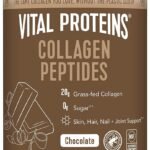
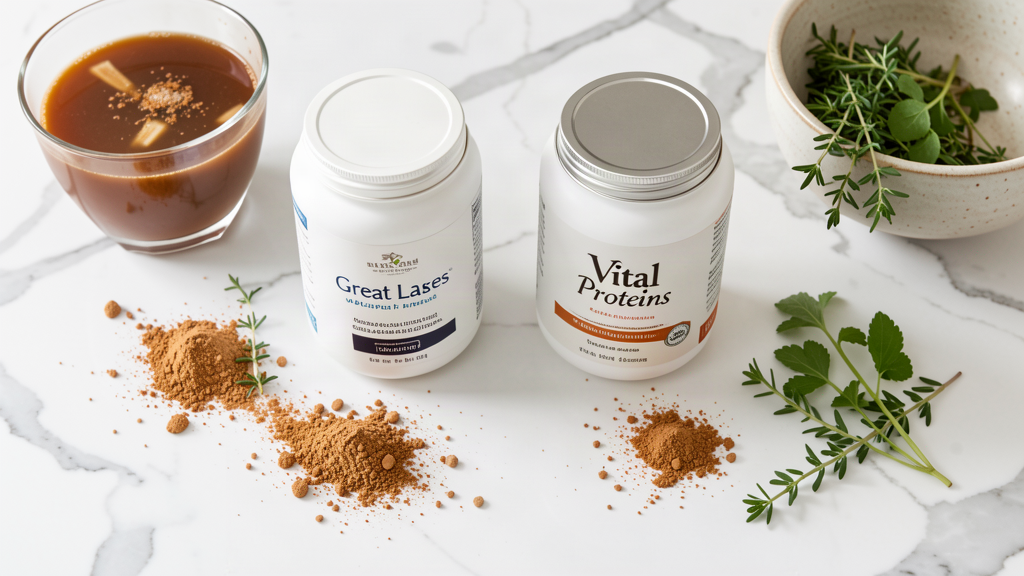
Two names dominate the conversation: Great Lakes Wellness and Vital Proteins. Both are grass-fed, hydrolyzed collagen powders with loyal followings. But they differ in serving size, price per gram, dissolvability, and third-party testing — details that matter when you’re investing in a supplement to support your fasting journey.
In this head-to-head comparison, we break down exactly how Great Lakes and Vital Proteins stack up across seven critical categories. Whether you’re using collagen to break a 16-hour fast, support joint recovery after fasted workouts, or heal your gut between eating windows, this guide helps you pick the right bottle.
Quick Comparison Table
| Feature | Great Lakes Wellness | Vital Proteins |
|---|---|---|
| Serving Size | 2 scoops (20g) | 1 scoop (20g) |
| Collagen per Serving | 18g protein | 20g protein |
| Calories | 70 | 70 |
| Collagen Types | I & III (bovine) | I & III (bovine) |
| Sourcing | Grass-fed, pasture-raised | Grass-fed, pasture-raised |
| Third-Party Tested | Yes (NSF, kosher) | Yes (NSF Certified for Sport) |
| Price (16oz) | ~$25 | ~$27 |
| Cost per Serving | ~$1.43 | ~$1.59 |
| Dissolvability | Excellent (quick-dissolve) | Very good (may clump in cold) |
| Keto Friendly | Yes (0g carbs, 0g sugar) | Yes (0g carbs, 0g sugar) |
| Available Sizes | 10oz, 16oz, 32oz | 10oz, 20oz |
Sourcing and Quality: Where the Collagen Comes From
Both Great Lakes and Vital Proteins source their collagen from grass-fed, pasture-raised bovine hides. This matters because cattle raised on grass produce collagen with a more favorable amino acid profile and lower exposure to antibiotics and hormones compared to conventionally raised animals.
Great Lakes Wellness has been in the gelatin and collagen business since 1922 — over a century of experience. Their collagen is sourced from South American cattle (primarily Brazil and Argentina) where pasture-raising is the standard practice. The company holds kosher certification and conducts third-party testing through NSF International.
Vital Proteins sources from New Zealand and Australian cattle, regions known for strict agricultural standards and grass-fed practices. Their NSF Certified for Sport designation means every batch is tested for banned substances — a critical feature for competitive athletes who fast and supplement. Jennifer Aniston’s involvement as Chief Creative Officer has helped mainstream the brand, but the quality credentials hold up independent of celebrity endorsement.
Verdict: Both use high-quality, grass-fed bovine collagen. Vital Proteins’ NSF for Sport certification gives a slight edge for athletes, while Great Lakes’ century-long track record provides confidence in consistency.
Protein Content and Bioavailability
The real question for fasters isn’t just how much collagen you’re getting — it’s how much your body can actually absorb and use. Both products deliver hydrolyzed collagen broken down to molecular weights in the 500-3000 Daltons range, which research shows allows di- and tripeptides (like Pro-Hyp and Gly-Pro-Hyp) to enter your bloodstream within 1-2 hours of ingestion.
Great Lakes provides 18g of protein per 20g serving (2 scoops). The slight difference from the theoretical 20g comes from the hydrolysis process and trace minerals. Their “quick dissolve” formulation uses enzymatic hydrolysis optimized for rapid absorption.
Vital Proteins delivers a full 20g of collagen protein per single 20g scoop. The one-scoop convenience is a practical advantage — less measuring, less mess, and more consistent dosing. For fasters who mix collagen into morning coffee or post-fast smoothies, the single-scoop format is genuinely more convenient.
From a fasting perspective, the 70 calories and 0g carbs in both products mean a minimal insulin response. Research on collagen peptides specifically shows they produce a lower glycemic impact than whey or casein protein. For most intermittent fasters (16:8 or 18:6 protocols), adding collagen during the fasting window won’t significantly disrupt ketosis or autophagy — but it does technically break a strict water fast.
Verdict: Vital Proteins edges ahead with 20g per single scoop versus Great Lakes’ 18g across two scoops. For fasters tracking macros precisely, those extra 2 grams matter.
Mixability and Taste
Let’s be honest: nobody drinks collagen for the flavor. But a supplement you dread taking is a supplement you’ll eventually stop taking. Both products are unflavored and designed to dissolve invisibly into liquids.
Great Lives Wellness excels here. Their “quick dissolve” formula lives up to the name — it dissolves completely in hot coffee, tea, or warm broth within 15-20 seconds of stirring. In cold water or smoothies, it integrates without the gritty texture that plagues cheaper collagen powders. Many fasters report it’s the best-mixing collagen they’ve tried.
Vital Proteins dissolves well in warm liquids but can occasionally form small clumps in cold water or iced coffee. This isn’t a dealbreaker — a quick blend with a frother eliminates it — but it’s a noticeable difference head-to-head. In smoothies and baked goods, both products perform identically.
Taste-wise, both are genuinely flavorless. Neither leaves the slightly “beefy” aftertaste that lower-quality collagen powders sometimes carry. You can add either to black coffee, bone broth, or smoothies without altering the flavor profile.
Verdict: Great Lakes wins on mixability, especially in cold liquids. If you’re adding collagen to iced coffee or cold smoothies during your eating window, Great Lakes dissolves more seamlessly.
Third-Party Testing and Transparency
Supplement quality isn’t just about what’s on the label — it’s about what independent labs confirm is actually in the bottle. This is especially important for collagen, where heavy metal contamination (particularly lead, mercury, and cadmium) is a documented risk, especially in marine-sourced products.
Great Lakes Wellness holds NSF International certification and kosher certification. They publish certificates of analysis (COAs) and test for heavy metals, microbiological contaminants, and verify protein content. Their century-long reputation in the gelatin industry means they have institutional knowledge about quality control that newer brands simply can’t match.
Vital Proteins carries NSF Certified for Sport certification — the gold standard for athletic supplements. This certification verifies not just purity and potency, but also that the product is free from over 270 banned athletic substances. For fasters who also compete in sports or fitness events, this certification provides an extra layer of assurance. They also test for heavy metals and publish batch-specific COAs.
Verdict: Both are well-certified. Vital Proteins’ NSF for Sport certification is slightly more rigorous for athletes, while Great Lakes’ kosher certification may matter for those with dietary restrictions.
Price and Value
Collagen supplementation is a long-term investment. A daily 10-20g dose means you’ll go through a 16oz container in roughly two weeks. Over a year, the cost difference between brands adds up significantly.
Great Lakes Wellness 16oz container: approximately $25, providing 14 servings at 2 scoops each. That’s roughly $1.43 per serving or about $43 per month. They also offer a 32oz “value size” that brings the per-serving cost down further.
Vital Proteins 20oz container: approximately $27, providing 15 servings. That’s roughly $1.80 per serving or about $54 per month. The price premium reflects the brand’s marketing investment and NSF for Sport certification costs.
Over 12 months, the difference is stark: Great Lakes costs roughly $516 annually versus Vital Proteins at $648. That’s $132 per year — enough to cover several months of a fasting app subscription or electrolyte supplements.
Verdict: Great Lakes offers better value per gram of collagen. If budget is a primary concern, Great Lakes is the clear winner. Vital Proteins’ premium pricing is justified for athletes needing NSF for Sport certification.
Winner by Use Case
There’s no universal “best” collagen — the right choice depends on how you fast and what you need.
Choose Great Lakes if: You want the best value, you mix collagen into cold drinks, you need kosher certification, or you prefer a brand with over 100 years of industry experience. It’s the workhorse collagen that does everything well without the premium price tag.
Choose Vital Proteins if: You’re a competitive athlete who needs NSF for Sport certification, you prefer single-scoop convenience, you’re willing to pay a premium for the brand’s quality reputation, or you want the added assurance of batch-specific COAs.
For most intermittent fasters who use collagen to support gut health and break their fast gently, Great Lakes offers the best balance of quality, mixability, and value. The cost savings over a year are meaningful, and the product performs identically in terms of collagen delivery.
For fasted athletes who compete or train at high intensity, Vital Proteins’ NSF for Sport certification provides the第三方 testing rigor that competitive environments demand.
Frequently Asked Questions
Does collagen break a fast?
Technically, yes — collagen peptides contain calories (about 70 per serving) and amino acids that trigger a mild digestive response. However, for most intermittent fasters focused on weight loss, metabolic health, or gut repair, the benefits of collagen outweigh the minimal caloric impact. If your primary goal is maximum autophagy, save collagen for your eating window.
How much collagen should I take while fasting?
Research supports 2.5-10g per day for general health benefits, with most studies using 10-15g for skin and joint outcomes. For fasting specifically, 10-15g is a practical sweet spot — enough to support gut lining repair and joint health without excessive calories during your eating window.
Can I take collagen during a 24-hour fast?
For a strict 24-hour water fast, avoid collagen to maintain the fasting state. For a modified 24-hour fast (where coffee or tea is allowed), adding 10g of collagen to your morning coffee won’t significantly disrupt the metabolic benefits while supporting gut health.
Is marine collagen better than bovine for fasting?
Not necessarily. While marine collagen has a smaller molecular size theoretically improving absorption, no published human head-to-head trial has proven marine collagen superior to bovine. Bovine collagen (types I and III) is better studied and more affordable. The best collagen is one you’ll actually take consistently.
Should I take collagen before or after breaking my fast?
The timing depends on your goals. Taking collagen 15-30 minutes before your first meal can help prime your gut lining and reduce the digestive shock of breaking a fast with a larger meal. Taking it immediately after your first bite integrates it into your eating window seamlessly. Both approaches work — consistency matters more than timing.
Bottom Line
Both Great Lakes and Vital Proteins deliver high-quality, grass-fed collagen peptides that support fasting goals. Great Lakes wins on value and mixability — it’s the better daily driver for most fasters. Vital Proteins wins on convenience and athlete-focused certification — it’s the premium choice for competitive environments.
Whatever you choose, incorporating 10-15g of collagen into your eating window can support gut healing, joint recovery, and skin health — benefits that compound over months of consistent use alongside your fasting practice.
Check Great Lakes Collagen on Amazon
Check Vital Proteins Collagen on Amazon
Browse All Collagen Peptides on Amazon
As an Amazon Associate, I earn from qualifying purchases. This article is for informational purposes only and does not constitute medical advice. Consult your healthcare provider before starting any fasting or supplement regimen.