
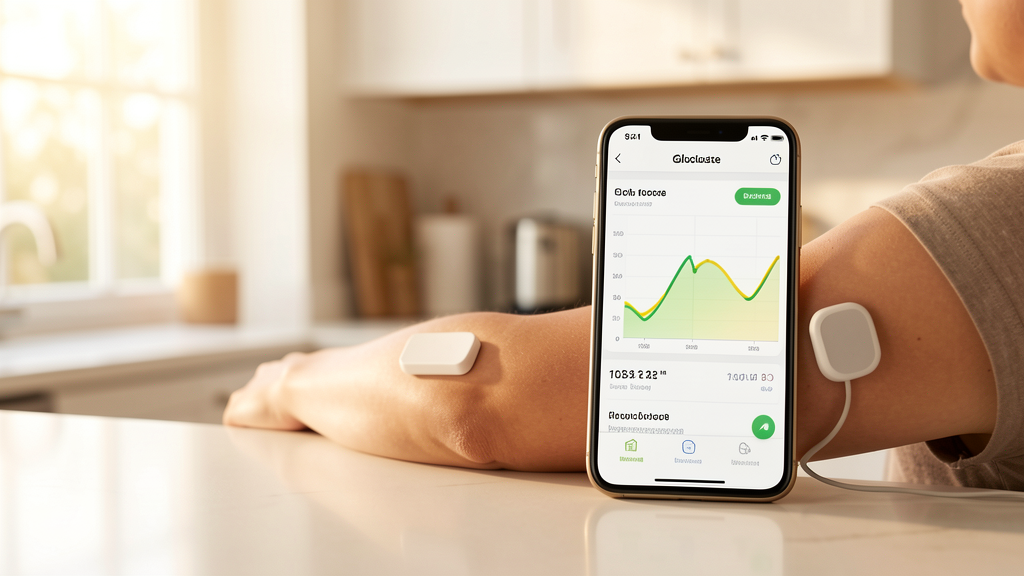
If you’ve ever broken a fast wondering whether your blood sugar actually dipped low enough to trigger autophagy — or whether that post-meal spike sabotaged your metabolic gains — you’re not alone. A continuous glucose monitor (CGM) removes the guesswork entirely. These tiny sensors track your blood sugar 24/7, giving you real-time data on how fasting, food, and exercise affect your body at the glucose level.
In 2026, CGMs have exploded beyond diabetes management. Biohackers, intermittent fasters, and wellness enthusiasts are using them to optimize fasting windows, identify glucose spikes from specific foods, and fine-tune when to break a fast for maximum benefit. But with multiple devices on the market — each with different pricing, sensor life, and app ecosystems — choosing the right one can feel overwhelming.
We tested and compared the top CGMs available in 2026, evaluating them specifically through the lens of fasting: accuracy during extended fasts, app integration with fasting trackers, sensor comfort for all-day wear, and whether the cost makes sense for non-diabetic users. Here’s what we found.
Why Use a CGM for Fasting?
Traditional finger-prick testing only gives you a single glucose reading at one moment. A CGM captures your glucose levels every 1-5 minutes, 24 hours a day, creating a complete picture of your metabolic response to fasting.
For fasters, this data is gold. You can see exactly when your body switches from burning glucose to burning fat (the metabolic crossover point), how long your post-meal glucose elevation lasts, and whether your overnight fasting glucose is trending in a healthy range. Research published in the journal Cell Metabolism has shown that post-meal glucose spikes — even in non-diabetics — are linked to inflammation, aging, and metabolic dysfunction. A CGM lets you identify and eliminate the foods causing those spikes.
Extended fasters (24-72+ hours) particularly benefit because CGMs provide a safety net. When your glucose drops below 70 mg/dL during a multi-day fast, you’ll know immediately rather than relying on how you feel — which can be unreliable once ketosis sets in.
Best CGMs for Fasting in 2026: Our Top Picks
1. Dexcom G7 — Best Overall for Serious Fasters
The Dexcom G7 remains the gold standard in continuous glucose monitoring. With a Mean Absolute Relative Difference (MARD) of approximately 8.2%, it’s the most accurate CGM available to consumers. The sensor is small (about the size of two stacked pennies), waterproof for up to 24 hours of submersion, and lasts 10 days before needing replacement.
What makes it great for fasting: The Dexcom G7 pairs with the Dexcom Follow app, which means a fasting partner or accountability buddy can monitor your glucose in real-time during extended fasts. The trend arrows show you not just where your glucose is, but where it’s heading — critical for knowing whether you’re safely in fat-burning mode or approaching dangerously low levels during a 48-hour fast.
Pricing: Without insurance, the Dexcom G7 runs approximately $89-149 per month depending on whether you buy directly from Dexcom or through third-party retailers. The starter kit includes a transmitter, sensor, and applicator.
Pros:
- Most accurate CGM on the market (lowest MARD)
- Real-time alerts for low/high glucose
- Excellent app with detailed trend analysis
- Works with Apple Watch and Android Wear OS
- Dexcom Follow allows remote monitoring during extended fasts
Cons:
- Most expensive option on the market
- Requires a prescription in most states
- 10-day sensor life (shorter than Libre)
- Transmitter must be replaced every 3 months
2. FreeStyle Libre 3 — Best Value for Intermittent Fasters
Abbott’s FreeStyle Libre 3 has become the go-to choice for intermittent fasters who want CGM data without the premium price tag. At roughly half the cost of the Dexcom G7, it delivers real-time glucose readings with impressive accuracy (MARD ~7.9% — actually slightly better than the G7 in some studies).
The sensor is thin, discreet, and lasts a full 14 days — four days longer than the Dexcom. For someone doing 16:8 intermittent fasting daily, that means fewer sensor changes and less skin irritation over time.
What makes it great for fasting: The Libre 3 app includes a “Time in Range” metric that shows you what percentage of your fasting window your glucose stays in the optimal zone (70-140 mg/dL). Over weeks of data, you can see exactly how different eating windows and meal compositions affect your fasting glucose levels.
Pricing: The FreeStyle Libre 3 sensors are available for approximately $49-75 per month. Abbott also offers a subscription program that can bring costs down further.
Pros:
- Best value CGM for non-diabetic users
- 14-day sensor life (longer than competitors)
- No fingerstick calibration required
- Extremely small and discreet sensor
- Real-time readings without scanning (unlike Libre 2)
Cons:
- Slightly less accurate than G7 at very low glucose levels
- App can be slower to update than Dexcom
- Limited third-party app integration compared to Dexcom
- Freezing temperatures can damage sensors
3. Dexcom Stelo — Best No-Prescription Option
The Dexcom Stelo made waves when it became the first over-the-counter CGM in the United States. No prescription, no doctor’s visit — you can order it directly from Dexcom’s website or pick it up at select pharmacies. It’s designed specifically for people without diabetes who want to understand their glucose patterns.
The Stelo uses the same sensor technology as the G7 but comes in a simplified app experience geared toward wellness rather than medical management. You won’t get the same level of detailed alerts, but you’ll get the core glucose tracking and trend data that fasters need.
What makes it great for fasting: The barrier to entry is the lowest of any CGM. If you’re curious about how your body responds to fasting but don’t want to navigate the prescription process, the Stelo lets you start tracking within days. The app includes glucose “scores” after meals that simplify the data for newcomers.
Pricing: Approximately $49-99 per month. Two sensor options: the standard Stelo (10 days) and the Stelo Biosensor (which pairs with a separate app for enhanced insights).
Pros:
- No prescription required — order online or in-store
- Same sensor technology as the premium G7
- Clean, simple app designed for wellness users
- Lower barrier to entry for CGM-curious fasters
- Skin adhesive designed for 10-day continuous wear
Cons:
- No real-time low glucose alerts (wellness mode, not medical)
- Less detailed data than the full Dexcom G7 system
- Only available in the US (not yet international)
- 10-day sensor life
4. Levels Health — Best for Data-Driven Fasters
Levels isn’t a CGM itself — it’s a platform that pairs with Dexcom or FreeStyle Libre sensors and adds AI-powered metabolic analysis on top. Their app uses machine learning to score your meals, exercise, sleep, and stress based on how they affect your glucose. For fasters who want to go beyond raw numbers and understand why their glucose does what it does, Levels is the most insightful option.
What makes it great for fasting: Levels provides a “Metabolic Score” (1-10) that factors in your fasting glucose, post-meal response, time in range, and variability. Over weeks, you can see how extending your fasting window, changing meal timing, or adjusting your last meal composition affects your overall metabolic health score.
Pricing: Levels is a subscription service at approximately $199 per month, which includes CGM sensors and the Levels app. They also sell accessory packs on Amazon including adhesive patches and sensor protectors.
Pros:
- AI-powered meal scoring and metabolic insights
- Comprehensive analysis beyond raw glucose data
- Integrates with Apple Health, Whoop, Oura Ring
- Community features for accountability
- Personalized recommendations based on your data
Cons:
- Most expensive option (requires CGM + subscription)
- Dependent on third-party CGM hardware
- Insights require several weeks of data to become accurate
- Subscription model — costs add up over time
5. Nutrisense — Best for Fasting + Nutrition Coaching
Nutrisense combines CGM data with one-on-one dietitian support, making it the best choice for fasters who want both the data and expert guidance to interpret it. Your assigned dietitian reviews your glucose patterns, helps you understand how fasting affects your metabolism, and creates personalized nutrition recommendations.
What makes it great for fasting: Having a dietitian who can see your real-time glucose data during a fast is invaluable. They can help you identify whether your fast is too aggressive (causing cortisol-driven glucose spikes), whether your refeeding strategy is optimal, and whether your overall fasting protocol is supporting or undermining your goals.
Pricing: Starting at approximately $179-299 per month depending on the plan and duration. Higher tiers include more dietitian sessions.
Pros:
- One-on-one dietitian guidance with CGM data
- Personalized fasting protocols based on your glucose patterns
- Excellent onboarding process for CGM beginners
- Detailed food logging with glucose impact scores
- Great for people transitioning to extended fasting
Cons:
- Premium pricing puts it out of reach for many
- Dependent on dietitian availability and quality
- App is less polished than Levels or Dexcom
- Requires commitment to get full value from coaching
CGM Comparison Table for Fasters
| Feature | Dexcom G7 | Libre 3 | Dexcom Stelo | Levels | Nutrisense |
|---|---|---|---|---|---|
| Price/Month | $89-149 | $49-75 | $49-99 | $199 | $179-299 |
| Prescription | Required | Required | Not required | Not required* | Not required* |
| Sensor Life | 10 days | 14 days | 10 days | 10-14 days | 10-14 days |
| Accuracy (MARD) | ~8.2% | ~7.9% | ~8.2% | Hardware dependent | Hardware dependent |
| Real-time Alerts | Yes | Yes | Limited | Yes | Yes |
| Fasting Insights | Basic | Good | Basic | Excellent | Excellent |
| Best For | Extended fasters | Budget-conscious | CGM beginners | Data nerds | Coaching seekers |
* Levels and Nutrisense use sensors from Dexcom or Abbott — they don’t manufacture their own hardware.
How to Use a CGM to Optimize Your Fasting Protocol
Having a CGM is only useful if you know how to interpret the data. Here’s a practical framework for fasters:
Baseline Phase (Week 1-2)
Wear the CGM during your normal eating pattern without changing anything. This establishes your baseline glucose range, identifies your personal glucose response to your current diet, and reveals any concerning patterns like elevated fasting glucose or late-night spikes.
Fasting Window Testing (Week 3-4)
Start your fasting protocol while tracking glucose. For 16:8 intermittent fasting, observe how quickly your glucose drops after your last meal, how low it goes overnight, and whether it rises in the morning (a cortisol response is normal). For extended fasts (24-72 hours), track the full glucose curve to see your metabolic crossover point.
Refeeding Analysis (Week 5+)
Use the CGM to test different breaking-fast meals. Some foods cause massive glucose spikes that can undo the metabolic benefits of a fast. Bone broth, small protein meals, and healthy fats typically produce gentler glucose responses than carbohydrates. The CGM shows you exactly which foods work best for your body.
CGM Accessories You’ll Need
Once you have your CGM, a few accessories make the experience much better — especially during extended fasts when you need the sensor to stay put for days.
Adhesive patches — The built-in sensor adhesive is adequate but not bombproof. Overlay patches add an extra layer of security, especially if you exercise or shower frequently during fasts.
Waterproof covers — While most modern CGMs are water-resistant, waterproof sensor covers protect the sensor during swimming or long showers. Essential if your fasting protocol includes sauna or cold plunge sessions.
Electrolytes — Extended fasting depletes electrolytes rapidly. Monitor your glucose AND your electrolytes for a complete picture. LMNT electrolyte packets are a favorite among extended fasters — zero sugar, zero carbs, so they won’t break your fast.
Frequently Asked Questions
Will a CGM break my fast?
No. CGMs are non-invasive sensors that measure glucose in interstitial fluid through a tiny filament just under the skin. They don’t introduce any calories, sugars, or substances that would break a fast. Many extended fasters wear CGMs throughout 3-5 day water fasts without issue.
Do I need a prescription for a CGM?
It depends on the device. The Dexcom G7 and FreeStyle Libre 3 require a prescription in most US states. The Dexcom Stelo is available over-the-counter without a prescription. Levels and Nutrisense handle the prescription process as part of their subscription service.
How accurate are CGMs for non-diabetics?
Modern CGMs like the G7 and Libre 3 are highly accurate across the full glucose range. For non-diabetics, the readings are more than sufficient for tracking fasting patterns, identifying glucose spikes from foods, and monitoring metabolic health. The accuracy is comparable to finger-prick testing for most practical purposes.
How long do CGM sensors last?
Sensor life varies by manufacturer: Dexcom G7 and Stelo sensors last 10 days, while FreeStyle Libre 3 sensors last 14 days. Levels and Nutrisense use the same underlying hardware, so sensor life depends on which CGM they provide. Plan for 2-3 sensor changes per month.
Can I wear a CGM during exercise while fasting?
Yes, most CGMs are designed for continuous wear including during exercise. The Dexcom G7 and Libre 3 are both water-resistant. For high-impact activities, overlay patches help keep the sensor secure. Just be aware that intense exercise can cause temporary glucose fluctuations that aren’t related to your fasting state.
The Bottom Line
A CGM is the single most powerful tool available to fasters who want to understand what’s happening inside their body. Whether you’re doing 16:8 intermittent fasting or extended multi-day fasts, real-time glucose data transforms your approach from guesswork to precision.
For most fasters, the FreeStyle Libre 3 offers the best balance of accuracy, sensor life, and affordability. If you want the absolute best accuracy and don’t mind paying a premium, the Dexcom G7 is unmatched. And if you’re CGM-curious with no prescription in hand, the Dexcom Stelo gets you started with zero friction.
Whichever device you choose, pair it with quality electrolytes and a solid fasting app, and you’ll have a data-driven fasting protocol that evolves with your body. That’s the future of fasting — and it’s here now.
As an Amazon Associate, I earn from qualifying purchases.
Related posts:
 Best Continuous Glucose Monitors for Fasting in 2026: Complete Buyer’s Guide
 How Long Until Autophagy Starts During Fasting? The Complete 2026 Guide
 Ketone Testing During Fasting: Why Your Strips Drop and the Best Ways to Measure Ketosis in 2026
 Best Sauna Blankets for Fasting Recovery in 2026: Complete Buyer’s Guide
 Best Spermidine Supplements for Fasting and Autophagy in 2026: Expert Review