
Fasting-Mimicking Diet 2026: The TikTok Trend Explained
The fasting-mimicking diet has exploded on TikTok in 2026, with creators sharing their five-day Prolon experiences and dramatic before-and-after results. But behind the viral clips lies a body of serious science — and three landmark clinical trials published this year that change everything we thought we knew about fasting without actually fasting.
If you have been curious about the fasting-mimicking diet but unsure whether it lives up to the hype, this guide breaks down the latest research, explains exactly how FMD works at the cellular level, and helps you decide whether a pre-made kit or a DIY approach is right for your fasting journey.
What Is the Fasting-Mimicking Diet?
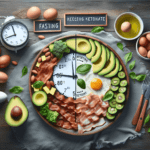
The fasting-mimicking diet, or FMD, is a structured five-day eating protocol designed to trigger the same cellular benefits as a water-only fast — autophagy, cellular rejuvenation, and metabolic reset — while still allowing you to eat small amounts of food. It was developed by Dr. Valter Longo, a biogerontologist at the University of Southern California’s Longevity Institute, and has been refined over more than two decades of clinical research.
Here is how it works. During the five-day cycle, calories are restricted to roughly 1,100 on day one and about 750 per day on days two through five. The macronutrient breakdown is carefully calibrated: 11 to 14 percent protein, 42 to 46 percent fat, and the remainder from complex carbohydrates. This specific ratio keeps IGF-1 (insulin-like growth factor 1) and glucose low enough to signal your cells that fasting is underway, while providing enough nutrition to keep you functional.
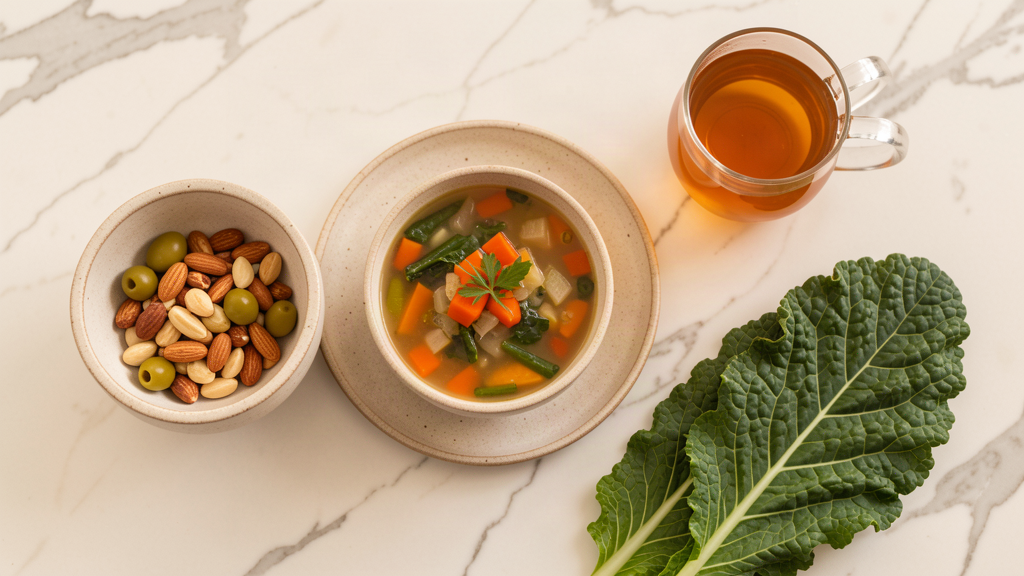
Typical FMD meals include nut bars, low-glycemic soups, kale-seed crackers, olives, and herbal teas. The food is entirely plant-based, low in sugar, and moderate in healthy fats. After the five-day cycle, you gradually reintroduce normal food over one to two days. Most protocols recommend doing one FMD cycle per month for three consecutive months, then repeating quarterly for ongoing maintenance.
The key insight is that your body does not need a complete absence of food to activate fasting pathways. It needs the right type and amount of nutrition — enough to sustain you, but not enough to trigger the growth and storage signals that a full meal would. That is the “mimicking” part, and it is what makes this approach so different from traditional fasting.
The 2026 Research: Three Trials That Change Everything
Three major clinical trials published in 2026 have moved the fasting-mimicking diet from “interesting hypothesis” to “clinically validated intervention.” Here is what each one found.
First Human Autophagy Trial (January 2026)
A randomized controlled trial published in early January 2026 provided the first direct evidence in humans that a structured FMD can measurably boost autophagic flux — the rate at which cells clean out damaged components and recycle them. Autophagy is the cellular housekeeping process that activates during fasting, and it is central to the longevity benefits associated with caloric restriction. Until this trial, autophagy data came almost entirely from animal models. The 2026 study confirmed that the five-day FMD protocol triggers the same cleanup cascade in human white blood cells, along with measurable metabolic improvements including lower fasting glucose and improved lipid profiles.
King’s College London Gum Disease Trial (2026)
Researchers at King’s College London conducted a trial across Spain testing whether periodic FMD cycles could reduce periodontitis — chronic gum disease that affects nearly half of adults over 30. Participants completed three five-day FMD cycles over six months. The results showed significant reductions in gum inflammation markers and improved periodontal health. This was unexpected because gum disease is driven by chronic low-grade inflammation, and the FMD appeared to reset inflammatory pathways systemically, not just locally. For fasters who deal with gum sensitivity or chronic inflammation, this finding connects oral health directly to fasting practice.
USC Inflammatory Bowel Disease Study (2026)
Perhaps the most exciting 2026 result came from USC, where researchers tested the FMD in patients with inflammatory bowel disease, including Crohn’s disease. The study found that the fasting-mimicking diet eased Crohn’s symptoms in approximately 70 percent of participants over a three-month protocol of monthly five-day cycles. Critically, when researchers replaced the FMD with a water-only fast, the benefits diminished — suggesting that the prebiotic ingredients in the FMD meals play an active role in restoring gut barrier function, not just the calorie restriction itself. This challenges the assumption that more restriction always equals more benefit.
Together, these three trials establish the FMD as a legitimate clinical tool, not just a biohacker experiment. For anyone interested in fasting for longevity, gut health, or inflammation, the 2026 data is hard to ignore.
How the Fasting-Mimicking Diet Activates Autophagy
Autophagy — literally “self-eating” — is the process by which your cells break down damaged proteins, dysfunctional mitochondria, and accumulated waste. Think of it as your body’s internal recycling program. During a normal feeding state, cells are focused on growth and energy storage. When calories drop and IGF-1 falls, cells switch to a repair-and-recycle mode. That switch is autophagy.
The fasting-mimicking diet triggers this switch through a specific sequence. In the first 24 hours, glycogen stores deplete and insulin drops. By day two, the body begins shifting toward fat oxidation. By day three, ketone production increases and IGF-1 reaches levels associated with cellular repair. The low protein content (11 to 14 percent) is critical here — high protein intake stimulates mTOR, the growth pathway that directly suppresses autophagy. By keeping protein low, the FMD allows mTOR to quiet down while AMPK (the energy-sensing pathway) activates.
The 2026 autophagy trial confirmed this cascade in human subjects for the first time, measuring autophagic flux directly in circulating white blood cells. Participants showed elevated LC3-II levels — a marker of active autophagy — during the FMD cycle, with levels returning to baseline after refeeding. This means the FMD provides a controlled, measurable pulse of cellular cleanup that you can repeat monthly.
For fasters who practice extended water fasts, the FMD offers a less risky alternative that achieves similar autophagy activation without the muscle loss, electrolyte imbalances, and metabolic stress that come with multi-day water-only fasting. It is not a replacement for all fasting — but it is a powerful tool in the fasting toolkit.
How to Try the Fasting-Mimicking Diet in 2026
You have two main options: a pre-made kit or a do-it-yourself approach. Here is what each looks like in practice.
Option 1: Pre-Made FMD Kits
The most popular option is Prolon’s five-day fasting-mimicking diet kit, which runs about $220 to $250 per cycle. Prolon is the only FMD backed by Dr. Longo’s clinical research, and the meals are designed to match the exact macronutrient ratios from the studies. The kit includes soups, nut bars, olives, kale crackers, herbal teas, and a supplement capsule. Everything is pre-portioned and labeled by day, so there is zero guesswork.
The convenience factor is real — you do not need to calculate macros, shop for specific ingredients, or worry about whether your homemade version actually mimics fasting. For your first FMD cycle, a pre-made kit is the safest way to ensure you are getting the right nutritional profile.
Option 2: DIY Fasting-Mimicking Diet
If the cost of Prolon feels steep (and at $250 per cycle, it adds up), you can approximate the FMD at home. The core principles are simple: keep calories between 750 and 1,100 per day, maintain the 11 to 14 percent protein ratio, prioritize plant-based foods, and minimize sugar and high-glycemic carbs.
A typical DIY FMD day might include a small bowl of vegetable soup with olive oil, a handful of nuts, a piece of low-sugar fruit like berries, and herbal tea. A digital food scale is essential for tracking portions accurately — even small overshoots can push calories high enough to break the fasting signal.
The risk with DIY is precision. Dr. Longo’s research is based on exact macronutrient ratios, and even small deviations can reduce the fasting-mimicking effect. If you go the DIY route, track your macros carefully for at least the first few cycles, and consider pairing the FMD with a quality electrolyte supplement to maintain mineral balance during the low-calorie days.
What to Expect During the Five Days
Day one typically feels like a normal low-calorie day. You may notice mild hunger but nothing unusual. Day two is often the hardest — hunger peaks, energy dips, and you may feel irritable or have difficulty concentrating. This is the transition period as your body depletes glycogen and shifts toward fat oxidation. By day three, most people report a surprising energy boost, reduced hunger, and mental clarity. Days four and five often bring a sense of lightness and well-being that fasters describe as similar to the “fasting high” experienced during extended water fasts.
After the five-day cycle, reintroduce food gradually. Start with small portions of easily digestible foods — soup, steamed vegetables, soft proteins — and build back to normal meals over one to two days. Jumping straight into a large meal after FMD can cause digestive discomfort.
Best FMD Kits and Tools for Fasting in 2026
If you decide to try the fasting-mimicking diet, having the right tools makes the experience smoother and more effective. Here are the essentials for 2026.
Prolon Fasting Mimicking Diet Kit — The gold standard. Five days of pre-portioned, plant-based meals designed to match Dr. Longo’s clinical protocol. Everything is included: soups, bars, crackers, olives, teas, and supplements. No cooking required. Best for first-timers who want guaranteed macronutrient precision. Check the latest price on Amazon.
Digital Food Scale — Essential for DIY FMD practitioners. You need accurate portion measurements to stay within the 750 to 1,100 calorie target. A scale with 0.1-gram precision and a tare function makes tracking soups, nuts, and oils easy. Find a reliable digital kitchen scale that reads grams and ounces.
Electrolyte Supplement — During the five-day FMD, electrolyte balance matters even more than during a water fast because you are consuming food but at very low calories. A quality electrolyte mix with sodium, potassium, and magnesium helps prevent headaches, fatigue, and cramps. Look for sugar-free options designed for fasting — fasting-specific electrolyte supplements are formulated for low-calorie protocols.
FMD vs Traditional Fasting: Which Is Better?
Neither approach is universally better — they serve different purposes. Traditional water-only fasting (16 to 72 hours) delivers a stronger autophagy signal and deeper ketosis, but it carries higher risks: muscle loss, electrolyte imbalances, and metabolic stress. The fasting-mimicking diet provides a gentler, more sustainable path to the same cellular benefits with fewer side effects.
For people who are new to fasting, the FMD is an excellent entry point. It teaches your body to tolerate calorie restriction without the intensity of a full fast. For experienced fasters, the FMD is a useful tool for monthly maintenance cycles — particularly if you fast regularly and want to reduce the cumulative stress on your body.
The 2026 research also suggests that the FMD may have unique benefits that water fasting does not. The USC IBD study found that the prebiotic ingredients in FMD meals actively support gut barrier repair — something a water-only fast cannot do. If gut health is a primary goal, the FMD may actually outperform traditional fasting.
The bottom line: the fasting-mimicking diet is not a replacement for all fasting, but it is a powerful addition to your fasting practice. Use it strategically — monthly cycles for maintenance, or as a bridge between extended fasts — and combine it with electrolyte support, proper refeeding, and consistent tracking for the best results.
Frequently Asked Questions
How often should I do the fasting-mimicking diet?
Most research protocols recommend one five-day FMD cycle per month for three consecutive months, followed by quarterly maintenance cycles. Listen to your body and adjust based on how you feel. If you are new to fasting, start with one cycle, evaluate your results, and then decide on frequency.
Can I exercise during the fasting-mimicking diet?
Light activity like walking, gentle yoga, or stretching is fine during the FMD. Avoid intense workouts, heavy lifting, or high-intensity interval training during the five-day cycle — your calorie intake is too low to support strenuous exercise safely. Resume normal exercise after refeeding.
Is the fasting-mimicking diet safe for everyone?
No. The FMD is not recommended for pregnant or breastfeeding women, children, people with eating disorders, or those with certain medical conditions including type 1 diabetes. If you take medications — especially for blood sugar or blood pressure — consult your healthcare provider before starting an FMD cycle, as medication adjustments may be necessary.
What is the difference between Prolon and a DIY fasting-mimicking diet?
Prolon is the only commercially available FMD that has been clinically tested in the exact format used in research studies. A DIY version can approximate the calorie and macronutrient targets, but precision is harder to achieve without careful tracking. For your first cycle, Prolon is the safer choice. After that, many people switch to DIY to reduce costs.
Does the fasting-mimicking diet put you into ketosis?
Yes, mildly. By days three through five, most people enter a light state of ketosis as the body shifts from glucose to fat for fuel. The ketosis is less intense than during a water-only fast because the small amount of carbohydrates in FMD meals keeps blood glucose from dropping too far. This mild ketosis is part of what triggers the autophagy and cellular repair benefits.
Ready to explore more fasting strategies? Check out our complete beginner’s guide to intermittent fasting or learn how fasting reshapes your gut microbiome based on the latest 2026 research.
As an Amazon Associate, I earn from qualifying purchases.