

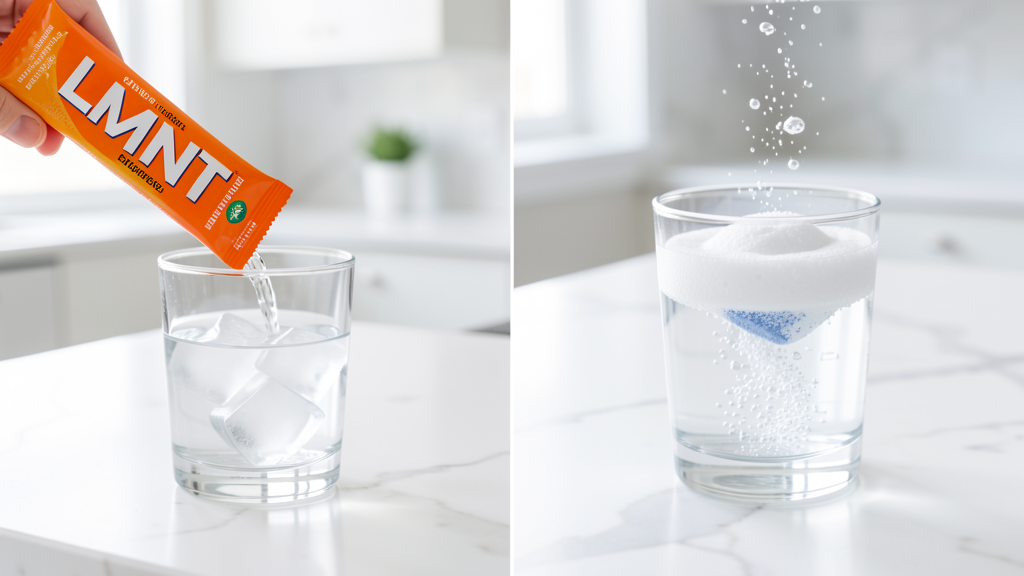
Staying hydrated during a fast is one of the most overlooked aspects of intermittent fasting. You’re not just losing water — you’re flushing out critical electrolytes like sodium, potassium, and magnesium. The wrong electrolyte supplement can spike your insulin and break your fast. The right one keeps you feeling sharp, energized, and craving-free.
Two brands dominate the fasting electrolyte space: LMNT and Nuun. Both promise clean hydration, but they take very different approaches. In this head-to-head comparison, we break down the ingredients, sodium content, sugar levels, taste, price, and — most importantly — which one actually works best for fasting and keto lifestyles.
We’ve personally tested both products across multiple fasting protocols — from 16:8 intermittent fasting to 48-hour extended fasts. Here’s what we found.
Quick Comparison: LMNT vs Nuun at a Glance
Before diving into the details, here’s how these two stack up side by side:
| Feature | LMNT | Nuun Sport |
|---|---|---|
| Form | Powder stick packs | Effervescent tablets |
| Sodium | 1,000 mg | 300 mg |
| Potassium | 200 mg | 150 mg |
| Magnesium | 60 mg (malate) | 25 mg (oxide) |
| Calcium | Not included | 13 mg |
| Sugar | 0 g | 1 g (dextrose) |
| Calories | 0 | 15 |
| Price per Serving | ~$1.15 – $1.50 | ~$0.65 – $0.80 |
| Sweetener | Stevia | Stevia + dextrose |
| Flavors Available | 10+ | 15+ |
Sodium Content: Why It Matters During Fasting
Sodium is the king of fasting electrolytes. When you stop eating, your insulin drops, which signals your kidneys to excrete more sodium. This is why many fasters experience headaches, dizziness, and fatigue in the first few days — it’s not hunger, it’s sodium depletion.
LMNT delivers 1,000 mg of sodium per serving — more than three times what Nuun provides. That’s not an accident. LMNT was co-founded by Robb Wolf and Danny Vega, both of whom come from the keto and fasting world. Their formula is designed around the latest sports science research, which suggests that 4–6 grams of sodium daily is optimal for active individuals.
Nuun Sport provides 300 mg of sodium per serving. This is adequate for general hydration and light exercise, but it falls short for extended fasts, heavy sweating, or keto dieters who are already sodium-depleted. You’d need to take three Nuun tablets to match the sodium in a single LMNT packet.
For fasting specifically, the sodium difference is the most critical factor. If you’re doing 16:8 intermittent fasting, Nuun’s 300 mg might be enough on rest days. But for 24-hour fasts, multi-day fasts, or if you’re active during your fast, LMNT’s 1,000 mg is the clear winner. The difference between feeling energized and hitting a wall at hour 18 often comes down to sodium.
We tested this during a 36-hour fast: LMNT kept us feeling sharp through the entire fast, while Nuun left us reaching for salt by hour 20. For serious fasters, sodium content isn’t just a number — it’s the difference between a productive fast and a miserable one.
Sugar and Calories: Will It Break Your Fast?
This is the question every faster asks: will this break my fast?
LMNT has zero sugar and zero calories. There’s no dextrose, no maltodextrin, no hidden carbs. The sweet flavor comes from stevia, a non-nutritive sweetener that doesn’t spike insulin. You can drink LMNT during your fasting window with complete confidence.
Nuun Sport contains 1 gram of sugar and 15 calories per serving. The sugar comes from dextrose, which is used as a binding agent in the tablet. While 1 gram is minimal, it technically introduces glucose into your system. For most intermittent fasters, 1 gram won’t meaningfully impact your fast. But if you’re doing strict water fasting or autophagy-focused fasts where even minimal caloric intake matters, Nuun is not the ideal choice.
The science on this is nuanced. Autophagy — the cellular cleanup process that many fasters are chasing — is inhibited by amino acids and glucose. While 1 gram of dextrose is unlikely to fully shut down autophagy, it does create a small insulin response. If you’re fasting primarily for autophagy benefits, the zero-calorie advantage of LMNT gives you peace of mind that you’re not interfering with the process.
Verdict: LMNT wins on the fasting compatibility front. Zero is always better than some when you’re trying to stay in a fasted state.
Magnesium Forms: Why It Matters
Both products include magnesium, but the forms are very different — and that difference matters more than most people realize.
LMNT uses magnesium malate, which has decent bioavailability and is easier on the stomach than magnesium oxide. Malate is also involved in the Krebs cycle, the body’s primary energy production pathway. This makes it a smart choice for fasters who need sustained energy without food.
Nuun uses magnesium oxide, which is the cheapest and least bioavailable form of magnesium. Only about 4% of magnesium oxide is actually absorbed by the body. The rest passes through your digestive system, which is why magnesium oxide is commonly used as a laxative at higher doses.
At 25 mg per serving, Nuun’s magnesium oxide is unlikely to cause digestive issues — but it’s also unlikely to meaningfully contribute to your daily magnesium needs. LMNT’s 60 mg of magnesium malate, while still below the recommended 400 mg daily intake, is at least in a form your body can actually use.
For fasters who are serious about magnesium supplementation, you’ll likely need to add a separate magnesium supplement regardless of which electrolyte drink you choose. But LMNT’s magnesium malate gives you a better head start.
Flavor, Form Factor, and Taste
Both brands offer a wide range of flavors, but the experience of drinking them is quite different.
LMNT comes as a powder in individual stick packs. You tear open a packet, dump it into 16 oz of water, shake, and drink. The flavors are bold and salty — this isn’t a subtle electrolyte drink. Popular flavors include Orange Salt, Raspberry Salt, and Citrus Salt. The raw unflavored version is pure salt with no additives, which is great for mixing into food or coffee during eating windows.
Nuun Sport comes as effervescent tablets. Drop one into 16 oz of water, watch it fizz and dissolve, and enjoy. The tablet format is incredibly convenient — toss a tube in your gym bag and you’re set. Flavors tend to be lighter and more “sports drink” style, with options like Lemon Lime, Fruit Punch, and Tri-Berry.
Taste is subjective, but the general consensus in the fasting community is clear: LMNT tastes salty because it is salty — and that’s exactly what your body needs during a fast. Nuun tastes more like a light sports drink, which is pleasant but doesn’t deliver the same electrolyte punch.
For portability, Nuun wins. Tablets take up virtually no space and don’t require a shaker bottle. LMNT stick packs are slightly bulkier but still very portable. If you’re traveling or at the office, Nuun’s tablet format is hard to beat for convenience.
Price and Value: Which Gives You More for Your Money?
Price is where things get interesting. LMNT is the premium option at roughly $1.15 to $1.50 per serving, depending on whether you buy single boxes or subscribe for a discount. A 30-count box runs about $35–$45. Subscription customers save 25%, bringing the per-serving cost down to around $1.15.
Nuun Sport is significantly cheaper at about $0.65 to $0.80 per serving. A tube of 10 tablets costs around $7–$8, and multi-packs bring the per-serving cost even lower. Costco and Amazon often have bulk deals that drop the price below $0.60 per serving.
But price per serving doesn’t tell the whole story. If you need 1,000 mg of sodium during a fast, you’d need to take three Nuun tablets (costing ~$2.00–$2.40) to match one LMNT packet (~$1.15–$1.50). At that point, LMNT is actually the better value for fasting-specific hydration.
For casual hydration, light workouts, or everyday use where you don’t need massive sodium doses, Nuun is the more economical choice. Think of it this way: LMNT is a specialized tool for fasting, while Nuun is a general-purpose hydration product.
Which Should You Choose for Fasting?
Here’s the bottom line:
Choose LMNT if:
- You’re doing extended fasts (24+ hours)
- You follow a keto or low-carb diet
- You need high sodium to prevent fasting headaches and fatigue
- You want zero sugar and zero calories during your fasting window
- You’re active during your fasting period (morning workouts, walking)
- You’re chasing autophagy and want zero caloric interference
Choose Nuun if:
- You’re doing 16:8 intermittent fasting and need light electrolyte support
- Budget is a primary concern
- You prefer the convenience of effervescent tablets
- You want a mild, sports-drink style flavor
- You’re looking for an all-purpose hydration supplement (not just fasting)
Many experienced fasters actually keep both on hand — LMNT for extended fasts and heavy training days, Nuun for lighter fasting days and general hydration. There’s no rule that says you have to pick just one.
Other Electrolyte Options Worth Considering
While LMNT and Nuun are the two most popular choices, they’re not the only options in the fasting electrolyte space. Here are a few others worth knowing about:
Hi-Lyte Electrolyte Drops — These concentrated liquid drops are incredibly portable and provide a solid electrolyte profile without any sweeteners or flavors. A few drops in water and you’re set. Great for travelers who don’t want to carry packets or tablets.
Nutri-Align Fasting Salts — Specifically designed for extended fasting with a balanced blend of sodium, potassium, and magnesium. These capsules are popular among multi-day fasters who want precise control over their electrolyte intake.
Keto Vital Electrolyte Complex — A budget-friendly option that provides decent electrolyte support for keto dieters. Not as refined as LMNT, but the price point makes it accessible for those on a tight budget.
For most fasters, though, LMNT or Nuun will cover your needs. The choice between them comes down to your fasting intensity, budget, and sodium requirements.
Frequently Asked Questions
Can I drink LMNT during a 24-hour fast?
Yes. LMNT has zero sugar, zero calories, and zero artificial sweeteners that spike insulin. It’s one of the safest electrolyte options for extended fasting. Many fasters report that LMNT makes the difference between a smooth 24-hour fast and one where they feel drained by hour 18.
Does Nuun break a fast?
Technically, Nuun Sport contains 1 gram of sugar and 15 calories, which could minimally affect a strict fast. For most intermittent fasters doing 16:8 protocols, this is negligible. However, if you’re doing autophagy-focused fasts where every calorie counts, choose a zero-sugar option like LMNT instead.
How many electrolytes do I need during a fast?
Research suggests 4–6 grams of sodium, 3.5–5 grams of potassium, and 400–600 mg of magnesium per day for active individuals. One LMNT packet gives you 1,000 mg sodium, so you’d need 4–6 packets daily to hit the upper range. Adjust based on your activity level, climate, and how you feel.
Are there cheaper alternatives to LMNT and Nuun?
Yes. DIY electrolyte drinks using table salt, potassium chloride (like NoSalt or Nu Salt), and magnesium powder can be extremely affordable — often under $0.10 per serving. However, the convenience and taste of pre-made options like LMNT and Nuun make them worth the premium for most people.
Which is better for keto?
LMNT is the clear winner for keto diets. Its high sodium content (1,000 mg) addresses the increased sodium needs that come with carb restriction, and its zero-sugar formula won’t interfere with ketosis. On keto, you’re already depleting sodium faster than usual, so the extra sodium in LMNT is a significant advantage.
Can I mix LMNT and Nuun together?
You can, but it’s usually unnecessary. If you’re finding that LMNT’s sodium is too much for light days, just switch to Nuun for those days. Mixing them would give you somewhere around 650 mg of sodium, which is a reasonable middle ground — but most fasters find it simpler to choose one or the other based on the day’s activity level.
Final Verdict
For fasters and keto dieters, LMNT is the superior choice. The 1,000 mg sodium dose, zero sugar, and clean ingredient list make it purpose-built for fasting. Nuun is a solid, affordable electrolyte supplement for everyday hydration, but it falls short when you need the higher sodium doses that fasting demands.
If you’re serious about your fasting practice, invest in LMNT for your extended fasts and heavy training days. Keep Nuun around for lighter days and general hydration. Your body — and your fast — will thank you.
Shop LMNT on Amazon: Check latest prices on LMNT
Shop Nuun on Amazon: Check latest prices on Nuun
As an Amazon Associate, I earn from qualifying purchases. This doesn’t affect the price you pay or my recommendations. Prices and availability may change.
Related posts:
 LMNT vs Ultima Electrolytes for Fasting (2026)
 LMNT Zero-Sugar Electrolytes Review
 The Benefits of LMNT Zero Sugar Electrolytes for Hydration and Performance
 Nuun Hydration Daily Review
 KEY NUTRIENTS Multivitamin Electrolytes Powder Packets No Sugar – 5 Delicious Flavors Post Workout and Recovery Hydration Packets 10 Pack – No Calories, Electrolytes Powder Packets Review