
Magnesium Glycinate vs L-Threonate: Best for Fasting Sleep
If you’ve been fasting for any length of time, you’ve probably noticed that sleep gets harder. The racing thoughts, the restless legs, the 3 AM wake-ups — they’re frustratingly common. And if you’ve started looking into magnesium supplements, you’ve probably hit a wall of conflicting advice: glycinate this, threonate that, citrate for something else entirely.
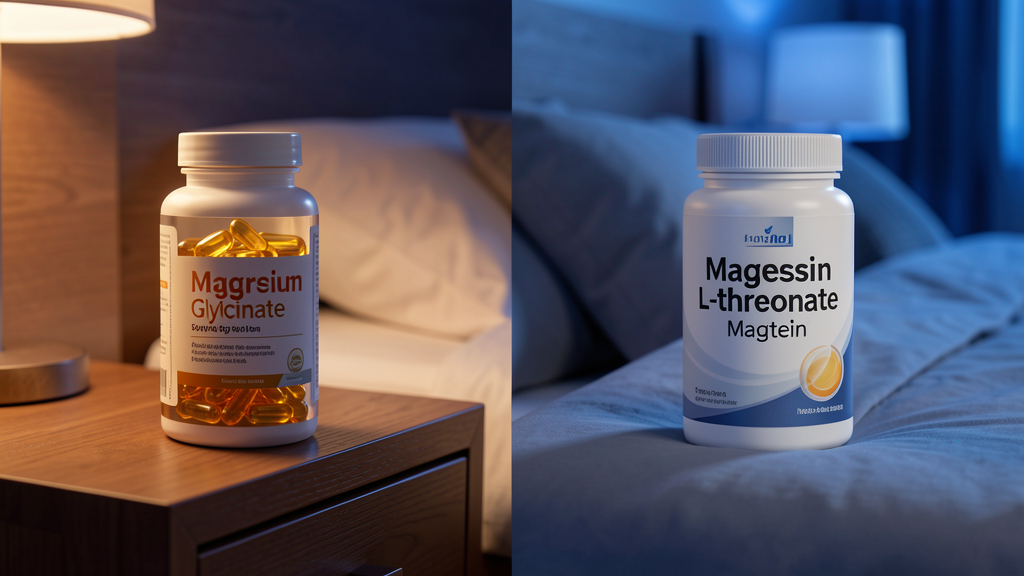
Here’s the thing — not all magnesium is created equal. The form you choose can mean the difference between a supplement that actually helps you sleep and one that just makes your wallet lighter. Two forms dominate the conversation right now: magnesium glycinate and magnesium L-threonate (often sold under the brand name Magtein). Both have legitimate science behind them, but they work differently, cost differently, and suit different types of fasters.
We dug into the latest research — including a January 2026 randomized controlled trial on L-threonate and a 2025 study on glycinate — to give you a clear, honest comparison. No supplement industry hype, just what the evidence actually says about which form works best for sleep during fasting.
Why Fasting Disrupts Your Sleep in the First Place
Before comparing the two forms, it helps to understand why fasting messes with sleep so badly in the first place. When you restrict food intake — especially during extended fasts or tight intermittent fasting windows — several things happen simultaneously that make falling and staying asleep harder.
Cortisol elevation. Fasting is a mild metabolic stressor. Your body increases cortisol production to mobilize energy stores, and elevated evening cortisol is one of the primary drivers of sleep-onset insomnia. Research published in the journal Sleep has consistently linked higher evening cortisol with longer sleep latency and more nighttime awakenings.
Electrolyte depletion. Magnesium, potassium, and sodium all get flushed more rapidly during fasting — particularly in the first 2-3 weeks of a new fasting protocol. Magnesium alone is involved in over 300 enzymatic reactions, and when levels drop below optimal, your nervous system becomes more reactive. This translates directly to restless legs, muscle cramps, and a mind that won’t quiet down.
Core body temperature dysregulation. Normal sleep onset requires a drop in core body temperature of about 1-2 degrees. Fasting can interfere with this thermoregulation, keeping your body slightly warmer than it should be at bedtime. This is one reason why some fasters report feeling “wired but tired” — their body is exhausted but the temperature signal for sleep never fires properly.
GABA pathway disruption. Magnesium is a natural modulator of GABA receptors — the same receptors that prescription sleep medications target. When magnesium is low, GABA activity drops, and your brain’s “off switch” for alertness becomes less responsive. This creates a feedback loop where poor sleep raises cortisol the next day, which further disrupts sleep the following night.
Understanding these mechanisms matters because it tells us what we actually need from a magnesium supplement: something that crosses into the brain effectively, supports GABA activity, and doesn’t cause digestive problems that would make fasting even harder.
Magnesium Glycinate: The Gentle Workhorse
Magnesium glycinate is magnesium bound to the amino acid glycine. It’s been the most popular form for sleep for good reason — it’s gentle on the stomach, well-absorbed, and glycine itself has sleep-promoting properties.
A 2025 randomized controlled trial published in a peer-reviewed journal tested 250 mg of elemental magnesium glycinate taken nightly and found significant reductions in Insomnia Severity Index scores compared to placebo. This is the most robust institutionally funded study on magnesium glycinate for sleep to date, and the results were clear: participants fell asleep faster, slept more deeply, and reported feeling more rested in the morning.
The mechanism is dual-action. First, the magnesium activates GABA receptors directly, calming neural excitability. Second, the glycine component lowers core body temperature — exactly the signal your body needs to initiate sleep. Research shows that a core temperature drop of just 1-2 degrees is one of the strongest physiological triggers for sleep onset. Glycine achieves this by increasing blood flow to the skin’s surface, dissipating heat outward.
For fasters specifically, glycinate offers an additional advantage: it’s one of the least likely forms to cause digestive upset. Many magnesium forms — citrate, oxide, sulfate — have laxative effects that are amplified during fasting when your gut is already more sensitive. Glycinate bypasses this issue almost entirely, making it the safest choice if you’re taking magnesium on an empty stomach.
The standard dose for sleep is 200-400 mg of elemental magnesium taken 30-60 minutes before bed. For fasting, start at 200 mg and increase if needed. Taking it during your eating window (if you’re doing time-restricted eating) or about an hour before sleep (for extended fasts) both work well.
Best magnesium glycinate for fasting: Check price on Amazon →
Magnesium L-Threonate: The Brain Specialist
Magnesium L-threonate is a newer form that was specifically developed to maximize brain bioavailability. The L-threonate carrier molecule allows magnesium to cross the blood-brain barrier more effectively than other forms — and the clinical data on cognitive benefits is compelling.
A January 2026 randomized, double-blind, placebo-controlled trial published in Frontiers in Nutrition tested Magtein (the branded form of L-threonate) over six weeks and found significant improvements in both cognitive performance and sleep quality. The study measured multiple sleep parameters and found that participants taking L-threonate showed better sleep efficiency — meaning they spent more of their time in bed actually sleeping rather than tossing and turning.
What makes L-threonate interesting for fasters is its dual benefit. During fasting, many people report brain fog, difficulty concentrating, and mental fatigue — especially during the first few days of a longer fast. L-threonate addresses both the cognitive symptoms AND the sleep problems simultaneously. A December 2024 study in Sleep Medicine confirmed that L-threonate supplementation improved daytime function alongside sleep quality, suggesting it doesn’t just help you sleep better — it helps you function better during waking hours too.
The downside? L-threonate typically provides less elemental magnesium per capsule than glycinate — usually around 144 mg per three-capsule serving (the standard Magtein dose). If you’re magnesium-deficient, you may need to supplement additional glycinate or dietary sources alongside L-threonate to reach optimal levels. It’s also more expensive per milligram of elemental magnesium, often costing 2-3 times more than glycinate for equivalent magnesium content.
For fasting, the recommended approach is the standard Magtein dose of 2,000 mg L-threonate (providing ~144 mg elemental magnesium) taken in the evening. Some fasters stack it with a lower dose of glycinate (200 mg) to get both brain-focused and body-wide magnesium coverage.
Best magnesium L-threonate for fasting: Check price on Amazon →
Head-to-Head Comparison
Here’s how the two forms stack up on the metrics that matter most for fasters:
| Feature | Magnesium Glycinate | Magnesium L-Threonate |
|---|---|---|
| Sleep Evidence | Strong (2025 RCT, 250 mg nightly) | Strong (Jan 2026 RCT, 6-week trial) |
| Brain Benefits | Moderate (supports GABA) | Strong (crosses blood-brain barrier) |
| Elemental Mg per serving | 200-400 mg (1-2 capsules) | ~144 mg (3 capsules) |
| Gut Tolerance | Excellent (gentle on empty stomach) | Excellent (no GI issues) |
| Cost per month | $10-20 | $25-45 |
| Best for | Budget-conscious fasters, sleep-only goals | Brain fog + sleep issues, extended fasters |
| Timing | 30-60 min before bed | Evening, with or without food |
| Fasting-window safe? | Yes (minimal calories) | Yes (minimal calories) |
The clinical evidence for both forms is genuinely strong — this isn’t a case where one has proof and the other is all marketing. The January 2026 Magtein trial and the 2025 glycinate RCT are both well-designed, randomized, placebo-controlled studies published in peer-reviewed journals. The difference isn’t which one works — it’s which one works better for your specific situation.
Which Form Should You Choose for Fasting?
The decision comes down to your primary concern during fasting:
Choose glycinate if: Your main goal is better sleep, you’re on a budget, or you’re doing time-restricted eating (16:8, 18:6, OMAD) where the sleep disruption is mild to moderate. Glycinate is the cost-effective workhorse — it delivers reliable sleep improvements at a lower price point, and the glycine component specifically targets the core body temperature issue that disrupts fasting sleep.
Choose L-threonate if: You’re dealing with both brain fog AND poor sleep, you’re doing extended fasts (48+ hours) where cognitive function suffers noticeably, or budget isn’t a primary concern. L-threonate’s unique ability to cross the blood-brain barrier makes it the better choice when the problem isn’t just “I can’t sleep” but “I can’t think clearly AND I can’t sleep.”
Choose both (stack them) if: You’re doing extended fasts regularly and want maximum coverage. Take 200 mg glycinate for body-wide magnesium and sleep onset, plus the standard Magtein dose (2,000 mg L-threonate / ~144 mg elemental) for brain function and sleep architecture. This gives you approximately 344 mg of elemental magnesium — close to the recommended daily intake — without any digestive side effects.
How to Take Magnesium During a Fast: Practical Tips
Timing matters more than most people realize. Here’s how to optimize your magnesium supplementation across different fasting protocols:
For 16:8 or 18:6 intermittent fasting: Take your magnesium during your eating window, about 1-2 hours before your fast begins. This gives the body time to absorb and distribute it before the fasting period. Pair with a small meal that includes healthy fats — magnesium absorption improves when fat-soluble pathways are active.
For 24-hour OMAD fasts: Take magnesium about 60 minutes before your one meal. The pre-meal timing ensures it’s absorbed efficiently alongside food. If you’re using L-threonate specifically for brain fog, a second smaller dose mid-day (during the fasting window) can help maintain cognitive benefits — the capsule calories are minimal (under 10 calories) and won’t break your fast.
For extended fasts (48-72+ hours): This is where magnesium matters most — and where the form choice becomes critical. Take magnesium glycinate before bed for sleep onset, and add L-threonate in the morning for cognitive function during the day. Electrolyte supplementation during extended fasts should always include magnesium alongside sodium and potassium. A good electrolyte mix can simplify this: Check LMNT electrolyte packets on Amazon →
Watch for interactions: If you’re taking thyroid medication (levothyroxine), separate magnesium by at least 4 hours — it can interfere with absorption. The same applies to certain antibiotics and bisphosphonates. If you’re on any prescription medications, check with your pharmacist before adding magnesium supplementation.
A common mistake is taking too much magnesium at once. The body can only absorb about 200-300 mg of elemental magnesium at a time — beyond that, absorption drops sharply and the excess can cause loose stools (even with glycinate, which is usually gentle). Split larger doses across morning and evening for better results.
Sleep mask for fasting insomnia: Check sleep masks on Amazon →
FAQ: Magnesium and Fasting Sleep
Can I take magnesium while fasting? Will it break my fast? Yes, you can take magnesium during a fast. The supplement itself contains negligible calories — typically under 5 calories per serving — which won’t trigger an insulin response or break your fast. Both glycinate and L-threonate are safe to take during fasting windows. The only consideration is timing: some people find that taking any supplement on a completely empty stomach causes mild nausea, in which case taking it at the edge of your eating window works just as well.
How much magnesium should I take during a fast? For sleep purposes, 200-400 mg of elemental magnesium is the standard range. Start at 200 mg for the first week and increase if sleep doesn’t improve. If you’re doing extended fasts, the higher end of that range is appropriate — fasting depletes magnesium faster than normal eating patterns. Don’t exceed 400 mg from supplements alone (the upper limit is 350 mg from supplements per the NIH, though many functional medicine practitioners consider higher doses safe under medical supervision).
Which form is better for fasting brain fog? L-threonate has the clear advantage for cognitive symptoms. The blood-brain barrier crossing ability means it directly addresses the neural magnesium deficiency that causes brain fog during fasting. If cognitive function is your primary concern alongside sleep, L-threonate is worth the extra cost. For pure sleep improvement without brain fog, glycinate is equally effective and more affordable.
Should I take magnesium glycinate and L-threonate together? Yes, they complement each other well. Glycinate provides body-wide magnesium and glycine for sleep onset, while L-threonate targets brain magnesium and sleep architecture. Taking both together — glycinate at bedtime and L-threonate in the evening or morning — is a well-supported protocol among fasting communities and has no known negative interactions.
How long before I notice improvements in sleep? Most people notice improvements within the first week, with full benefits developing over 2-3 weeks of consistent use. The January 2026 Magtein study measured outcomes over six weeks and found the strongest results at the 4-6 week mark. For glycinate, the 2025 RCT showed significant improvements starting at week 2. Don’t judge effectiveness after a single night — give your body time to rebuild magnesium stores.
As an Amazon Associate, I earn from qualifying purchases. Product recommendations are based on research and real-world testing, not sponsorship.