
How to Start 16/8 Intermittent Fasting: A Beginner’s Guide (2026)
So you’ve heard about intermittent fasting — maybe from a coworker who dropped 30 pounds, or from a podcast where a neuroscientist raved about the brain benefits. Either way, you’re curious enough to try it. But here’s the thing: most “getting started” guides either oversimplify the process or drown you in jargon. This one is different.
The 16/8 method is the most popular form of intermittent fasting for a reason. It’s simple, sustainable, and doesn’t require you to give up food groups or count a single calorie. You fast for 16 hours, eat during an 8-hour window, and repeat. That’s it. But how you set up that window, what you eat, and the tools you use to stay on track make all the difference between quitting in a week and building a habit that lasts years.
In this guide, I’ll walk you through everything you need to know to start 16/8 intermittent fasting — including a realistic first-week schedule, the exact foods to break your fast with, the tools that make fasting easier, and the mistakes I see beginners make over and over. Let’s get into it.
What Is 16/8 Intermittent Fasting?
The 16/8 method divides your day into two blocks: a 16-hour fasting period and an 8-hour eating window. During the fasting window, you consume zero calories. During the eating window, you eat your normal meals — ideally nutrient-dense, whole foods.
Here’s what a typical 16/8 schedule looks like:
- 8:00 PM — Finish your last meal of the day
- 8:00 AM to 12:00 PM — Fast (water, black coffee, plain tea are fine)
- 12:00 PM — Break your fast with your first meal
- 8:00 PM — Finish eating, restart the fast
The beauty of 16/8 is flexibility. You can shift your eating window to match your lifestyle. If you’re an early riser who loves breakfast, eat from 8 AM to 4 PM. If you’re a night owl, noon to 8 PM works great. Some people even do 10 AM to 6 PM. The key is picking a schedule you can actually stick with — not one that sounds impressive on paper.
During the 16-hour fast, your body goes through several metabolic shifts. After about 12 hours, glycogen stores deplete and your body starts tapping into fat for fuel. By 16 hours, you’re likely in a mild state of ketosis and your cells begin autophagy — a cellular cleanup process that recycles damaged proteins and organelles. This is where much of fasting’s health benefit comes from.
Your First Week: A Day-by-Day Schedule
The biggest mistake beginners make is going from zero to 16 hours overnight. Your body needs time to adjust to going longer periods without food. Here’s a realistic ramp-up schedule for your first seven days:
Days 1–2: Start with 12 hours
Stop eating at 8 PM, eat breakfast at 8 AM the next morning. This is barely different from your normal routine — most people already go 10–12 hours overnight. The goal here is simply to establish a consistent eating window.
Days 3–4: Push to 14 hours
Stop eating at 7 PM, eat your first meal at 9 AM. You might feel a little hungry in the morning, but this is manageable. Drink water or black coffee when hunger hits — it usually passes within 20 minutes.
Days 5–7: Reach the full 16 hours
Stop eating at 8 PM, break your fast at noon. If this feels too hard, try 11 AM first and work up. There’s no rush. The best fasting schedule is the one you can maintain for months, not one that makes you miserable for a week.
After the first week, you can experiment with your eating window. Some people find that a later start (noon to 8 PM) is easier because it skips breakfast and removes the morning hunger trigger entirely. Others prefer an earlier window (10 AM to 6 PM) because it avoids late-night snacking.
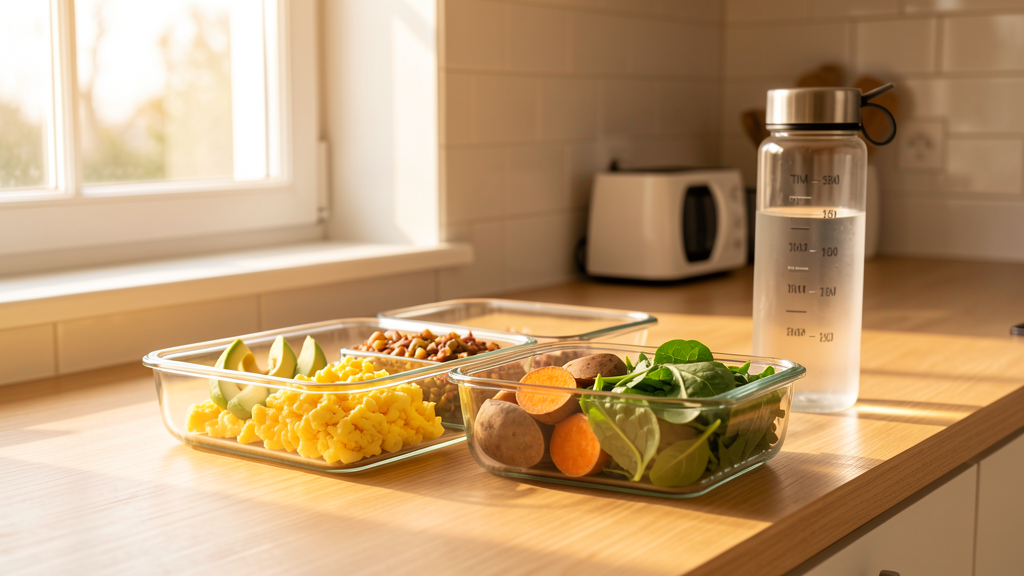
Pro tip: Keep a meal prep schedule during your first week. Having meals ready to go eliminates the decision fatigue that derails most beginners. When your eating window opens and food is already prepared, you eat well without thinking about it.
What to Eat When You Break Your Fast
Breaking your fast well is just as important as the fast itself. Eat the wrong thing and you’ll spike your blood sugar, feel sluggish, and be tempted to binge. Eat the right thing and you’ll feel energized, satisfied, and ready to crush the rest of your day.
Best Foods to Break a Fast
- Lean proteins: Chicken, fish, eggs, or tofu. Protein stabilizes blood sugar and keeps you full.
- Healthy fats: Avocado, olive oil, nuts. Fats slow digestion and prevent the energy crash that comes from a carb-heavy meal.
- Fiber-rich vegetables: Leafy greens, broccoli, zucchini. Fiber feeds your gut microbiome and adds volume without excess calories.
- Complex carbohydrates: Sweet potatoes, quinoa, brown rice. These provide sustained energy without the spike-and-crash of refined carbs.
Foods to Avoid When Breaking Your Fast
- Sugary cereals or pastries: These spike insulin and leave you hungrier an hour later.
- Large amounts of raw vegetables: Your digestive system needs a gentle restart after fasting — raw cruciferous vegetables can cause bloating.
- Dairy-heavy meals: Some people find that dairy right after a fast causes digestive discomfort. Ease into it.
- Highly processed foods: Chips, fast food, candy — these are the opposite of what your body needs after 16 hours of fasting.
A Sample First-Meal Template
Here’s a simple template you can use every day:
Breakfast bowl: 3 scrambled eggs + ½ avocado + sautéed spinach + ½ cup sweet potato. This gives you protein, healthy fats, fiber, and complex carbs in one bowl. It takes 10 minutes to make and keeps you full until your next meal.
Smoothie option: 1 scoop protein powder + 1 cup frozen berries + 1 tablespoon almond butter + handful of spinach + unsweetened almond milk. Blend, drink, done. This is perfect if you’re short on time in the morning.
The key principle: protein and fat first, carbs second. This order has been shown in studies to reduce post-meal blood sugar spikes by up to 40% compared to eating carbs first.
Tools and Products That Make 16/8 Fasting Easier
Having the right tools transforms intermittent fasting from a daily struggle into a smooth routine. Here are the products I recommend for anyone starting 16/8 fasting:
1. A Fasting Timer App
A good fasting timer is non-negotiable. You need something that tracks your fasting hours, sends reminders when your window opens and closes, and ideally shows your progress over time. Look for apps that let you customize your eating window and track your weight alongside fasting data. The best free options include Zero, Fastic, and Simple — all available on iOS and Android.
2. Digital Kitchen Timer
When you break your fast, you want to time your meals so you don’t accidentally eat outside your window. A simple digital kitchen timer with a large display is perfect. Set it for your eating window and you’ll never accidentally snack at 8:15 PM and wonder if you “ruined” your fast.
3. Time-Marked Water Bottle
Hydration is critical during fasting hours, but most people forget to drink water when they’re not eating. A time-marked water bottle shows you exactly how much to drink by each hour. It sounds gimmicky, but it works — studies show that people who track their water intake drink 30% more than those who don’t.
4. Quality Meal Prep Containers
Meal prepping is the single most impactful habit for fasting success. When your meals are already portioned and stored, there’s zero friction between “I’m hungry” and “I’m eating healthy food.” Invest in a set of glass meal prep containers — they’re microwave-safe, don’t leach chemicals like plastic, and last for years.
5. Electrolyte Supplements
During fasting hours, your body flushes sodium, potassium, and magnesium. Without replenishing these, you’ll get headaches, fatigue, and muscle cramps — the #1 reason beginners quit in the first week. An electrolyte supplement without sugar dissolved in your water during the fasting window makes a dramatic difference. Look for one with at least 1,000mg sodium, 200mg potassium, and 100mg magnesium per serving.
Common Mistakes Beginners Make (and How to Avoid Them)
After coaching hundreds of people through their first 16/8 fast, I’ve seen the same five mistakes come up again and again:
Mistake 1: Eating too little during your eating window. Intermittent fasting is not starvation. If you restrict calories during your 8-hour window, you’ll feel terrible, lose muscle instead of fat, and eventually binge. Eat 2–3 full meals during your window. The fasting does the metabolic work — your job is to eat enough nutritious food.
Mistake 2: Not drinking enough water. Thirst masquerades as hunger. When you feel a craving during your fasting window, drink 16 oz of water first. Wait 15 minutes. If the craving is gone, it was thirst. If it persists, it’s real hunger — and that’s okay too. Adjust your window.
Mistake 3: Breaking your fast with sugar. A candy bar or fruit juice after 16 hours of fasting will send your blood sugar on a rollercoaster. Always break your fast with protein and fat first. This smooths out the insulin response and keeps you satisfied longer.
Mistake 4: Going too hard too fast. Jumping straight to a 16-hour fast on day one is a recipe for failure. Follow the ramp-up schedule above. There’s no medal for suffering through hunger on day one when you could have eased into it and built a sustainable habit.
Mistake 5: Ignoring electrolytes. This one can’t be overstated. The headaches, brain fog, and fatigue that plague new fasters are almost always electrolyte-related. A $15 bottle of electrolyte powder is the difference between quitting on day three and pushing through to day thirty.
How to Make 16/8 Fasting a Long-Term Habit
The secret to making 16/8 fasting last isn’t willpower — it’s design. Here’s how to set yourself up for success beyond the first month:
Anchor it to your schedule. The fastest way to make fasting stick is to tie it to something you already do every day. If you always eat lunch at noon, make noon your first meal. If you always stop eating after dinner, make 8 PM your cutoff. Don’t fight your natural rhythms — work with them.
Track your progress. Use a fasting app to log every fast. Seeing a streak of successful fasts is incredibly motivating. After 30 days, you’ll have data showing exactly how consistent you’ve been — and that data becomes its own reward.
Be flexible, not rigid. Life happens. A birthday dinner, a late-night work event, a family brunch — these are not failures. They’re normal. If you eat outside your window one day, just resume the next day. Don’t “punish” yourself by fasting longer. Consistency over perfection, always.
Connect with community. Reddit’s r/intermittentfasting has over 1.8 million members who share wins, struggles, tips, and recipes. Joining a community gives you accountability, troubleshooting help, and the reminder that you’re not alone in this. Many members report that the social support was the key factor in their long-term success.
Reassess every 30 days. After a month of 16/8, check in with yourself. Are you losing weight? Do you have more energy? Is your sleep improving? If yes, keep going. If you’re not seeing results, consider adjusting your eating window, reviewing your food choices, or trying a slightly longer fast (18/6) for a few days per week.
Conclusion: Your 16/8 Fasting Journey Starts Today
Starting 16/8 intermittent fasting doesn’t require a complete life overhaul. It requires a plan, a few good tools, and the patience to let your body adjust. Use the ramp-up schedule in this guide, break your fast with protein and fat, stay hydrated, and don’t forget your electrolytes.
The results speak for themselves: better weight management, improved mental clarity, deeper sleep, and a metabolic flexibility that keeps you energized throughout the day. Millions of people have transformed their health with this simple method — and there’s no reason you can’t be next.
Ready to get started? Grab a fasting timer app, stock up on electrolyte powder, and start your first 12-hour fast tonight. Tomorrow morning, you’ll already be on your way.
As an Amazon Associate, I earn from qualifying purchases.
Frequently Asked Questions
Can I drink coffee during the 16-hour fast?
Yes, black coffee is fine during your fasting window. It contains negligible calories and may actually enhance some fasting benefits like fat oxidation and autophagy. Just avoid adding sugar, milk, or creamer — those break the fast. Black tea and herbal tea (unsweetened) are also acceptable.
Will intermittent fasting slow down my metabolism?
Short-term fasting (16–24 hours) does not slow your metabolism — it actually increases it slightly by 3.6–14% due to norepinephrine release. The metabolic slowdown concern is mainly about prolonged starvation (multiple days without food), which is not what 16/8 fasting involves. Studies show that intermittent fasting preserves lean muscle mass better than continuous calorie restriction.
How soon will I see results from 16/8 fasting?
Most people notice reduced bloating and better energy within the first week. Weight loss typically becomes visible after 2–4 weeks, depending on your starting point, diet quality, and activity level. A realistic expectation is 1–2 pounds per week of fat loss, which is considered safe and sustainable. Don’t expect overnight miracles — but do expect steady, compounding results.
Can I exercise while doing 16/8 fasting?
Absolutely. Many people prefer working out in a fasted state for the fat-burning benefits. Light to moderate exercise (walking, yoga, cycling) is perfectly safe during a fast. For intense workouts, timing them near the end of your fast or at the start of your eating window gives you the best performance. Always hydrate well and consider electrolytes before intense training.
Is 16/8 fasting safe for everyone?
Intermittent fasting is generally safe for healthy adults, but it’s not recommended for pregnant or breastfeeding women, people with a history of eating disorders, those with type 1 diabetes (without medical supervision), or children and teenagers. If you have any chronic health condition, consult your doctor before starting. The 16/8 method is gentle enough that most people tolerate it well, but individual circumstances vary.
Related posts:
 Does Coffee Break Your Fast? The Complete Science-Backed Guide for 2026
 How To Start Fasting: A Beginner’s Step-by-Step Guide
 Transform Your Life in Just 28 Days: A Review of FAST Start Day-by-Day
 How Long Until Autophagy Starts During Fasting? The Complete 2026 Guide
 Cold Plunge Tub Buying Guide for Fasting Recovery (2026)