
Why Breaking Your Fast the Right Way Matters More Than You Think
You spent hours — maybe days — carefully fasting. Your body shifted into fat-burning mode, your insulin dropped, and autophagy kicked into gear. Then you made one mistake: you crushed a massive pizza the moment your eating window opened.
Within 30 minutes, you felt bloated, nauseous, and exhausted. Your blood sugar spiked so hard you crashed an hour later. All that careful metabolic work? Partially undone by one reckless refeed.
Breaking a fast properly is just as important as the fast itself. Whether you’re doing 16:8 intermittent fasting or completing a 72-hour water fast, how you reintroduce food determines whether you keep the benefits — or undo them entirely.
In this guide, I’ll walk you through exactly what to eat, when to eat it, and which products can make your transition smoother. We’ll cover everything from a simple 16-hour window to extended multi-day fasts, with specific food recommendations and supplements that actually help.
Check Kettle & Fire Bone Broth on Amazon →
Table of Contents
- The Science Behind Breaking a Fast
- Breaking a 16:8 Intermittent Fast
- Breaking a 24-Hour Fast
- Breaking a 48-72+ Hour Extended Fast
- The Best Foods to Break Any Fast
- Foods to Avoid When Breaking a Fast
- Supplements That Help After Fasting
- Frequently Asked Questions
The Science Behind Breaking a Fast
When you fast, several things happen in your digestive system:
Your stomach shrinks. Without food passing through for hours, your stomach muscles relax and the organ literally becomes smaller. A 2019 study in Gastroenterology found that gastric volume decreases by 30-50% during fasting periods. This is why eating a normal-sized meal after a long fast feels like overeating — because your stomach physically can’t hold what it used to.
Digestive enzyme production drops. Your body is smart. When there’s no food to digest, it conserves energy by reducing stomach acid and enzyme production. Jumping straight into a heavy meal means your body doesn’t have the tools to break it down properly. This leads to bloating, gas, and discomfort.
Insulin sensitivity spikes. After fasting, your cells become much more responsive to insulin. This is great for nutrient absorption — but it also means a massive carb load will cause an outsized blood sugar spike. Your pancreas has to work overtime to bring it back down, which can leave you feeling terrible.
Gut bacteria shift. Research from the University of Sydney (2023) showed that fasting reshapes your gut microbiome composition. The bacteria that thrive during fasting are different from those that need regular food input. Reintroducing food too quickly can cause digestive distress as your microbiome readjusts.
The bottom line: your body needs a gentle transition, not a shock. Think of it like exercise — you wouldn’t sprint a marathon after months of sitting on the couch.
Breaking a 16:8 Intermittent Fast
The 16:8 method is the most popular form of intermittent fasting, and honestly, it’s the easiest to break. Your body isn’t in deep ketosis after 16 hours, so you don’t need to be as careful as someone finishing a multi-day fast.
Here’s what works:
- Start with hydration. Drink 16-20 oz of water with a pinch of sea salt 15-30 minutes before eating. This pre-hydrates your cells and replenishes sodium lost overnight.
- Begin with something small. A handful of nuts, a piece of fruit, or a small handful of berries. Give your stomach a signal that food is coming.
- Wait 10-15 minutes, then eat your main meal. By this point, your digestive system is “booting up” — enzyme production has resumed, stomach acid is flowing, and you’re ready for a fuller meal.
What I personally eat to break my 16:8 fast: A small handful of walnuts and a few blueberries, followed 15 minutes later by a plate of scrambled eggs with avocado and sautéed spinach. Simple, nutritious, and easy on the stomach.
The beauty of 16:8 is that most people can tolerate a normal meal without issues. The key is just not going from zero to hundred with a giant plate of pasta.
Breaking a 24-Hour Fast
A 24-hour fast (sometimes called OMAD — One Meal A Day) requires more care. Your body has had a full day without food, and your digestive system has slowed down considerably.
The 3-Phase Approach:
Phase 1 — Hydrate (30 minutes before eating): Water with electrolytes. You can use LMNT electrolyte packets for convenience — they have zero sugar and won’t spike insulin.
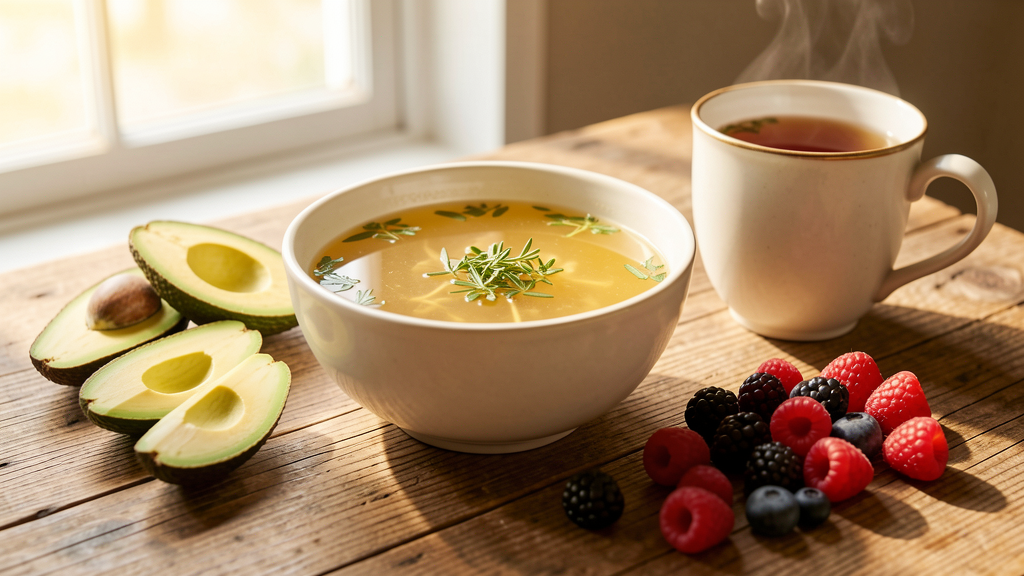
Phase 2 — Warm liquid starter (15 minutes before food): Bone broth or herbal tea. Bone broth is ideal because it provides easily digestible protein, minerals, and gelatin that coats and soothes the stomach lining. Kettle & Fire makes an organic, grass-fed option that’s widely available.
Phase 3 — Your main meal (after the warm liquid): Start with something gentle and gradually build up. A good template:
- Small portion of cooked vegetables (steamed broccoli, roasted sweet potato)
- Protein source (grilled chicken, baked salmon, or eggs)
- Healthy fats (avocado, olive oil drizzle, nuts)
- Complex carbs if desired (quinoa, rice, or sweet potato)
Avoid going straight for: raw salads, heavy dairy (cheese, ice cream), fried foods, or large portions of red meat. Your stomach acid isn’t fully up to speed, and these foods demand serious digestive effort.
Breaking a 48-72+ Hour Extended Fast
This is where it gets serious. If you’ve completed a 48-hour, 72-hour, or longer fast, breaking it correctly isn’t just about comfort — it’s about safety. Re-feeding syndrome is a real (though rare) risk with fasts longer than 72 hours, and even shorter extended fasts can cause serious digestive distress if done wrong.
⚠️ Important disclaimer: If you’ve fasted for 5+ days, consult a healthcare professional before refeeding. This guide covers 48-72 hour fasts, which are the most common extended fasts for non-medical purposes.
The 24-Hour Refeeding Protocol:
Hours 0-2 (First meal): Start with 4-6 oz of bone broth. Sip slowly over 15-20 minutes. Wait 30 minutes.
Hours 2-4 (Second meal): Add soft, easily digestible foods. Think steamed vegetables, mashed avocado, or a small portion of fermented vegetables (sauerkraut, kimchi). Keep portions small — think 200-300 calories max.
Hours 4-8 (Third meal): Now you can introduce a more complete meal. Include protein (fish, eggs, or chicken), cooked vegetables, and healthy fats. Keep it to 500-600 calories.
Hours 8-24: You can return to near-normal eating, but keep meals moderate and avoid your known trigger foods. Listen to your body — if something feels off, stop eating and wait.
Key products for extended fast refeeding:
- Bone broth: Kettle & Fire Organic Bone Broth — grass-fed, slow-simmered 20+ hours, rich in collagen and minerals
- Digestive enzymes: NOW Foods Super Enzymes — helps your body produce what it stopped making during the fast
- Probiotics: A quality probiotic helps restore gut bacteria that shifted during the fast
The Best Foods to Break Any Fast
Regardless of fast length, these foods are consistently gentle, nutritious, and effective for breaking a fast:
Tier 1: Start Here (First 30 Minutes)
- Bone broth — Liquid protein, easy to digest, replenishes sodium and potassium
- Watermelon or cantaloupe — High water content, natural electrolytes, gentle fiber
- A small handful of grapes or berries — Simple sugars for gentle blood sugar rise
- Cucumber slices — Hydrating, almost no digestive burden
Tier 2: Build Up (30-60 Minutes After Starting)
- Avocado — Healthy fats, potassium, fiber. One of the best post-fast foods in existence
- Steamed vegetables — Broccoli, zucchini, or asparagus. Cooking breaks down fiber, making them easier to digest
- Eggs — Complete protein, easy to digest, versatile
- Sauerkraut or kimchi — Fermented foods provide probiotics and enzymes your gut needs
Tier 3: Full Meal (1-2 Hours After Starting)
- Grilled chicken or fish — Lean protein that’s easy on the stomach
- Sweet potato — Complex carbs, fiber, potassium, and beta-carotene
- Nuts and seeds — Walnuts, almonds, chia seeds. Healthy fats and minerals
- Small salad with olive oil dressing — Wait until your stomach is fully “online” before tackling raw vegetables
Check Primal Kitchen Avocado Oil on Amazon →
Foods to Avoid When Breaking a Fast
Just as important as what you eat is what you don’t eat. These foods can cause serious discomfort or even health issues when reintroduced after fasting:
- Pizza and fried foods — High fat + refined carbs = digestive nightmare. Your bile production is reduced, so you can’t process heavy fats efficiently.
- Sugary drinks and candy — Blood sugar will spike dramatically and crash hard. After fasting, your insulin response is amplified, making sugar hits feel 10x worse.
- Large amounts of dairy — Cheese, ice cream, and creamy sauces require strong digestive enzymes that aren’t fully active yet.
- Raw cruciferous vegetables — Raw broccoli, cauliflower, and cabbage are hard to digest even under normal circumstances. Cook them first.
- Alcohol — Your liver is already working hard processing the metabolic byproducts of fasting. Adding alcohol puts excessive strain on it and hits you much harder than usual.
- Large portions of anything — Even healthy food can cause problems in large quantities. Start small and build up gradually.
Supplements That Help After Fasting
The right supplements can smooth the transition from fasting to eating. Here are the three I recommend most:
1. Bone Broth (Liquid Supplement)
Bone broth isn’t just food — it’s a functional supplement. It provides:
- Collagen and gelatin for gut lining repair
- Sodium, potassium, and magnesium (electrolytes)
- Glutamine, an amino acid that fuels intestinal cells
- Easy-to-absorb protein (10-12g per cup)
I keep Kettle & Fire Bone Broth stocked specifically for this purpose. Their chicken and beef varieties are both excellent.
2. Digestive Enzymes
After fasting, your body’s natural enzyme production takes time to ramp back up. A digestive enzyme supplement bridges that gap. Look for a broad-spectrum formula that includes:
- Protease — breaks down protein
- Lipase — breaks down fats
- Amylase — breaks down carbohydrates
- Lactase — breaks down dairy (if you plan to eat dairy)
NOW Foods Super Enzymes is my go-to — affordable, well-formulated, and widely available.
3. Probiotics
Fasting reshapes your gut microbiome. While this isn’t necessarily bad, reintroducing food after a fast is the perfect time to support beneficial bacteria with a quality probiotic. Look for one with multiple strains and at least 10 billion CFU.
Check Seed DS-01 Probiotic on Amazon →
Frequently Asked Questions
Can I break my fast with coffee?
Yes, but with caution. Black coffee is fine during a fast and can even be consumed right before your eating window opens. However, coffee stimulates stomach acid production, which can cause discomfort on an empty stomach if you’re sensitive. If you drink coffee to break your fast, start with a small amount and follow it with water 15 minutes before eating.
How long should I wait between breaking my fast and my biggest meal?
For a 16:8 fast, 15-30 minutes is usually enough. For a 24-hour fast, wait 30-60 minutes. For extended fasts (48+ hours), follow the 24-hour refeeding protocol outlined above — starting with small amounts and gradually increasing over the day.
Is it okay to break my fast with fruit?
Fruit is one of the best options for breaking a fast. Watermelon, berries, and cantaloupe are especially good because they’re high in water content and easy to digest. Avoid very acidic fruits like oranges or grapefruits on an extremely empty stomach, as they can cause discomfort.
What if I feel nauseous after eating post-fast?
Stop eating immediately and wait 30-60 minutes. Sip warm water or bone broth. Nausea usually means you ate too much, too fast, or too rich. Next time, start smaller and build up more slowly. If nausea persists for more than 2 hours, seek medical advice.
Can I exercise right after breaking my fast?
Avoid intense exercise immediately after breaking a fast. Your body needs 1-2 hours to digest and absorb nutrients. Light walking is fine. If you want to work out, do it during your fasted state (before eating) or wait at least 90 minutes after your first meal.
The Bottom Line
Breaking a fast properly isn’t complicated — it just requires a little patience and planning. The golden rule: start small, start gentle, and build up gradually.
For most people doing 16:8 intermittent fasting, a simple approach of “small snack, wait 15 minutes, then your normal meal” works perfectly. For longer fasts, the phased approach with bone broth, soft foods, and then a full meal over 4-8 hours is the safest path.
Keep these essentials on hand:
- Bone broth for your first post-fast sip
- Digestive enzymes to help your body catch up
- Electrolyte packets for hydration during the transition
Your fast did the hard work. Don’t undo it with a careless refeed. Treat the end of your fast with the same intentionality you brought to the fast itself.
As an Amazon Associate, I earn from qualifying purchases.
References
- Cienfuegos, S. et al. (2020). “Impact of 4- and 6-h Time-Restricted Feeding on Gut Microbiota.” Cell Metabolism, 31(6), 1283-1294.
- Mattson, M. P. et al. (2017). “Impact of Intermittent Fasting on Health and Disease Processes.” Ageing Research Reviews, 39, 46-58.
- Longo, V. D. & Panda, S. (2016). “Fasting, Circadian Rhythms, and Time-Restricted Feeding in Healthy Lifespan.” Cell Metabolism, 23(6), 1047-1059.
- Anton, S. D. et al. (2018). “Flipping the Metabolic Switch: Understanding and Applying the Health Benefits of Fasting.” Obesity, 26(2), 254-268.
Related posts:
 Does Coffee Break Your Fast? The Complete Science-Backed Guide for 2026
 How to Break a Fast With Bone Broth: The Complete 2026 Guide
 How to Break a Fast Safely: Complete Guide for 2026
 How To Refeed Properly And Break A Prolonged Intermittent Fasting Cycle
 How Long Until Autophagy Starts During Fasting? The Complete 2026 Guide