
Best CGMs for Fasting in 2026
If you’ve ever wondered whether your body is truly in fat-burning mode during a 16:8 fast, or whether that late-night snack spiked your glucose in ways you never imagined, you’re not alone. Continuous glucose monitors—once reserved for people managing diabetes—have exploded into the mainstream health and biohacking world, and they’re transforming how fasting practitioners understand their bodies.
Imagine seeing your blood sugar rise, fall, and stabilize in real time as you move through a fast. You could pinpoint exactly when ketosis kicks in, discover which foods wreck your metabolic health, and finally break through stubborn weight-loss plateaus with data instead of guesswork. That’s the promise of a continuous glucose monitor for fasting—and in 2026, the options have never been better.
In this guide, we’ll break down the top CGMs available right now, compare how they stack up for non-diabetics and fasting enthusiasts, and give you actionable tips to get the most out of your device. Whether you’re a seasoned faster or just beginning your intermittent fasting journey, this article will help you make a smart, informed decision.
Disclosure: As an Amazon Associate, I earn from qualifying purchases. This article contains affiliate links. Please see our full disclosure for details.
What Is a Continuous Glucose Monitor (CGM)?
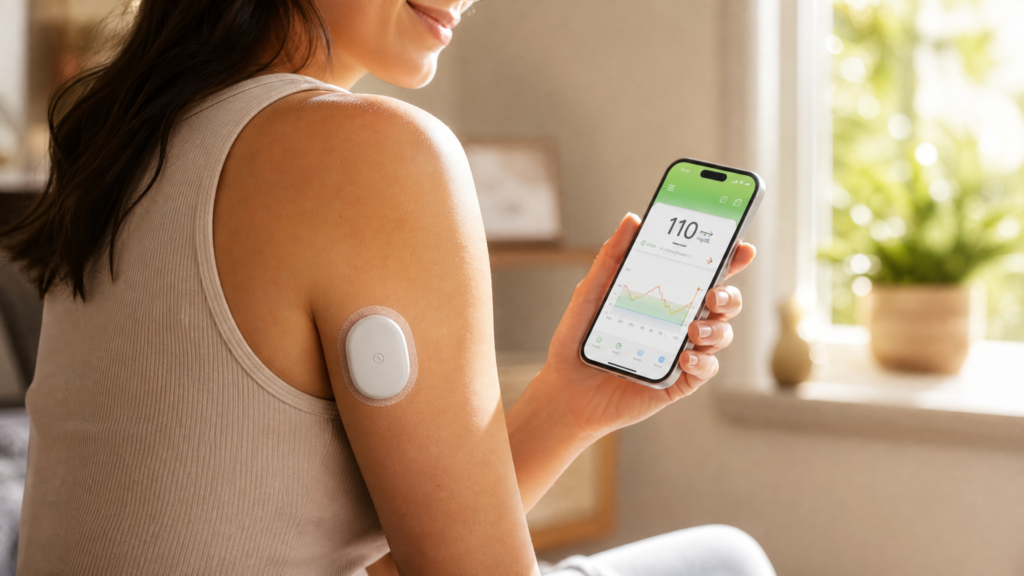
A continuous glucose monitor is a small wearable device that tracks your blood sugar levels throughout the day and night. Unlike a traditional finger-prick glucose meter—which gives you a single reading at one point in time—a CGM provides a constant stream of data, typically updating every one to five minutes.
Here’s how it works: A tiny sensor filament is inserted just beneath the skin (usually on the back of the upper arm or abdomen), where it measures glucose in the interstitial fluid—the fluid that surrounds your cells. A small transmitter sends that data wirelessly to your smartphone or a dedicated receiver, where you can view your glucose levels in real time and track trends over hours, days, and weeks.
The key difference from a traditional blood glucose monitor kit is continuity. A finger-prick meter tells you your blood sugar at the moment you prick your finger—say, fasting at 8 a.m. But a CGM shows you the entire arc: how your glucose drops overnight, the dawn phenomenon that causes a natural morning spike, and how it responds (or doesn’t) to exercise, stress, and sleep.
For fasting practitioners, this continuous data is gold. You no longer have to guess whether you’re in a fat-burning state or wonder why you feel sluggish at hour 18 of a 24-hour fast. A CGM gives you the objective feedback you need to optimize your fasting protocol with confidence.
In 2026, several CGM brands have made the jump from prescription-only medical devices to over-the-counter consumer products, making them more accessible and affordable than ever before. Let’s look at the best options available today.
Best CGMs for Non-Diabetics in 2026
The CGM landscape has shifted dramatically in the past two years. Where you once needed a diabetes diagnosis and a doctor’s prescription, you can now walk into a pharmacy or order online. Here’s how the top devices compare for fasting enthusiasts who don’t have diabetes.
Dexcom Stelo – Best Overall for Fasting Beginners
The Dexcom Stelo is arguably the best entry point for anyone new to CGMs and fasting. Priced at roughly $89 per month (including sensors and app access), it’s designed specifically for non-diabetics who want to understand their metabolic health.
Key features:
- 15-day sensor life—apply once, monitor for over two weeks
- Over-the-counter availability (no prescription required)
- Clean, intuitive smartphone app with personalized insights
- Automatic alerts for highs and lows (customizable thresholds)
- Integrates with Apple Health, Google Fit, and other wellness apps
For intermittent fasting, the Stelo is excellent because it makes trends easy to interpret. The app highlights your glucose variability score and shows you exactly how stable your blood sugar stays during a fast. The 15-day sensor life also means less hassle—you won’t be swapping sensors every week.
Abbott Lingo – Best for Wellness-Focused Fasters
Priced at approximately $91 per month, the Abbott Lingo takes a slightly different approach. While it tracks glucose continuously like other CGMs, Lingo is built around a broader wellness framework that includes insights about sleep, activity, and metabolic responses to food.
Key features:
- OTC availability—no prescription needed
- Built-in “Lingo Count” system that simplifies glucose management
- Designed specifically for non-diabetics pursuing wellness goals
- Tracks patterns across fasting, eating, and exercise windows
- 14-day sensor life
If you’re interested in the bigger picture—not just glucose, but how fasting fits into your overall health strategy—Lingo is worth considering. The app provides personalized coaching prompts and encourages behavioral changes that go beyond raw data.
Dexcom G7 – Best Accuracy for Data-Driven Fasters
The Dexcom G7 is the gold standard for accuracy, but it comes with a higher price tag and a prescription requirement. Expect to pay $300 or more per month without insurance, though some people find partial coverage through their healthcare provider.
Key features:
- Prescription required (designed for people with diabetes, but increasingly used by biohackers)
- 10-day sensor life (shorter than Stelo, but clinical-grade accuracy)
- MARD (Mean Absolute Relative Difference) under 8%—among the most accurate CGMs available
- Real-time alerts, customizable alarms, and shareable data
- Seamless integration with insulin pumps and health platforms
For serious data-driven fasters—people who are tracking autophagy markers, fine-tuning eating windows down to the hour, or working with a functional medicine practitioner—the G7’s superior accuracy may be worth the premium. The clinical-grade precision means you can trust the numbers when making meaningful decisions about your fasting protocol.
FreeStyle Libre 3 Plus – Best Value for Long-Term Users
Abbott’s FreeStyle Libre 3 Plus offers an excellent balance of accuracy, convenience, and cost for long-term fasting practitioners. It’s prescription-based but often covered by insurance for qualifying conditions, and the sensor life of 15 days keeps replacement costs manageable.
Key features:
- Prescription required
- 15-day sensor life
- No scanning required—continuous real-time data (unlike older Libre models)
- Compact, discreet design
- Strong accuracy competitive with the G7
The FreeStyle Libre 3 Plus is particularly popular among fasting communities because it strikes a practical balance: clinical-level accuracy without the G7’s premium price. If you’re fasting consistently and want reliable data over months, this is a strong choice.
How CGMs Help During Fasting
Knowing your glucose levels is one thing. Understanding how they map to your fasting practice is where the real magic happens. Here’s how a CGM transforms your approach to intermittent fasting and extended fasts.
Real-Time Glucose Tracking
During a fast, your glucose naturally declines as your body shifts from burning glucose to burning fat. A CGM lets you watch this transition happen in real time. You can see exactly when your levels drop into the range associated with ketosis (typically below 70 mg/dL) and how long it takes for your body to get there based on what you ate before the fast.
This data helps you optimize your pre-fast meals. You’ll quickly notice which foods cause prolonged glucose elevation—and therefore delay ketosis—and which ones lead to a smooth, rapid transition into fat-burning mode.
Autophagy Insights
While no consumer device directly measures autophagy—the cellular “cleanup” process that many fasting practitioners seek—stable, low glucose levels are a strong proxy indicator. When your glucose remains in a low, steady range for extended periods, it suggests the conditions for autophagy are likely present. A CGM lets you track those conditions with precision.
Identifying Optimal Eating Windows
One of the most practical benefits of using a CGM while fasting is learning which eating window works best for your body. By tracking glucose responses to meals eaten at different times, you might discover that a 16:8 protocol from noon to 8 p.m. produces much better glucose stability than eating from 8 a.m. to 4 p.m. These insights are highly individual, and a CGM makes them visible.
Breaking Through Plateaus
Weight-loss plateaus are frustrating, but CGM data can reveal hidden culprits. You might discover that certain “healthy” foods are causing unexpected glucose spikes that stall your progress, or that stress-induced cortisol is raising your baseline glucose. Armed with this data, you can make targeted adjustments to your fasting schedule, meal choices, or lifestyle habits.
For a deeper dive into optimizing your fasting protocol, check out our guide to the best fasting apps in 2026, which pair beautifully with CGM data to create a comprehensive fasting strategy.
CGM vs Traditional Glucose Meters
If you’ve been using a traditional finger-prick glucose meter to monitor your fasting, you might be wondering whether a CGM is really worth the investment. Let’s break down the differences.
Accuracy
Modern CGMs like the Dexcom G7 are remarkably accurate, with a MARD below 8%. However, traditional blood glucose meters (which measure blood directly) are still considered the most accurate method for point-in-time readings. For most fasting applications, the accuracy of today’s CGMs is more than sufficient—the continuous data more than compensates for the slight precision trade-off.
Convenience
This is where CGMs shine. A traditional meter requires you to prick your finger, apply blood to a strip, and wait for a reading—every single time. That means you’re likely checking your glucose once or twice a day at most. A CGM, by contrast, provides readings every few minutes automatically, 24 hours a day, while you sleep, exercise, and go about your life. The convenience factor alone makes it worth considering. You can find a solid blood glucose monitor kit on Amazon for under $30, but the data it provides is limited by how often you remember to use it.
Cost
Traditional glucose meters are inexpensive—often free or under $30—but test strips cost $0.25 to $1.00 each, and you’ll burn through them quickly if you’re checking frequently. A CGM runs $89–$300+ per month depending on the model, but the continuous data it provides is a fundamentally different product. For serious fasting practitioners who are tracking trends and making data-driven decisions, the value proposition is strong.
Best of Both Worlds
Many experienced fasters keep both a CGM and a finger-prick meter on hand. The CGM tracks continuous trends throughout the day, while the traditional meter serves as a spot-check for calibration or confirmation. It’s also handy during fasting when you want a quick reading without waiting for the CGM to update.
Tips for Using a CGM During Intermittent Fasting
Ready to put your CGM to work? Here are practical tips to get the most accurate data and actionable insights during your fasting practice.
Choose the Right Placement
Most CGM sensors are approved for the back of the upper arm or the abdomen. For fasting practitioners, the back of the arm tends to be the best spot—it’s less likely to interfere with exercise, sits more comfortably during sleep, and generally provides consistent readings. Avoid placing the sensor on areas with scars, moles, or areas that will be in direct contact with pressure during sleep.
You might also consider picking up some CGM patches and covers to protect your sensor during workouts, swimming, or extended wear. These adhesive patches help keep the sensor secure and can prevent premature dislodging—especially important if you’re active during your fasting window.
Stay Hydrated
Dehydration can affect CGM readings. During fasting, it’s easy to become mildly dehydrated (especially if you’re not supplementing with electrolytes). When dehydration sets in, the interstitial fluid that the CGM sensor reads becomes more concentrated, which can lead to inaccurate glucose readings. Drink plenty of water throughout your fast, and consider adding an electrolyte supplement for fasting to maintain proper hydration without breaking your fast.
For more on electrolytes during fasting, our guide to the best electrolyte supplements for fasting and keto covers everything you need to know.
Allow for the Warm-Up Period
Most CGMs require a warm-up period of 30 minutes to two hours after insertion before they begin providing readings. Don’t start a new sensor right before you expect important data. Plan ahead: apply a new sensor the night before or several hours before a significant fast begins.
Interpret the Data Holistically
A CGM will show you glucose spikes after meals, gradual declines during fasts, and sometimes surprising responses to stress or poor sleep. The key is to look at patterns over days and weeks, not individual readings. One high reading after a meal isn’t alarming—but a consistent pattern of elevated fasting glucose might indicate it’s time to adjust your eating window or food choices.
Tracking your glucose data alongside your fasting log is incredibly powerful. A dedicated fasting tracker journal can help you cross-reference your CGM data with sleep quality, stress levels, exercise, and meal timing. Over time, this holistic view reveals insights that raw glucose numbers alone can’t provide.
For more on tracking your fasting journey comprehensively, check out our roundup of the best fitness trackers for fasting in 2026.
Don’t Obsess Over Every Number
One common pitfall for new CGM users is becoming hyper-focused on individual readings. A glucose spike of 140 mg/dL after a meal isn’t necessarily a problem—what matters is how quickly your body brings it back down and what your baseline levels look like over time. Use the CGM as a long-term learning tool, not a source of daily anxiety.
Conclusion: Start Your CGM-Powered Fasting Journey
A continuous glucose monitor is one of the most valuable tools a fasting practitioner can have in 2026. Whether you choose the affordable, beginner-friendly Dexcom Stelo, the wellness-focused Abbott Lingo, the clinically precise Dexcom G7, or the well-balanced FreeStyle Libre 3 Plus, you’ll gain insights that transform your understanding of your body’s metabolic responses.
CGMs take the guesswork out of fasting. They show you when you’re in ketosis, how your body handles meals, and where hidden metabolic issues might be lurking. Combined with a solid fasting app and the right supplements, a CGM gives you a complete picture of your health that was simply impossible just a few years ago.
Ready to take the next step? Start by picking a CGM that fits your budget and goals, set it up with proper placement and hydration, and commit to tracking your data for at least 30 days. You’ll be amazed at what you learn about your body—and how much more effective your fasting practice becomes.
Frequently Asked Questions
Can I use a CGM if I don’t have diabetes?
Yes. In 2026, several CGMs—including the Dexcom Stelo and Abbott Lingo—are available over the counter specifically for non-diabetics. These devices are marketed toward health-conscious individuals who want to understand their metabolic health, optimize nutrition, and track glucose trends. You don’t need a diabetes diagnosis or a prescription for these models.
How much does a CGM cost per month for fasting?
Costs vary by brand. Over-the-counter options like the Dexcom Stelo and Abbott Lingo run roughly $89–$91 per month. Prescription models like the Dexcom G7 can cost $300 or more per month without insurance. The FreeStyle Libre 3 Plus falls somewhere in between, and partial insurance coverage may be available for some users. Factor in the value of the continuous data when evaluating the investment.
Will a CGM break my fast?
No. A CGM sensor is inserted just beneath the skin and uses no caloric or glucose-containing materials. It does not break a fast in any meaningful way. The device simply reads glucose levels in your interstitial fluid—it doesn’t introduce anything into your body.
How accurate are CGMs compared to finger-prick meters?
Modern CGMs are highly accurate, with top models like the Dexcom G7 achieving a MARD under 8%. However, traditional finger-prick meters remain slightly more accurate for point-in-time readings since they measure blood glucose directly. For fasting applications, CGM accuracy is more than sufficient, and the continuous data provides a much richer picture than occasional finger-prick readings.
How long does a CGM sensor last?
Sensor life depends on the model. The Dexcom Stelo and FreeStyle Libre 3 Plus offer 15-day sensors, while the Dexcom G7 lasts 10 days and the Abbott Lingo lasts 14 days. Most fasting practitioners find that 10–15 days per sensor is manageable, and the data collected during that window is well worth the replacement cycle.
Related posts:
 Best Continuous Glucose Monitors for Fasting in 2026: 5 CGMs Tested and Ranked
 Best Sugar-Free Snacks for Fasting and Keto in 2026 — Reddit’s Top Picks
 Best Supplements for Fasting and Muscle Preservation in 2026
 Best Fasting Tips and Wins This Week (May 11–17, 2026)
 Best Fasting Essentials: Your Weekly Roundup for May 31, 2026