
Ketosis and Fasting: The Science of Fat Burning
When you skip a meal or extend your overnight fast beyond 12 hours, your body begins a remarkable metabolic transformation. The sugar reserves that normally power your cells start to run low, and your liver kicks into a different gear entirely. This is the beginning of ketosis — a state where your body switches from burning glucose to burning fat for fuel.
Understanding ketosis is essential for anyone practicing intermittent fasting or extended fasting. It’s not just about losing weight. Ketosis fundamentally changes how your brain functions, how your muscles perform, and how your body preserves lean tissue during periods without food. In this deep dive, we’ll explore the science behind this metabolic switch, what actually happens inside your cells, and why ketone bodies might be one of evolution’s greatest survival innovations.
What Is Ketosis? The Metabolic Switch
Ketosis is a metabolic state characterized by elevated levels of ketone bodies in the blood or urine. Under normal eating conditions, your body runs primarily on glucose — a sugar derived from carbohydrates in your diet. Glucose is stored in your liver and muscles as glycogen, providing a quick-access energy reserve that your body taps into between meals.
But glycogen stores are finite. Your liver can hold roughly 80-100 grams of glycogen, and your muscles another 300-400 grams. Once these reserves deplete — typically after 12-36 hours of fasting, depending on activity level — your body needs an alternative fuel source. That’s when ketosis begins.
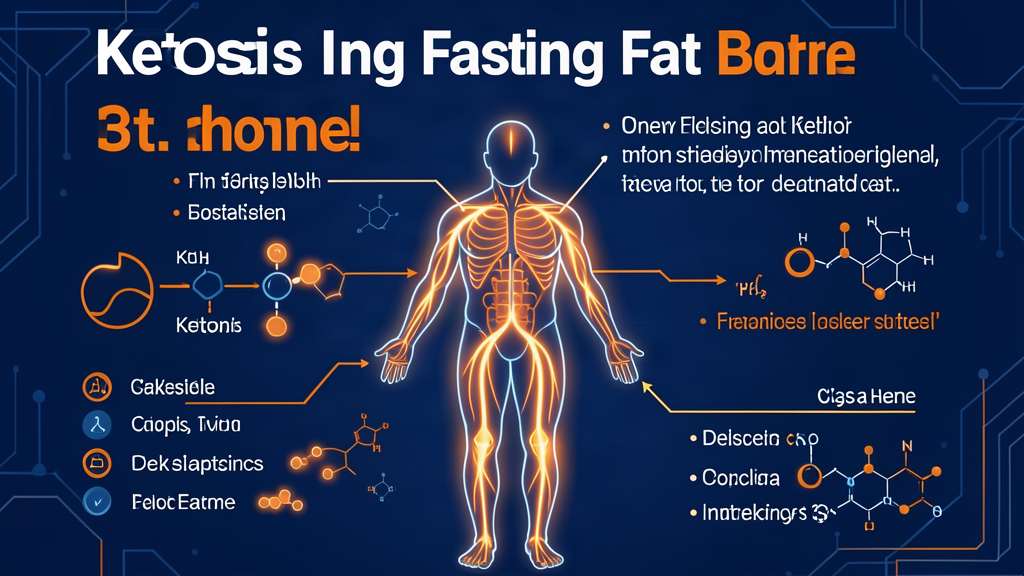
During ketosis, your liver breaks down fatty acids from stored body fat through a process called beta-oxidation. The resulting molecules are converted into ketone bodies: acetoacetate, beta-hydroxybutyrate (BHB), and acetone. These ketone bodies enter your bloodstream and travel to your brain, heart, and muscles, where they can be used as fuel in place of glucose. This metabolic switch isn’t a malfunction or a sign of starvation — it’s an evolutionary adaptation that allowed our ancestors to survive extended periods without food, sometimes lasting weeks.
How Fasting Triggers Ketosis: A Timeline
Understanding the timeline helps you know what to expect during your fasting practice. Here’s what happens inside your body as you progress through different stages:
Hours 0-12: The Fed State
After eating, your body absorbs nutrients and stores excess energy. Insulin levels rise, promoting glucose uptake and glycogen storage. Your body runs on the food you just ate. This is why many intermittent fasting protocols start with a 12-hour overnight fast — it simply extends the natural period between meals without requiring any metabolic adaptation.
Hours 12-18: The Transition Zone
As your last meal is fully digested, insulin levels drop. Your body starts transitioning from dietary glucose to tapping into glycogen stores. You might notice your breath becoming slightly fruity — this is acetone, one of the ketone bodies, being exhaled as your body prepares for the metabolic switch. Hunger hormones like ghrelin may spike during this transition, but they typically normalize within a few days of consistent fasting practice.
Hours 18-24: Ketosis Begins
Glycogen stores are significantly depleted, and your liver ramps up fatty acid oxidation. Ketone body production increases measurably. Your brain starts utilizing ketone bodies for fuel. Many people report improved mental clarity during this phase — a quality blood ketone meter can help you track this transition and understand your personal metabolic timeline.
Hours 24-48: Full Ketosis
By this point, you’re firmly in ketosis with blood ketone levels typically ranging from 0.5-3.0 mM. Fat oxidation is now your body’s primary energy pathway. Your muscles efficiently burn fatty acids while your brain runs on a mixture of glucose (produced through gluconeogenesis from amino acids and glycerol) and ketone bodies. Growth hormone levels increase significantly, helping preserve muscle mass while promoting fat mobilization.
Days 3-7: Adaptation and Optimization
For those practicing extended fasts, this period represents metabolic adaptation. Your body becomes increasingly efficient at using ketones as fuel. Many people report reduced hunger, stable energy throughout the day, and enhanced mental focus. Quality electrolyte supplements become crucial during this phase as your kidneys excrete more sodium and water in response to falling insulin levels.
Ketone Bodies: The Brain’s Alternative Fuel
Your brain is an energy-hungry organ, consuming roughly 20% of your body’s total energy despite being only 2% of your body weight. Under normal conditions, it runs almost exclusively on glucose. But glucose cannot efficiently cross the blood-brain barrier in large quantities. Fatty acids, while abundant during fasting, are too large and hydrophobic to enter brain tissue easily.
This is where ketone bodies become essential. Beta-hydroxybutyrate (BHB), the most abundant ketone body during fasting, crosses the blood-brain barrier through specific monocarboxylate transporters (MCT1 and MCT2). Once inside brain cells, BHB is converted back into acetyl-CoA, which enters the citric acid cycle to produce ATP — the cellular energy currency that powers everything from thought to movement.
The efficiency of this process is remarkable. Ketone bodies actually produce more ATP per unit of oxygen consumed than glucose does. Some researchers describe ketones as a “super fuel” for the brain, producing less oxidative stress and fewer reactive oxygen species during metabolism. This may explain why many people experience improved cognitive function, reduced brain fog, and enhanced mental clarity during fasting-induced ketosis. The brain essentially runs cleaner on ketones than on glucose.
Ketosis vs. Ketoacidosis: The Critical Difference
A common concern about fasting and ketosis is confusion with diabetic ketoacidosis (DKA), a life-threatening condition. Understanding the distinction is crucial for safe fasting practice and for addressing the misconceptions that sometimes surround ketogenic diets and fasting.
Physiological ketosis — the state induced by fasting or ketogenic diets — is tightly regulated by your body’s feedback mechanisms. Blood ketone concentrations during fasting typically stay between 0.5-3.0 mM. Your pancreas still produces some insulin, even during extended fasting, which keeps ketone production in check. This is a natural, safe metabolic state that humans have experienced throughout evolutionary history. Your body has multiple redundant systems to prevent ketone levels from rising to dangerous concentrations.
Diabetic ketoacidosis, by contrast, occurs almost exclusively in people with type 1 diabetes (or very advanced type 2 diabetes) who produce little to no insulin. Without insulin’s regulatory effect on ketone production, the process spirals unchecked. Blood ketone levels can exceed 10-25 mM — far beyond what occurs in physiological ketosis. The blood becomes acidic (pH drops below 7.3), leading to a medical emergency requiring immediate treatment with insulin and fluids.
For healthy individuals practicing intermittent or extended fasting, ketoacidosis is extremely rare. Your body maintains sufficient insulin production to regulate ketone levels within a safe range. Even during prolonged fasts of 7-14 days, blood ketone levels rarely exceed 5-6 mM in healthy people. The risk increases only in those with pre-existing insulin deficiency or certain rare metabolic conditions.
Benefits of Fasting-Induced Ketosis
Enhanced Fat Burning
During ketosis, your body becomes highly efficient at accessing and burning stored body fat. With insulin levels low and fat oxidation elevated, your adipose tissue releases fatty acids that are transported to your liver and converted into ketone bodies. Studies show that fasting-induced ketosis preferentially targets visceral fat — the dangerous fat surrounding your organs — more effectively than simple caloric restriction. This makes fasting a particularly powerful tool for improving metabolic health markers beyond just the number on the scale.
Neuroprotection
Ketone bodies provide clean-burning fuel for your brain with less oxidative stress than glucose. Additionally, BDNF (brain-derived neurotrophic factor) production increases during ketosis, supporting neuroplasticity — your brain’s ability to form new neural connections and strengthen existing ones. Research suggests these mechanisms may offer protection against neurodegenerative conditions. Maintaining metabolic flexibility through periodic fasting may support long-term brain health and cognitive function.
Muscle Preservation
Well-managed fasting and ketosis help preserve muscle mass. During fasting, growth hormone levels increase significantly — some studies show up to 300-500% elevation during multi-day fasts. This hormonal response, combined with ketones’ protein-sparing effect, helps maintain lean tissue while your body burns fat for fuel. The key is that your body preferentially burns fat when ketones are available, reducing the need to break down muscle protein for glucose production through gluconeogenesis.
Reduced Inflammation
Beta-hydroxybutyrate, the primary ketone body, has been shown to inhibit the NLRP3 inflammasome — a protein complex involved in inflammatory responses. Chronic low-grade inflammation is implicated in numerous age-related conditions, from cardiovascular disease to cognitive decline. By periodically entering ketosis through fasting, you may help modulate inflammatory pathways and support your body’s natural anti-inflammatory processes.
Practical Tips for Optimizing Ketosis
Timing Your Fasts: For nutritional ketosis, fast for at least 18-24 hours. Most people begin producing measurable ketones after 16-20 hours of fasting, with levels rising significantly after 24 hours. For cognitive benefits, consider extending to 36-48 hours periodically, as this is when ketone levels typically reach their peak for most people and the neuroprotective effects become more pronounced.
Electrolyte Management: During ketosis, your kidneys excrete more sodium and water as insulin levels drop. Supplement with sodium (1-2 grams), potassium (1-2 grams), and magnesium (300-400 mg) daily during extended fasts. This prevents the “keto flu” symptoms — headache, fatigue, irritability — that can make fasting unnecessarily difficult. Electrolyte packets like LMNT provide a convenient way to maintain mineral balance without breaking your fast.
Supplement Support: MCT oil provides readily convertible fatty acids that the liver quickly turns into ketones, potentially easing the transition into ketosis. Exogenous ketones (BHB salts or esters) can raise blood ketone levels even during eating windows, allowing you to experience some benefits of ketosis without strict fasting. Quality electrolyte supplements designed specifically for fasting help maintain mineral balance during the diuretic phase of early ketosis.
Breaking Your Fast Wisely: When exiting ketosis, reintroduce carbohydrates gradually. A sudden influx of sugar after a prolonged fast can cause digestive discomfort and blood sugar spikes. Start with easily digestible foods like bone broth, small portions of vegetables, or a handful of nuts before transitioning to your regular meals. This gentle re-entry helps maintain the metabolic benefits you’ve built up during your fast.
Conclusion: Embracing Your Metabolic Flexibility
Ketosis during fasting isn’t a dangerous deviation from normal metabolism — it’s a return to our evolutionary heritage. For most of human history, our ancestors experienced regular periods without food, and their bodies developed sophisticated mechanisms to maintain energy production through fat oxidation and ketone body synthesis.
By understanding the science behind ketosis, you can fast more safely and effectively. You’ll know what to expect as your body transitions between fuel sources, how to support the process with proper nutrition and supplementation, and why those periods of extended fasting may offer benefits far beyond the scale.
The metabolic switch to ketosis represents one of your body’s most elegant survival adaptations. By practicing periodic fasting and supporting the process with evidence-based nutrition, you tap into this ancient pathway — potentially improving your cognitive function, supporting healthy body composition, and enhancing your overall metabolic health.
Ready to optimize your fasting practice? Explore our recommended fasting supplements on Amazon to support your journey into ketosis.
As an Amazon Associate, I earn from qualifying purchases.
Frequently Asked Questions
How long does it take to enter ketosis during a fast?
Most people begin producing measurable ketones after 16-24 hours of fasting. However, the time varies based on your glycogen stores (influenced by your last meal’s carbohydrate content), activity level, and metabolic efficiency. Athletes with depleted glycogen stores may enter ketosis faster, while someone who recently ate a high-carb meal may take longer. Blood ketone levels typically reach 0.5-1.0 mM after 24-48 hours of fasting.
Can I test my ketone levels at home?
Yes, several methods exist for measuring ketones. Blood meters (like Keto-Mojo) measure beta-hydroxybutyrate and provide the most accurate readings. Urine strips measure acetoacetate and are less expensive but become less reliable as your body adapts to ketosis. Breath meters measure acetone and offer a non-invasive option. For fasting purposes, blood ketone meters provide the most useful data for tracking your metabolic state and understanding your personal response to different fasting durations.
Is ketosis safe for everyone during fasting?
For healthy adults, fasting-induced ketosis is generally safe. However, certain individuals should exercise caution or avoid prolonged fasting: pregnant or breastfeeding women, people with type 1 diabetes (risk of ketoacidosis), those with a history of eating disorders, individuals taking certain medications (especially insulin or sulfonylureas), and people with rare metabolic disorders like carnitine deficiency. Always consult a healthcare provider before starting extended fasts, especially if you have underlying health conditions.
What’s the difference between nutritional ketosis and fasting ketosis?
Nutritional ketosis is achieved through a very low-carb, high-fat diet (typically under 20-50g carbs daily), while fasting ketosis occurs during periods without food. Both result in elevated ketone levels, but fasting ketosis typically produces higher BHB levels because it combines carb restriction with caloric restriction. Fasting ketosis also activates additional pathways like autophagy more strongly than nutritional ketosis alone. Many practitioners combine both approaches — eating a ketogenic diet while incorporating regular fasting windows for synergistic benefits.
Will fasting ketosis cause muscle loss?
Well-managed fasting ketosis actually helps preserve muscle mass. During fasting, growth hormone levels increase significantly (some studies show up to 300-500% elevation during multi-day fasts). This hormonal response, combined with ketone bodies’ protein-sparing effect, helps maintain lean tissue while your body burns fat for fuel. Studies show that during multi-day fasts, the majority of weight lost comes from fat stores, not muscle tissue. The key is adequate electrolyte intake and avoiding excessively prolonged fasts without medical supervision.
Related posts:
 Most Popular Intermittent Fasting Techniques For Increasing Fat Burning And Promoting Ketosis
 The Role Of Extended Fasting In Promoting Ketosis And Fat Adaption
 Metabolic Flexibility and Fasting: Train to Burn Fat
 Ketone Testing During Fasting: Why Your Strips Drop and the Best Ways to Measure Ketosis in 2026
 Fasting For Weight Loss: Understanding Ketosis