
How to Read Food Labels for Intermittent Fasting: 2026 Guide
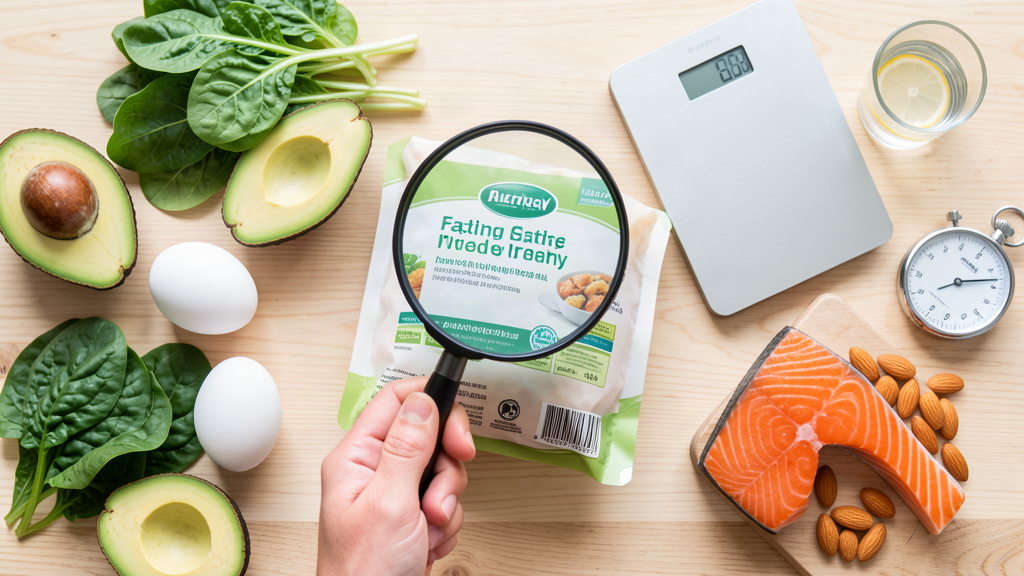
You can do everything right during your fasting window and still stall. You drink your black coffee, you close your eating window on time, you keep your electrolytes dialed in — and then a single “healthy” smoothie or a “no sugar added” bar quietly undoes a week of progress. The problem is rarely willpower. The problem is the label. Most fasters skim the front of the package, trust the marketing, and move on. But the Nutrition Facts panel and ingredient list tell a much more honest story than the front of the box ever will, and learning to read them is one of the highest-leverage skills you can build in 2026.
This guide walks you through exactly how to read food labels for intermittent fasting — from serving sizes and added sugars to net carbs, sugar alcohols, and the hidden sweetener names that show up in places you would never expect. Along the way, you will get a simple step-by-step system you can use at the grocery store in under a minute per product, plus the tools that make the whole process faster and more accurate.
Why Food Labels Matter More When You Fast
If you eat three meals a day, a mediocre food choice is a small bump. When you eat one or two meals inside a tight eating window, every single item you consume carries far more weight. There is simply nowhere for a hidden 30 grams of sugar to hide. During your eating window, that sugar means a bigger insulin spike, more stored fat instead of burned fat, and usually a crash in energy an hour later. If you are eating low-carb or ketogenic to deepen ketosis and autophagy, the label is the difference between staying in ketosis and silently dropping out of it.
Labels matter during the fast itself, too. Anything with meaningful calories or a meaningful insulin response technically breaks a fast, which is why the ingredient list on an electrolyte powder, a flavored coffee creamer, or a “zero calorie” drink deserves the same scrutiny as a candy bar. Our breakdown of what actually breaks a fast covers the science of which ingredients count and which do not, but the short version is this: the label is the gatekeeper. If it is on the panel, it is in your body.
There is also a timing dimension most people miss. Even when something fits your macros, eating large amounts of sugar right after breaking a fast tends to produce a sharper glucose swing than the same amount eaten later in the day, because your body is primed to absorb nutrients quickly after an overnight fast. Reading the label carefully lets you break your fast deliberately instead of impulsively — the same principle behind our guide on how to break your fast properly.
Step 1: Start With the Serving Size
Every mistake on a Nutrition Facts panel starts here, because the entire panel is scaled to one serving — and companies get to choose what counts as one serving. The FDA updated the label format between 2020 and 2021 to make this harder to game: calories and serving sizes are now printed in larger, bolder type, servings per container are more prominent, and reference amounts for common foods were updated to reflect what people actually eat in one sitting. But companies still have room to define servings in creative ways, and they use it.
A bag of chips that looks like a reasonable snack often lists two or three servings. A popular bottled coffee drink may show 120 calories per serving while the bottle contains two servings — meaning the 340-calorie drink in your hand is really a 680-calorie, 50-gram-sugar meal in disguise. A pint of ice cream, a family-size cookie pouch, and a “single serve” muffin are all classic offenders. The front of the package sells you one story; the servings line quietly tells another.
Here is the habit to build: before you look at anything else, find the servings per container line and multiply. If a package lists 2.5 servings, mentally double or triple every number on the panel. That single habit eliminates the most common label-reading error in one second. When you compare two products, always compare them at the same real-world amount — the whole container, or a fixed weight like 100 grams — not the serving sizes the manufacturers happen to choose.
Step 2: Decode the Added Sugars Line
Underneath Total Sugars, the modern label includes one line that changed everything for fasters and keto followers: “Includes Xg Added Sugars.” This line separates sugars the manufacturer put into the product — syrups, cane sugar, honey, fruit juice concentrate — from sugars that occur naturally in whole foods like plain yogurt or milk. A plain Greek yogurt with 6 grams of naturally occurring lactose is a very different food from a flavored yogurt with 6 grams of added cane sugar on top of its natural lactose, and the updated label finally lets you see that difference at a glance.
Use the percentage Daily Value to calibrate your decisions. On a 2,000-calorie diet, the FDA sets the Daily Value for added sugars at 50 grams per day. The American Heart Association takes a stricter position — roughly 25 grams per day for women and 36 grams for men — which is closer to what most keto and fasting protocols actually target. On the panel itself, 5% of the Daily Value or less per serving counts as low, while 20% or more counts as high. A protein bar with “only 9 grams of sugar” sounds innocent until you realize that is 18% of the daily added-sugar allowance in a single snack — and most people eat two servings anyway.
Watch for the phrases that sound reassuring but mean nothing useful. “No sugar added” means no sugars were added during processing; it does not mean the product is low in sugar, because plenty of foods carry large amounts of naturally occurring sugar on their own. “Unsweetened” is a stronger claim, but it says nothing about carbs, starches, or sugar alcohols further down the panel. And the word “natural” on a front-of-package label has no regulated definition behind it at all — it is marketing, not nutrition.
Step 3: Calculate Net Carbs From Fiber and Sugar Alcohols
For anyone fasting to stay in ketosis, net carbs are the number that actually matters, and the standard calculation is simple: take Total Carbohydrates, subtract Dietary Fiber, and subtract sugar alcohols. Fiber passes through your digestive system without raising blood sugar the way starches and sugars do, so most keto protocols do not count it against your carb limit. This is why two products can show identical total-carbohydrate numbers on the panel while producing completely different effects on your blood glucose and ketone levels.
Sugar alcohols need more nuance than fiber does. Not all sugar alcohols behave the same way. Erythritol has a glycemic impact of essentially zero, and most fasters subtract it in full. Maltitol is a different story — it has a meaningfully higher glycemic impact and is the reason so many “sugar-free” candy and chocolate products still trigger cravings, digestive upset, and stalled progress. The conservative approach many experienced fasters follow is to subtract erythritol fully and only half of other sugar alcohols, then adjust based on how your body actually responds. If you want to see this play out in real time rather than guess, a continuous glucose monitor makes the effect unmistakable — our guide to using a CGM while fasting shows you how to set that up.
One more ingredient worth knowing: allulose, a rare sugar that tastes like table sugar but does not spike blood sugar the way sucrose does. It shows up in more keto-friendly products every year, and while it does contain some calories, many fasters treat it as effectively zero-impact for carb counting. If a product’s carb count looks too good to be true, check whether allulose, erythritol, or another sugar alcohol is doing the heavy lifting on the ingredient list.
Step 4: Read the Ingredient List Like a Detective
The Nutrition Facts panel tells you how much; the ingredient list tells you what. Ingredients are required to appear in descending order by weight, which means the first three to five items dominate the product. If sugar or a syrup appears in the first three positions, no amount of clever marketing on the front of the package changes what the product fundamentally is. Flip the box over first, read the top of the list, and only then decide whether the rest of the panel is worth your attention.
The single biggest trap is that sugar hides under dozens of names. Beyond the obvious cane sugar, honey, and molasses, watch for dextrose, maltose, sucrose, glucose, rice syrup, malt syrup, fruit juice concentrate, evaporated cane juice, agave nectar, and — perhaps the sneakiest of all — maltodextrin. Maltodextrin has a higher glycemic index than table sugar and is used in tiny amounts precisely because it dissolves invisibly into products that taste only mildly sweet. A “no sugar added” energy bar can be carrying a fast-drying starch payload that hits your bloodstream faster than the sugar you were trying to avoid.
Protein powders deserve special suspicion here, because they are one of the products fasters trust most blindly. Many popular powders are sweetened with sugar, sugar alcohols, or maltodextrin to make them taste like a milkshake, and the carb counts add up fast when you are mixing two scoops at a time. Read the sweetener section of the panel, not just the protein line — a powder with 30 grams of protein and 15 grams of sugar is not the clean fuel most people assume they are drinking.
Step 5: Spot the Hidden Sugar Traps in Drinks and Supplements
If packaged solid foods are where sugar hides, drinks are where it lives in plain sight. A 16-ounce flavored latte from a coffee chain can carry 40 to 50 grams of sugar — roughly a day’s worth of added sugar in a single cup. Bottled iced teas, smoothies marketed as health food, cold-pressed juices, and even many sports drinks are in the same territory. During a fast, any of these ends it immediately. During your eating window, they deliver a sugar load that can undo a full day of careful eating in minutes.
Electrolyte products are the other category to audit carefully, and they are easy to overlook because the category earned its reputation as fasting-friendly. Plenty of popular electrolyte powders and drink mixes are sweetened with sugar or loaded with dextrins, which quietly break your fast and stall ketosis — the exact opposite of what you reached for them to do. When you are evaluating one, run it through the same two-step check: does the added-sugars line come in under a gram, and does the ingredient list avoid maltodextrin and cane sugar entirely? Our roundup of the best electrolyte powders for fasting covers which formulas actually pass that test.
Supplement capsules, gummies, and chewables fall into the same trap. Many gummy vitamins and “immune support” chews are essentially candy with a vitamin label attached — often 2 to 5 grams of added sugar per serving, with serving sizes conveniently set at two or three gummies when the bottle really holds far more. If it tastes like candy, read the panel before you decide it is medicine.
Common Label-Reading Mistakes Fasters Make
Even experienced fasters fall into predictable patterns. The first is trusting the front of the package. “Keto,” “low carb,” “sugar free,” and “all natural” are marketing claims, not regulated nutrition statements — the only numbers that count are the ones on the panel and the ingredients behind it. The second mistake is comparing per-serving numbers between products with different serving sizes, which is how a “lower calorie” choice turns out to be the higher-calorie one at the amount you actually eat.
The third mistake is ignoring liquid calories almost entirely, because drinks feel less like eating. Creamers, flavored syrups, protein shakes, and kombucha are the most common sources of unplanned calories during a strict eating window. The fourth is trusting portion estimates instead of measuring. Most people pour roughly double the serving size they think they are pouring, and that error compounds with calorie-dense foods like nut butters, oils, nuts, and granola. A simple digital kitchen scale removes the guesswork entirely, and once you weigh a handful of almonds a single time, you never estimate again by eye.
Finally, there is the sugar-alcohol blind spot: buying “sugar-free” products and eating them freely because the label says zero sugar, when the sugar alcohols inside them can still affect blood glucose, appetite, and digestion — maltitol especially. Zero sugar on the label is not zero impact in the body. Treat sugar alcohols as a separate line to evaluate, not as a free pass.
Tools That Make Label Reading Easier
A good label habit does not require much equipment, but the right few tools remove most of the friction and make accuracy automatic. The first is a reliable digital kitchen scale. Scales solve the single largest source of label error — portion estimation — and they turn vague serving sizes like “about a handful” into precise grams you can look up and repeat. If you want the label-reading math done for you, smart scales pair with an app that pulls up nutrition data for thousands of foods the moment you weigh them.
The second tool is a clean-label electrolyte formula. Since electrolytes are the supplement most fasters rely on daily, and the category is full of sweetened products, keeping one verified zero-sugar option in rotation is worth the effort. LMNT electrolyte packets are a popular choice precisely because the ingredient list is short, the added-sugar line reads zero grams, and there is no maltodextrin hiding in the formula — the exact standard this guide teaches you to apply everywhere else.
Third, if you drink protein shakes inside your eating window, audit the powder the same way you audit any packaged food. A clean organic protein powder with a short ingredient list and minimal added sugar behaves very differently from a dessert-flavored blend loaded with sucralose blends and maltodextrin. Take thirty seconds to read the panel before you commit to a tub, because you will be drinking it daily for weeks.
Frequently Asked Questions
Does anything with sugar break a fast?
For most fasting goals, yes — anything with meaningful calories or a meaningful insulin response ends a fast. Sugar is the most direct way to trigger both. Zero-calorie sweeteners occupy a gray area: some raise insulin and some do not, and the only reliable way to know which category you fall into is to test your own response. The full guide on what breaks a fast walks through each common ingredient in detail.
How do I calculate net carbs on a US nutrition label?
Take Total Carbohydrates, subtract Dietary Fiber, then subtract sugar alcohols. Most fasters subtract erythritol in full and only half of other sugar alcohols like maltitol, then adjust based on personal response. If a product contains allulose, many protocols treat it as effectively zero-impact for carb counting purposes.
Is “no sugar added” safe during fasting?
Not on its own. “No sugar added” only means the manufacturer did not add sugars during processing — the product can still contain plenty of naturally occurring sugar. It also says nothing about starches, sugar alcohols, or maltodextrin. Always check the added-sugars line and the ingredient list rather than trusting the front-of-package claim.
Which sugar alcohols are safest on keto?
Erythritol has essentially zero glycemic impact and is the most fasting-friendly option. Maltitol has a meaningful glycemic impact and is the most common reason people stall on “sugar-free” products. Sorbitol and xylitol fall in between. If a product lists maltitol as its primary sweetener, treat the zero-sugar claim with skepticism.
How much added sugar can I have during my eating window?
The FDA Daily Value is 50 grams per day on a 2,000-calorie diet, and the American Heart Association recommends closer to 25 grams for women and 36 grams for men. Most people doing intermittent fasting with a low-carb or ketogenic approach aim well below those numbers, using the 5%-or-less rule of thumb: anything at or below 5% of the Daily Value per serving is low, and anything at or above 20% is high.
The Bottom Line
Reading a food label well is not complicated — it is a five-step habit you can run in under a minute: check the servings per container, read the added-sugars line, calculate net carbs, scan the first few ingredients for hidden sugar names, and give drinks and supplements the same scrutiny you give solid food. Do that consistently and the label stops being a source of confusion and starts being one of your most useful tools for protecting your fast, staying in ketosis, and making your eating window count.
If you are building a label-reading habit this month, start with the three tools above — a kitchen scale, a clean electrolyte formula, and an honest protein powder — and audit one pantry item every time you grocery shop. Small, consistent checks beat occasional perfection, and the links above take you straight to the products that make it easy. As an Amazon Associate, I earn from qualifying purchases.