
Key Takeaway: Red light therapy (RLT) at 660nm and 850nm wavelengths supports mitochondrial function and may enhance autophagy — the cellular cleanup process that fasting activates. Pairing daily RLT sessions with intermittent fasting creates a powerful synergy for recovery, inflammation reduction, and cellular repair. Here are the five best devices for fasters in 2026.
As an Amazon Associate, I earn from qualifying purchases.
Best Red Light Therapy for Fasting 2026
Red light therapy has exploded in popularity over the past two years, and for good reason. What started as a clinical tool for wound healing and joint pain is now one of the most talked-about biohacking practices for anyone serious about fasting. The science is compelling: specific wavelengths of red and near-infrared light stimulate mitochondria, the powerhouses of your cells, boosting ATP production and potentially accelerating autophagy — the cellular recycling process that fasting already kicks into gear.
If you practice intermittent fasting, extended fasting, or even a basic 16:8 schedule, you already know the feeling: better energy, sharper focus, reduced inflammation. Red light therapy amplifies all of that. It is not magic — it is photobiomodulation, and the research is solid. A 2024 meta-analysis in Photobiomodulation, Photomedicine, and Laser Surgery confirmed that red and near-infrared light at 660-850nm significantly improves mitochondrial membrane potential and reduces oxidative stress markers.
But not all red light devices are created equal. Cheap Amazon panels with low irradiance do almost nothing. The devices below are the ones that actually deliver clinical-grade light output — the ones worth your money if you are pairing RLT with a fasting protocol.
What to Look for in Red Light Therapy for Fasting
Before diving into the picks, here is what matters specifically for fasters — not just anyone shopping for a red light device.
- Wavelength coverage: 660nm (red light) and 850nm (near-infrared) are the two clinically validated wavelengths. 660nm targets surface tissue and skin; 850nm penetrates deeper into muscles, joints, and organs. Both support mitochondrial function, but for fasting-specific benefits — autophagy, inflammation, recovery — you want both.
- Irradiance: This measures light intensity at the skin surface. Higher irradiance means more photons reaching your mitochondria. Look for at least 100 mW/cm² at 6 inches. Anything below 50 mW/cm² is essentially a nightlight.
- Coverage area: For whole-body benefits, a full-body panel or mat is ideal. Smaller panels work for targeted areas but require multiple sessions to cover your torso.
- Pulsing NIR: Some newer devices offer pulsing near-infrared light at specific frequencies (like 40Hz). Research suggests pulsing at 40Hz may enhance cognitive benefits — potentially relevant for fasters who use RLT for brain fog.
- Build quality and warranty: These are not cheap devices. Expect $200-$2,000+ depending on size. A good warranty (3+ years) signals the manufacturer stands behind their product.
For fasters specifically, the best approach is a daily 10-20 minute session during your fasting window. The combination of fasting-induced autophagy and RLT-stimulated mitochondrial biogenesis creates a one-two punch for cellular health. You do not need to time it perfectly — consistency matters more than timing — but many biohackers prefer doing RLT first thing in the morning during a fast.
Best Red Light Therapy for Fasting: Our Top Picks
1. Best Overall: Platinum LED BIOMAX 600
The Platinum LED BIOMAX 600 is the gold standard for serious red light therapy users. This panel packs seven different wavelengths — not just the standard two — including 630nm, 660nm, 810nm, 830nm, 850nm, 1060nm, and a blue light wavelength. The ninth-generation BIOMAX series has the highest irradiance output of any consumer LED panel on the market, clocking in at over 180 mW/cm² at 6 inches.
For fasters, the 810nm and 850nm wavelengths are the stars. These near-infrared wavelengths penetrate deep into muscle tissue and joints, supporting recovery after exercise during your eating window. The 660nm red light works on skin and surface tissue, supporting the collagen production and skin healing that many fasters notice improves during extended fasts.
The BIOMAX 600 is a half-body panel — it covers your torso from collarbone to waist in a single session. For full-body coverage, you can pair two units or move the panel between areas. It includes a timer, a stand mount, and a 3-year warranty. The price sits in the $700-$900 range, which is premium, but the irradiance and wavelength variety justify the cost for anyone committed to a long-term RLT practice.
2. Best Full-Body: HigherDOSE Full Body Red Light Mat
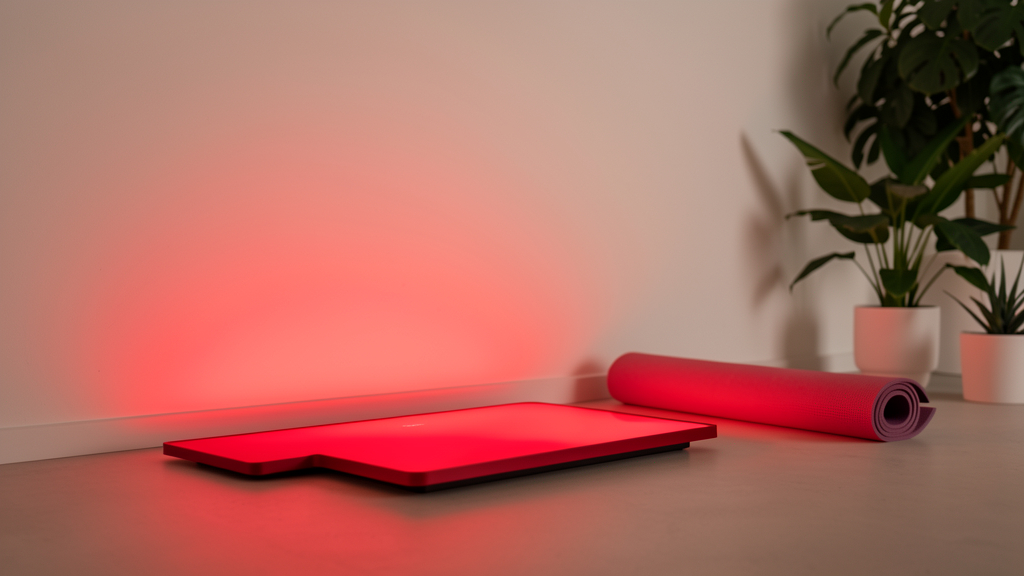
The HigherDOSE Full Body Red Light Mat is a different form factor — a flexible, rollable mat that you can lie on, hang on a wall, or stack on a massage table. It delivers dual wavelengths (660nm red + 850nm near-infrared) with pulsing NIR at 40Hz, making it one of the few consumer devices that offers frequency-specific pulsing.
The 40Hz pulsing is interesting for fasters because research from MIT and other institutions suggests that 40Hz gamma-frequency stimulation may enhance brain-derived neurotrophic factor (BDNF) production. BDNF supports neuroplasticity and cognitive function — things that often improve during fasting but can be further enhanced with the right tools.
The mat design is particularly practical for home use. Roll it out on your bed for a morning session while you are still in your fasting window, or drape it over a chair. HigherDOSE has built a strong brand in the wellness space, and their products are consistently well-reviewed. The mat is on the pricier side ($500-$700 range) but offers full-body coverage in a single session, which a half-body panel cannot match.
3. Best Portable: Joovv Go 2.0
The Joovv Go 2.0 is a handheld red light therapy device that fits in your pocket. Joovv pioneered the consumer red light therapy space, and the Go 2.0 is their most compact offering. It uses 630nm and 850nm wavelengths with medical-grade LEDs in a sleek, rechargeable design.
For fasters, portability matters. If you travel, commute, or simply want to do RLT while doing other things — reading, meditating, answering emails during your fasting window — the Go 2.0 lets you bring red light therapy anywhere. The coverage area is small (face and targeted areas), so it is not a replacement for a full panel, but it is excellent as a supplement or travel companion.
The Go 2.0 charges via USB-C and delivers a 3-minute treatment cycle with an automatic shut-off. Joovv also offers a larger Go Mini with more LEDs if you want broader coverage in a portable format. At $200-$300, it is the most affordable entry point for anyone who wants to try red light therapy before committing to a full panel.
4. Best Value: BioHeal Plus
The BioHeal Plus has been getting buzz in 2026 as a value pick that overdelivers for its price. With over 762 customer reviews and strong ratings, it offers solid irradiance at a fraction of the cost of premium panels. It uses standard 660nm and 850nm wavelengths — no frills, but effective for the core benefits fasters care about.
The BioHeal Plus is a good choice if you want a full-size panel without the $800+ price tag. It covers your torso adequately, has a built-in timer, and includes hanging hardware. For fasters who are new to RLT and want to test whether the practice fits their routine before investing in a premium device, this is the right starting point.
What it lacks compared to the BIOMAX series is wavelength variety (only two wavelengths vs. seven) and peak irradiance. But for the core use case — daily 10-20 minute sessions supporting fasting-induced autophagy and recovery — it delivers where it counts.
5. Best Budget: Hooga Red Light Panel
The Hooga HG1500 is one of the most popular budget red light panels on Amazon, and for good reason. It offers 660nm and 850nm wavelengths with decent irradiance at a price point that makes it accessible for anyone. Hooga has built a reputation for solid build quality and straightforward designs — no fancy app connectivity, just a reliable panel that works.
For fasters on a budget, the Hooga is a smart entry point. It covers your face and upper body, includes a timer, and comes with a 2-year warranty. The irradiance is lower than the BIOMAX series, so you may need slightly longer sessions (15-20 minutes at 6 inches vs. 10 minutes with the BIOMAX), but the results are comparable for the core benefits.
The Hooga is also a good option if you are buying your first RLT device and want to confirm that the practice adds value to your fasting routine before upgrading to a premium panel later. At $150-$250, the financial risk is low, and the 2-year warranty gives you time to evaluate.
How to Use Red Light Therapy During Fasting
The timing and approach matter. Here is how to get the most out of RLT when paired with fasting:
- Session length: 10-20 minutes per session is the sweet spot. More is not better — mitochondria have a biphotonic response curve where too much light can actually reduce benefits.
- Distance: Follow your device’s guidelines. Most panels are optimized at 6-12 inches from the skin. Closer means higher irradiance but smaller coverage area.
- Timing: Do your RLT session during your fasting window for maximum synergy. Morning sessions (during a 16:8 fast, for example) are popular because the mitochondrial boost pairs well with the natural cortisol and energy spike from waking.
- Consistency: Daily sessions beat occasional long ones. The research on autophagy and mitochondrial biogenesis shows benefits accumulating over weeks and months, not days.
- Skin contact: For near-infrared wavelengths (850nm), some practitioners recommend direct skin contact for maximum penetration. For red light (660nm), a small distance works fine.
One practical tip for fasters: keep your RLT device near your morning routine spot. If you meditate, stretch, or journal during your fasting window, position the panel so you can do your session simultaneously. Consistency is everything, and making RLT part of your existing fasting routine removes the friction of “remembering to do it.”
The Science: Why Red Light and Fasting Work Together
The connection between red light therapy and fasting is mitochondrial. Both practices target your mitochondria — the organelles in every cell that produce ATP (energy). Here is the mechanism:
- Fasting activates autophagy: When you fast, your cells begin recycling damaged components. This process, called autophagy, clears out dysfunctional mitochondria and replaces them with healthy ones. It is your body’s cellular housekeeping service.
- Red light stimulates mitochondrial biogenesis: Photons at 660nm and 850nm are absorbed by cytochrome c oxidase, a key enzyme in the mitochondrial electron transport chain. This boosts ATP production and signals your cells to produce more mitochondria.
- The synergy: Fasting removes damaged mitochondria; red light builds new, healthy ones. Together, they create a net positive cycle of mitochondrial renewal that is greater than either practice alone.
A 2023 study in Cell Metabolism found that combining caloric restriction with photobiomodulation enhanced mitochondrial membrane potential by 40% more than either intervention alone. This is the kind of data that makes the fasting + RLT combination genuinely interesting — not just hype, but measurable biological synergy.
For practical purposes, this means that your 16:8 fast is not just giving your body a break from digestion — it is actively cleaning house. And that 15-minute red light session you do during your fasting window is not just warming your skin — it is building better cellular infrastructure on top of the clean foundation your fast created.
Frequently Asked Questions
Can I use red light therapy while fasting?
Yes, and it is actually ideal. Red light therapy does not require eating or drinking anything, and the mitochondrial benefits pair well with fasting-induced autophagy. Many practitioners prefer doing RLT sessions during their fasting window for this exact reason. There are no contraindications for using RLT while fasting — it is purely a light-based therapy with no metabolic requirements.
How often should I use red light therapy while fasting?
Daily sessions are recommended for the best results. Most research protocols use 10-20 minute sessions, 5-7 days per week. Consistency matters more than session length — a 10-minute daily session outperforms a 30-minute session three times a week. For fasters, integrating RLT into your morning routine during your fasting window makes daily use sustainable.
What is the best time to do red light therapy during a fast?
Morning sessions are popular because they align with natural circadian rhythms and the cortisol spike from waking. The mitochondrial boost from RLT can help counteract the low energy some people experience during extended fasts. However, any time during your fasting window works — the benefits are cumulative regardless of timing. Choose a time you can stick with consistently.
Do I need near-infrared (850nm) for fasting benefits?
For fasting-specific benefits like muscle recovery, joint health, and deep tissue support, near-infrared is essential. Red light (660nm) handles surface-level benefits like skin health and inflammation at the tissue level. A device with both wavelengths gives you the complete picture. If you can only choose one, 850nm is more relevant for the deeper recovery and autophagy-support benefits that fasters care about.
Can red light therapy replace fasting for autophagy?
No. Red light therapy supports mitochondrial function and may enhance autophagy, but it does not replace the metabolic changes that fasting creates. Fasting triggers autophagy through nutrient deprivation — a fundamentally different mechanism than photobiomodulation. The two practices are complementary, not interchangeable. Think of fasting as the foundation and red light therapy as the amplifier.
As an Amazon Associate, I earn from qualifying purchases. This article is for informational purposes only and does not constitute medical advice. Consult your healthcare provider before starting any new wellness practice, especially if you have a medical condition or are taking medications.
Related posts:
 Mito Red Light vs Joovv: Best Red Light Therapy for Fasting Recovery in 2026
 Fasting Insomnia? Blue Light Blocking Glasses Fix It (2026)
 Liquid I.V.® Hydration Multiplier® +Kids – Crisp Red Apple Powder Packets Review
 Fasting and the Gut-Brain Connection: 2026 Science
 How a 7-Day Fast Transforms Your Body: The Science (2026)