
One of the most common questions people ask when starting intermittent fasting is deceptively simple: can I take my medication while fasting?
If you take daily prescriptions, over-the-counter pills, vitamins, or supplements, you’re not alone. Millions of people juggle medications alongside their fasting routines. The good news? Most pills won’t break your fast. The challenge is knowing which ones need food, which ones are fine on an empty stomach, and how to time everything so your fasting benefits aren’t undermined.
In this guide, we’ll break down the rules for every major medication category, share practical timing strategies, and recommend the tools that make managing your pills during fasting effortless.
Which Medications Are Safe to Take on an Empty Stomach?
The general rule is straightforward: if a pill or capsule contains no calories, it won’t break your fast. Most medications fall into this category. A standard tablet or capsule has negligible calories — typically less than 5 — which is well below the threshold that would trigger an insulin response or halt the metabolic benefits of fasting like autophagy and fat oxidation.
Here’s what’s generally considered safe during your fasting window:
- Blood pressure medications — ACE inhibitors (lisinopril, enalapril), ARBs (losartan, valsartan), and most beta-blockers can be taken on an empty stomach. In fact, some work better without food interfering with absorption. If you’re on metoprolol or similar beta-blockers, the timing relative to meals matters less than consistency.
- Thyroid medications — Levothyroxine (Synthroid) is specifically recommended to be taken 30-60 minutes before eating for optimal absorption. Fasting actually helps this medication work better because food — especially calcium-rich foods and coffee — can significantly reduce absorption. This is one case where fasting genuinely improves your medication’s effectiveness.
- Most antidepressants and anti-anxiety medications — SSRIs (sertraline, fluoxetine, escitalopram), SNRIs (venlafaxine, duloxetine), and benzodiazepines (lorazepam, clonazepam) generally don’t require food. Your doctor may have specific advice based on your dosage and formulation, but the medications themselves won’t break your fast.
- Statins — Cholesterol medications like atorvastatin (Lipitor) and rosuvastatin (Crestor) can be taken at any time, with or without food. Some statins are actually better absorbed with food, but the difference is minimal for most formulations.
- Antihistamines — Zyrtec, Claritin, and Benadryl are calorie-free and fine during fasting. If you take daily allergy medication, you won’t need to adjust your fasting schedule at all.
- Pain relievers (in moderation) — Acetaminophen (Tylenol) is generally fine on an empty stomach. Ibuprofen (Advil) can be taken but is harsher on the stomach lining without food — consider shifting it to your eating window if you use it regularly.
- Diabetes medications (some) — Metformin is the big exception (more on that below), but other diabetes medications like SGLT2 inhibitors (empagliflozin, dapagliflozin) can often be taken without food.
The key principle: calories are what break a fast, not the act of swallowing a pill. A standard pill or capsule contains negligible calories (usually less than 5), which is well within the threshold that most fasting experts consider acceptable.
Medications That Absolutely Need Food
Some medications must be taken with food — not because they’ll break your fast, but because taking them on an empty stomach can cause serious side effects or reduce their effectiveness:
- Metformin — This diabetes medication is notorious for causing nausea, stomach cramps, and diarrhea when taken without food. It’s one of the most commonly prescribed medications in the world, and if you take it, always schedule it during a meal. The extended-release formulation is slightly gentler, but food is still recommended.
- NSAIDs (ibuprofen, naproxen, aspirin) — These anti-inflammatory drugs can irritate the stomach lining and increase the risk of ulcers when taken on an empty stomach. If you rely on daily aspirin for heart health, try taking it with your first meal of the day.
- Corticosteroids (prednisone) — Taking prednisone without food increases the risk of gastrointestinal irritation and stomach ulcers. This is especially important for people on longer courses of steroids.
- Antibiotics (some types) — While many antibiotics can be taken on an empty stomach, some (like amoxicillin-clavulanate, known as Augmentin) are better tolerated with food to reduce nausea. Azithromycin and doxycycline are generally fine without food.
- Blood thinners (warfarin) — Vitamin K intake affects warfarin’s effectiveness, so consistency with meals matters more than strict timing. Keep your vitamin K intake consistent day to day rather than worrying about the fasting window.
- Iron supplements — While iron absorbs better on an empty stomach, it commonly causes nausea, constipation, and stomach pain. Many people need to take it with food, which means scheduling it during eating hours. If you must take iron during fasting, pair it with a small amount of vitamin C to boost absorption.
- Bisphosphonates (Fosamax, Actonel) — These osteoporosis medications require specific timing: take on an empty stomach with plain water, then remain upright for 30 minutes and don’t eat or drink anything else. This is one case where fasting actually aligns well with the medication’s requirements.
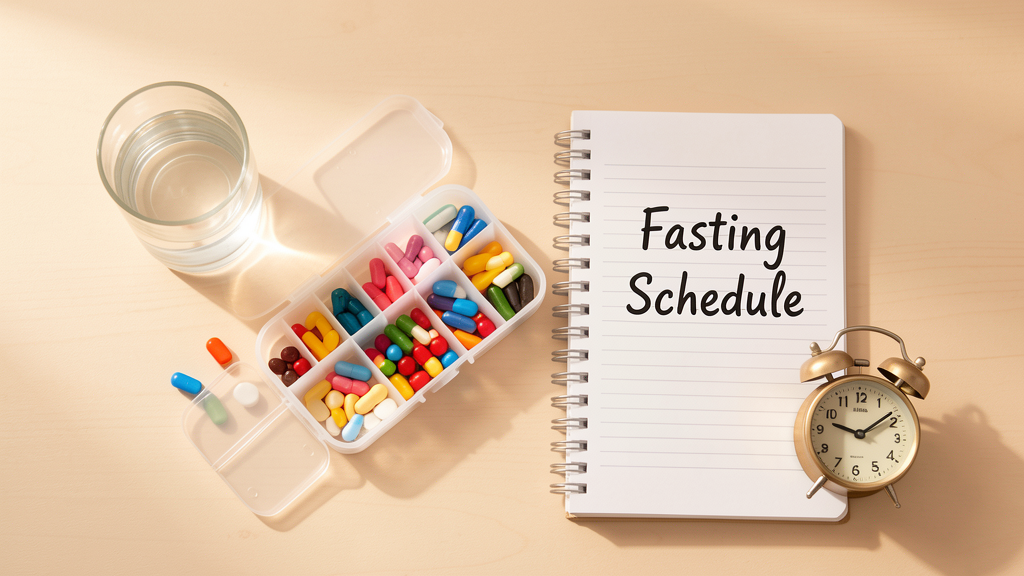
The solution is simple: shift these medications to your eating window. If you follow a 16:8 fasting schedule, take your food-dependent medications during your 8-hour eating window. A weekly pill organizer with morning and evening compartments makes this effortless.
Supplements and Vitamins: What Breaks a Fast?
Supplements are where things get trickier, because many contain calories, sugars, or fats that can trigger an insulin response:
- Fat-soluble vitamins (A, D, E, K) — These need fat for absorption, so they’re best taken during your eating window with a meal that contains some healthy fat. Taking them during fasting means you’re literally flushing money down the drain — your body can’t absorb them properly without dietary fat.
- B-complex vitamins — Generally calorie-free in tablet form. Safe during fasting. B vitamins are water-soluble and don’t require food for absorption.
- Vitamin C — Tablets and capsules are fine. Avoid gummy vitamins (they contain sugar and calories). Vitamin C is particularly helpful during fasting because it supports immune function, which can be temporarily stressed during longer fasts.
- Magnesium — Capsules and tablets are fine during fasting. Actually, magnesium can help with fasting-related muscle cramps, headaches, and sleep issues. Many people are deficient in magnesium, and fasting can make this worse as electrolytes are depleted.
- Electrolytes — Absolutely essential during fasting. Plain salt, potassium, and magnesium supplements won’t break your fast. Avoid electrolyte drinks with sugar or calories — read labels carefully, as many sports drinks contain 20-30 grams of sugar. A quality electrolyte tablet designed for fasting is your best bet.
- Protein powders — These definitely break your fast (typically 100-150 calories per serving). Save them for your eating window, ideally as part of your post-workout meal.
- Gummy vitamins — These contain sugar and typically 10-15 calories each. While it’s a small amount, they technically break a strict fast. If you’re doing a strict 24-hour fast for autophagy, skip the gummies. For casual 16:8 intermittent fasting, the minimal calorie impact is unlikely to matter.
- Fish oil / omega-3 capsules — These contain calories from fat (typically 10-15 calories per capsule). Take during your eating window. They also absorb better with food.
- Collagen peptides — These contain calories (typically 35-40 calories per scoop) and will break your fast. Use them in your eating window, ideally mixed into coffee or a smoothie.
Pro tip: A quality fasting supplement powder that includes electrolytes, magnesium, and trace minerals can help you stay compliant during your fasting window while addressing common deficiencies that develop during extended fasting periods.
Practical Strategies for Managing Medications While Fasting
Knowing the rules is one thing. Actually implementing them in your daily routine is another. Here are proven strategies that make it manageable:
1. Create a Medication Schedule
Divide your pills into two groups: fasting-safe and food-required. Use a large-compartment weekly pill organizer with AM and PM sections. Load it every Sunday so you never have to think about it during the week. Label the compartments “Fasting Window” and “Eating Window” instead of “Morning” and “Evening” to make the system intuitive.
2. Use Your Eating Window Strategically
If you eat between noon and 8 PM (a common 16:8 schedule), take all food-required medications with your first meal at noon and your last food-required pill with dinner. This gives you two natural “pill windows” that align perfectly with your eating schedule. For people doing 18:6 or OMAD, you’ll have even fewer windows, so plan accordingly.
3. Stay Hydrated with the Right Drinks
During your fasting window, stick to water, black coffee, and plain tea. These won’t affect medication absorption for most pills. However, if you take thyroid medication, wait at least 30-60 minutes before drinking coffee, as caffeine can interfere with absorption. Similarly, calcium in dairy-based coffee drinks can reduce absorption of several medications.
4. Track Your Medications
Use a simple app or a physical medication tracker. Some people find that a smart pill box with reminders eliminates the mental load entirely. The investment in a good organizer pays for itself in peace of mind and medication compliance.
5. Talk to Your Pharmacist
Your pharmacist knows more about drug interactions and timing than almost anyone. Bring your fasting schedule to them and ask specifically: “Which of my medications need to be taken with food?” They can give you personalized guidance based on your exact prescriptions, dosages, and formulations. This single conversation can save you from headaches, stomach issues, and reduced medication effectiveness.
Common Mistakes to Avoid
Even experienced fasters make these medication-related mistakes:
- Taking all pills first thing in the morning — This is habitual but problematic if some need food. Split your doses between fasting and eating windows based on each medication’s requirements.
- Skipping medications entirely — Never stop taking prescribed medication to “protect” your fast. The fasting benefits don’t outweigh the risks of uncontrolled blood pressure, blood sugar, or cholesterol. Always consult your doctor before making changes to your medication regimen.
- Ignoring stomach-side medications — NSAIDs and metformin on an empty stomach can cause real damage over time. Respect the food requirement — it exists for a reason.
- Using gummy vitamins during fasting — They taste great, but they contain sugar and calories. Switch to capsule or tablet forms for your fasting window.
- Forgetting about supplements — If you take fish oil, multivitamins, or protein supplements, these all contain calories and should be moved to your eating window.
- Not adjusting timing when changing fasting schedules — If you switch from 16:8 to 18:6 or OMAD, your medication timing needs to shift too. Don’t assume the same schedule works for every fasting protocol.
What About Coffee and Medication Absorption?
Many fasters rely on black coffee during their fasting window. Here’s what you need to know about the intersection of caffeine and medications:
- Coffee can reduce absorption of certain medications — particularly thyroid medications, some antibiotics (ciprofloxacin, levofloxacin), and certain osteoporosis drugs. The tannins and caffeine in coffee can bind to these medications and reduce their effectiveness by 30-50%.
- The fix is simple: take these medications first, wait 30-60 minutes, then have your coffee. Or take them at the opposite end of your eating window from when you drink coffee. Consistency matters more than perfection here.
- Coffee doesn’t break a fast — black coffee has negligible calories (2-5 per cup) and won’t trigger an insulin response. In fact, research suggests caffeine may enhance some of fasting’s metabolic benefits, including improved insulin sensitivity and increased fat oxidation.
- Coffee with cream or sugar breaks a fast — even a small splash of milk adds 10-20 calories. If you’re serious about your fasting window, stick to black coffee or use a zero-calorie sweetener like stevia.
The Bottom Line
Taking medication while fasting is absolutely manageable once you understand the basic framework: calorie-free pills are fine during fasting, food-required medications go in your eating window, and supplements need to be evaluated case by case.
Don’t let medication concerns stop you from trying intermittent fasting. With a little planning and the right organizational tools, you can maintain both your health regimen and your fasting schedule without compromise. The metabolic benefits of fasting — improved insulin sensitivity, autophagy, reduced inflammation, and fat loss — are too valuable to abandon over a medication timing question that has a straightforward answer.
The most important advice? Talk to your doctor and pharmacist about your specific medications. This guide covers general principles, but your healthcare provider knows your unique situation and can give personalized recommendations that account for your specific health conditions, medication interactions, and fasting goals.
Frequently Asked Questions
Will one pill break my fast?
No. A standard pill or capsule contains negligible calories (usually under 5 calories), which is well below the threshold that would break a fast or trigger an insulin response. The exception is gummy vitamins or softgel capsules that contain oil, which can have 10-30 calories each. For strict fasting aimed at autophagy, even these small amounts matter. For casual 16:8 intermittent fasting for weight loss, a single gummy vitamin is unlikely to derail your progress.
Can I take blood pressure medication while fasting?
Yes, most blood pressure medications (ACE inhibitors, ARBs, beta-blockers) can be safely taken on an empty stomach. In fact, some work better without food. Check with your doctor about your specific medication, but timing shouldn’t be a concern for most people. The important thing is consistency — take your blood pressure medication at the same time each day, whether that’s during your fasting window or eating window.
Should I take my multivitamin during my fasting window?
It depends on the type. If your multivitamin is a capsule or tablet with no added calories, it’s fine during fasting. However, fat-soluble vitamins (A, D, E, K) absorb significantly better with food, so taking them during your eating window is more effective. Avoid gummy vitamins during fasting — they contain sugar and calories. The most efficient approach is to take your multivitamin with your largest meal of the day.
Does coffee affect how my medication works while fasting?
Coffee can interfere with the absorption of certain medications, particularly thyroid drugs, some antibiotics, and osteoporosis medications. If you take any of these, take the medication first and wait 30-60 minutes before drinking coffee. Black coffee itself won’t break your fast and may actually enhance some metabolic benefits of fasting, including improved fat oxidation and insulin sensitivity.
What’s the best way to organize my pills for intermittent fasting?
Use a weekly pill organizer with AM/PM compartments. Separate your pills into two categories: those safe during fasting (take in the AM) and those that need food (take in the PM with your first meal). Load it once a week on the same day and you won’t have to think about it daily. A quality organizer with clear labeling eliminates guesswork and prevents missed doses.
Related posts:
 How to Break a Fast Properly: The Complete Guide for 2026
 Does Coffee Break a Fast? The Complete FAQ Guide (2026)
 How Long Until Autophagy Starts During Fasting? The Complete 2026 Guide
 Best Continuous Glucose Monitors for Fasting in 2026: Complete Buyer’s Guide
 How to Break Your Fast Properly: The Complete Guide to Refeeding After Intermittent Fasting