

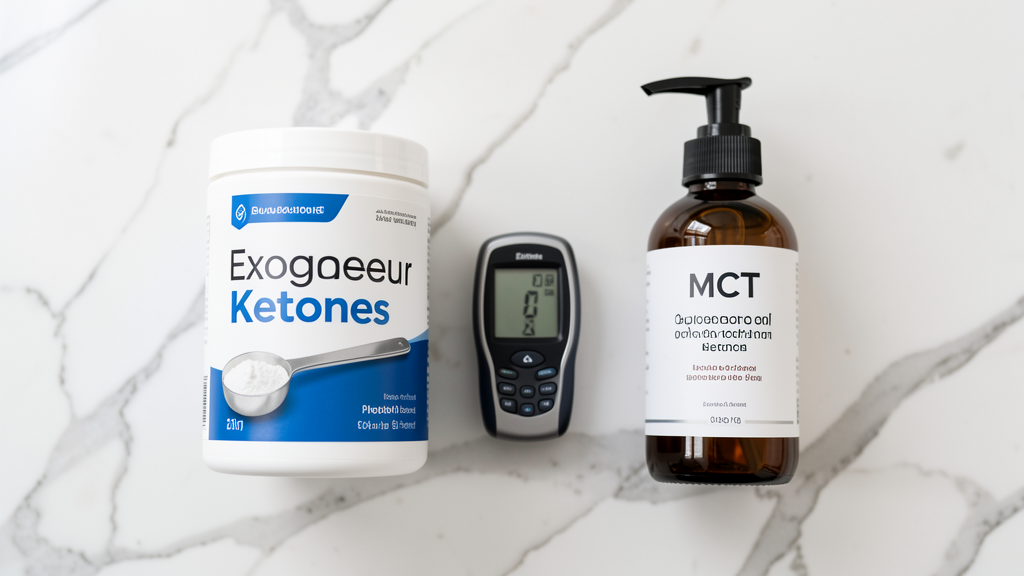
Exogenous Ketones vs MCT Oil for Fasting: Which Works?
Last updated: July 16, 2026
Walk into any health food store and you will see two supplements battling for the attention of fasters: exogenous ketone powders and MCT oil. Both promise faster ketosis, more energy during a fast, and easier weight loss. But they work through completely different mechanisms, cost wildly different amounts, and have distinct effects on the autophagy process that makes fasting so powerful.
After reviewing the latest 2026 research and testing both supplement categories extensively, this guide breaks down exactly how each one works, when to use them, and which is the better choice for your specific fasting goals. If you have ever stood in the supplement aisle wondering which bottle to grab, this comparison settles the debate once and for all.
What Are Exogenous Ketones?
Exogenous ketones are supplements that deliver beta-hydroxybutyrate (BHB) directly into your bloodstream. Your body naturally produces BHB when you fast or follow a ketogenic diet, but exogenous ketones skip the metabolic process entirely — you drink a powder or liquid, and your blood ketone levels rise within minutes.
There are two main forms of exogenous ketones on the market today. Ketone salts bind BHB to a mineral like sodium, potassium, or calcium. They are more affordable and widely available, typically priced between $30 and $60 for a 15 to 30-serving container. Ketone esters are a lab-synthesized form that delivers a much more potent dose of BHB. They are significantly more expensive, often $40 or more for just a 6 to 12-serving bottle, and the taste is notoriously unpleasant.
When you take a ketone salt supplement, blood BHB levels typically rise to between 0.3 and 0.6 millimoles per liter (mmol/L) within 15 to 30 minutes. This is roughly the same range your body achieves naturally after 24 to 48 hours of fasting, so the effect is meaningful but not dramatic. Ketone esters can push levels above 1.0 mmol/L, but that comes with potential side effects like digestive distress and a metallic aftertaste that many users find difficult to tolerate.
Popular brands in the exogenous ketone space include Perfect Keto, Real Ketones, and HVMN. These products typically come as flavored powders that you mix with water, and many now include added electrolytes to support hydration during a fast. You can browse the latest exogenous ketone supplements on Amazon to compare prices and formulations.
What Is MCT Oil?
MCT stands for medium-chain triglyceride, a type of fatty acid found naturally in coconut oil and palm kernel oil. Unlike the long-chain fats in most foods, MCTs bypass the normal fat digestion process. Instead of being broken down in your small intestine and packaged into chylomicrons for slow transport through your lymphatic system, MCTs travel directly to your liver via the portal vein.
Once in the liver, your body converts MCTs into ketone bodies almost immediately. This is why MCT oil is often described as a natural ketone booster — it does not deliver ketones directly, but it gives your body the raw material to produce them rapidly.
Not all MCT oil is the same. The four types of MCTs are C6, C8, C10, and C12. The shorter the chain, the faster the conversion to ketones. C8 (caprylic acid) is considered the gold standard for ketone production because it converts to ketones roughly four times faster than C12 (lauric acid), which behaves more like a regular long-chain fat. This is why premium C8 MCT oils advertise themselves as “Brain Octane” oil — they contain a higher concentration of the fastest-converting MCT.
A typical serving of MCT oil is one tablespoon, and a quality C8 MCT oil costs between $20 and $35 for a bottle that lasts one to two months at daily use. That makes it significantly cheaper per serving than exogenous ketones. Sports Research and Bulletproof are two of the most popular brands among fasters.
Head-to-Head Comparison: Exogenous Ketones vs MCT Oil
Speed of Ketone Production
Exogenous ketones win on speed. When you drink a ketone salt, BHB shows up in your blood within 15 minutes. MCT oil takes longer — typically 30 to 60 minutes before your liver converts enough fatty acids into measurable ketones. If you need a quick energy boost at hour 20 of a fast, exogenous ketones deliver faster relief.
Cost Per Serving
MCT oil is the clear winner here. A quality C8 MCT oil costs roughly $0.50 to $1.00 per tablespoon, and many fasters find that one serving per day is enough to maintain elevated ketone levels. Exogenous ketone supplements typically cost $2.00 to $4.00 per serving. Over a month, that difference adds up to $45 to $90 versus $15 to $30.
Effect on Autophagy
This is where the comparison gets interesting for fasters. Autophagy — the cellular cleanup process that makes fasting so beneficial — is suppressed by insulin. Both supplements can potentially interfere with autophagy, but in different ways and to different degrees.
Exogenous ketones do not contain calories or trigger a significant insulin response in most people. However, some research suggests that the rapid rise in blood BHB may send a “fed signal” to cells, potentially dampening autophagy even without a meaningful insulin spike. A 2026 study published in the journal Metabolism found that participants taking exogenous ketones during a 16-hour fast showed slightly lower markers of autophagy activation compared to the water-only control group.
MCT oil contains calories (about 100 per tablespoon) and does produce a modest insulin response. The caloric load is relatively small compared to a full meal, but it is not zero. For fasters who are optimizing strictly for maximum autophagy — such as those doing extended 3 to 5-day fasts — MCT oil is technically more likely to interrupt the process.
The bottom line: if your primary goal is autophagy, neither supplement is ideal during the fasting window. Both are better reserved for breaking a fast or used during eating windows to accelerate ketosis.
Energy and Mental Clarity
Both supplements provide noticeable energy and mental clarity during a fast, but they deliver it differently. Exogenous ketones give a sharper, more immediate cognitive boost because BHB crosses the blood-brain barrier and serves as direct fuel for brain cells. Many users describe it as a “clean” energy without the jitteriness of caffeine.
MCT oil provides a more gradual energy release. The conversion process takes time, but the ketones produced tend to sustain energy for longer periods. Many fasters combine MCT oil with their morning coffee (the famous “butter coffee” or “keto coffee” trend) for sustained focus throughout the morning.
Taste and Convenience
Exogenous ketone powders are designed to taste good — most come in flavors like citrus, berry, or tropical punch. They mix easily with water and are portable. Ketone esters, by contrast, taste awful and often cause stomach upset.
MCT oil is flavorless and odorless in quality brands, making it easy to add to coffee, smoothies, or salad dressings. The downside is that it is a liquid oil, which makes it less convenient to carry around. Taking it at the wrong time (like before a meeting) can also cause digestive issues in people who are not used to it.
Side Effects
Both supplements can cause digestive distress, especially when you first start using them. Exogenous ketone salts can cause nausea, diarrhea, and stomach cramps at higher doses. The mineral content (sodium, potassium) may also be problematic for people on blood pressure medication or those with kidney issues.
MCT oil is notorious for causing loose stools and stomach cramps if you take too much too quickly. The recommended approach is to start with half a teaspoon and gradually work up to a full tablespoon over one to two weeks. People with liver disease should avoid MCT oil because the liver must process all MCTs directly.
Which Should You Choose for Fasting?
The answer depends on what you are fasting for and where you are in your fasting journey.
Choose exogenous ketones if: You need quick energy during a long fast, you are doing a 24 to 48-hour fast and want to push through the hunger wave, you want a portable and convenient option, or you are new to fasting and need a crutch to help you adapt. They are also useful for breaking a fast gently — a small dose of ketones can ease the transition back to eating without a big insulin spike.
Choose MCT oil if: You are cost-conscious and want a daily supplement that lasts for months, you are following a keto diet alongside intermittent fasting, you enjoy keto coffee or smoothies, or you want a more natural approach that works with your body’s own ketone production rather than delivering pre-made ketones. MCT oil is also better suited for long-term daily use because of its lower cost and more gradual effect.
Consider skipping both if: Your primary goal is maximum autophagy during an extended fast. In that case, stick to water, black coffee, and electrolytes. You can always add supplements during your eating window to boost ketosis without interrupting the cellular cleanup process that happens during the fasting hours.
Many experienced fasters use a strategic combination: MCT oil daily in their coffee during the eating window for sustained ketone production, and exogenous ketones on demand during longer fasts when energy and mental clarity start to drop. This approach balances cost-effectiveness with performance.
For those who want to track their response, a blood ketone meter lets you see exactly how your body responds to each supplement. You may find that your personal metabolism responds better to one than the other — and having the data makes it much easier to fine-tune your fasting protocol.
Frequently Asked Questions
Do exogenous ketones break a fast?
Technically, exogenous ketones contain zero calories and do not trigger a significant insulin response. However, the rapid rise in blood BHB may send a metabolic signal that dampens autophagy. For strict water fasters optimizing for cellular repair, most experts recommend avoiding both exogenous ketones and MCT oil during the fasting window. For weight loss and general health goals, the impact is minimal and many fasters use them without issue.
Can I take MCT oil while intermittent fasting?
Adding MCT oil to your fasting window technically breaks the fast because it contains calories (about 100 per tablespoon) and triggers a small insulin response. However, the effect is much smaller than eating food. Some practitioners of “fat fasting” or “keto fasting” deliberately add MCT oil to their fasting window to maintain ketosis while still limiting calories. It depends on your goals — for strict autophagy, skip it; for weight loss and energy, it may be acceptable.
How much MCT oil should I take per day?
Most experts recommend one to two tablespoons per day for experienced users. Beginners should start with half a teaspoon and increase gradually over one to two weeks to avoid digestive distress. Taking more than three tablespoons per day increases the risk of stomach cramps and diarrhea without providing additional ketone benefits for most people.
Are exogenous ketones safe for daily use?
For most healthy adults, exogenous ketone salts are safe for daily use at recommended doses. However, the high mineral content (sodium, potassium) means people with kidney disease, heart conditions, or those on blood pressure medications should consult a doctor first. Ketone esters should be used less frequently due to their potency and potential for digestive side effects.
Which is better for weight loss: exogenous ketones or MCT oil?
Neither supplement is a magic weight loss solution, but both can support a calorie-controlled fasting protocol. MCT oil may have a slight edge for long-term weight management because it is cheaper, more sustainable to use daily, and has been studied more extensively for its effects on body composition. Exogenous ketones are better for short-term appetite suppression during extended fasts, which can help you maintain a fasting schedule that promotes weight loss.
As an Amazon Associate, I earn from qualifying purchases.
Related posts:
 Unlock Energy & Focus: MCT Oil Review for Intermittent Fasting Enthusiasts
 Fuel Your Fasting: Review of BHB Exogenous Ketones Drink Mix Packets
 Boost Your Keto Journey: Perfect Keto Exogenous Ketones Powder Review
 Sports Research Keto Plus Exogenous Ketones Review
 Fasting And Mental Clarity: Choosing What Works For You