
Spermidine: The Missing Link in Fasting Autophagy 2026
You fast for 16, 18, maybe 24 hours — and you trust that autophagy is cleaning house inside your cells. But what if the cleanup crew needs a key you’re not providing? That’s exactly what a landmark Nature Cell Biology study revealed in 2024, and the fasting community is still processing the implications in 2026: spermidine is the molecule that unlocks fasting-induced autophagy, and without enough of it, your fast may not deliver the cellular renewal you’re counting on.
In this article, we break down the science behind spermidine and fasting, explain why this discovery matters for anyone practicing intermittent or extended fasting, and show you how to make sure you’re getting enough — through food and supplements.
What Is Spermidine and Why Is Everyone Talking About It?
Spermidine is a naturally occurring polyamine — a small organic compound found in every living cell. It was first isolated from semen (hence the name) but is present in abundance in foods like wheat germ, soybeans, aged cheese, mushrooms, and legumes. Despite its unglamorous origins, spermidine has become one of the most exciting molecules in longevity research.
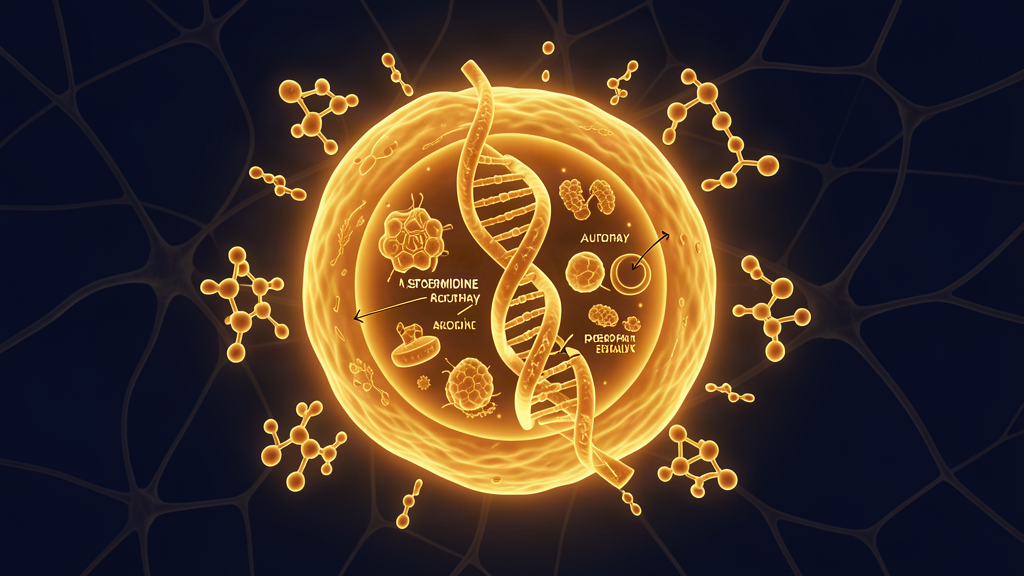
The reason for the buzz? A team led by researchers at the University of Graz, Austria, published a groundbreaking paper in Nature Cell Biology in August 2024. The study demonstrated that fasting causes a significant increase in spermidine concentration in the body — in humans, mice, flies, and yeast. This increase triggers a process called hypusination, a chemical modification of a protein called eIF5A, which in turn activates autophagy. The cascade is straightforward: fast → spermidine rises → eIF5A gets modified → autophagy kicks into high gear.
The critical finding: when researchers blocked spermidine production, the longevity benefits of fasting disappeared. Animals that could not increase their spermidine levels did not live longer, even though they fasted. This means spermidine isn’t just a bystander in the fasting process — it’s a required mediator. Without it, autophagy underperforms.
Since the study’s publication, spermidine has surged in popularity. YouTube longevity channels, biohacking forums, and supplement brands have all picked up the story. In 2026, spermidine supplement sales have grown by over 40% year-over-year, and the compound is now discussed alongside NMN, resveratrol, and rapamycin as a top-tier longevity intervention.
The Science: How Spermidine and Fasting Work Together
To understand why spermidine matters for fasters, you need to know what autophagy actually does. Autophagy — literally “self-eating” — is your cell’s recycling program. It breaks down damaged proteins, dysfunctional mitochondria, and accumulated cellular debris, then repurposes the raw materials for new, healthy components. Think of it as a deep clean for your cellular machinery.
Autophagy is triggered by several conditions, with fasting being the most well-known activator. When you stop eating, your body shifts from growth mode (driven by mTOR) to maintenance mode (driven by AMPK and autophagy). This transition is the foundation of why fasting is linked to longevity, cancer prevention, improved brain function, and metabolic health.
Here’s where spermidine enters the picture. The 2024 Nature Cell Biology study showed that the pathway works like this:
- Fasting begins: Caloric intake drops, insulin levels fall, mTOR activity decreases.
- Spermidine synthesis increases: The body ramps up production of spermidine in the gut and other tissues. The study found that gut bacteria also contribute to this increase.
- eIF5A hypusination occurs: Spermidine donates a specific chemical group to the translation factor eIF5A, activating it through a process called hypusination.
- Autophagy is induced: Activated eIF5A promotes the expression of autophagy-related genes, turning on the cellular cleanup process.
- Longevity benefits follow: Animals with adequate spermidine showed extended lifespan, improved metabolic health, and reduced age-related disease markers.
The researchers tested this across multiple species — from yeast to flies to mice — and even confirmed the spermidine increase in human subjects during fasting. This wasn’t a model organism curiosity; it’s happening in your body right now every time you skip a meal.
What makes this research especially compelling is that it connects two fields that had been studied separately. Fasting researchers knew autophagy was beneficial. Spermidine researchers knew the compound could trigger autophagy independently. The Graz team showed that spermidine is the bridge between the two — fasting’s benefits are, at least in part, mediated through spermidine.
Additional research has reinforced these findings. Studies show that spermidine supplementation alone — without fasting — can activate autophagy and extend lifespan in animal models. This has led some researchers to call spermidine a “caloric restriction mimetic,” a compound that mimics the effects of fasting while you eat normally.
Why This Matters for Your Fasting Practice
If you’re doing intermittent fasting or extended fasts, the spermidine research has practical implications. Here’s why it matters:
1. Your baseline spermidine levels affect fasting outcomes. Not everyone starts a fast with the same spermidine reserves. Age, diet, gut health, and genetics all influence your baseline levels. Older adults tend to have lower spermidine concentrations — which may partly explain why fasting benefits sometimes seem to diminish with age.
2. What you eat during eating windows matters. Spermidine is found in specific foods. If your eating window consists mainly of low-spermidine foods, you may be entering your next fast with suboptimal levels. The highest dietary sources include:
- Wheat germ: The single richest common source, with roughly 243–300 mg per kilogram. Just a tablespoon of wheat germ packs a meaningful dose.
- Soybeans and natto: Soy products are excellent sources, especially fermented preparations like natto.
- Aged cheeses: Parmesan, cheddar, and blue cheese have higher spermidine than fresh cheeses.
- Mushrooms: Shiitake, oyster, and white button mushrooms all contribute meaningful amounts.
- Legumes: Lentils, peas, and beans are solid plant-based sources.
- Whole grains: Brown rice, oats, and quinoa provide moderate amounts.
3. Supplementation may enhance your fasting autophagy. If dietary sources aren’t enough — or if you want to ensure optimal levels — spermidine supplements have become widely available. Most supplements derive spermidine from wheat germ extract, standardized to 1% spermidine content, delivering 1–10 mg per serving.
4. Gut health influences spermidine production. The Graz study found that gut microbiota contribute to spermidine synthesis during fasting. This means that supporting your gut microbiome — through fiber, fermented foods, and probiotics — may indirectly boost your fasting autophagy response.
For practical purposes, the takeaway is this: optimize your spermidine intake during eating windows so your fasting windows deliver maximum autophagy. It’s not about replacing fasting with a pill — it’s about ensuring your body has the molecular tools to execute the cleanup process that fasting initiates.
Best Spermidine Supplements for Fasters in 2026
The spermidine supplement market has matured significantly since 2024. Here are the top options available on Amazon in 2026, all backed by third-party testing and wheat germ-derived extraction:
Check the latest spermidine supplements on Amazon
When shopping for spermidine supplements, look for these key features:
- Wheat germ-derived — natural extraction, not synthetic
- Standardized to 1% spermidine — ensures consistent dosing
- Third-party tested — purity and potency verification
- 1–10 mg per serving — most studies use 1–6 mg daily
- No unnecessary fillers — clean ingredient lists
The most popular brands include Neurogan Health, Longevity Lab’s Longevinex, and several newer entrants. Most are priced between $25–$50 for a 30-day supply. For fasters, taking spermidine during your eating window — not during the fast itself — is the general recommendation, since the compound needs to be absorbed and integrated before the fasting-induced autophagy cascade begins.
Pro tip: Pair spermidine supplementation with a serving of wheat germ in your first meal. A tablespoon of wheat germ on yogurt, in a smoothie, or mixed into oatmeal provides both dietary and supplemental spermidine, plus additional nutrients that support the process.
How to Optimize Spermidine for Better Fasting Results
Ready to put this science into practice? Here’s a practical protocol for incorporating spermidine into your fasting lifestyle:
Step 1: Audit your current diet. Look at your eating window foods. Are you including any of the high-spermidine sources listed above? If your meals are dominated by meats, processed foods, and low-fiber vegetables, you’re likely low on spermidine.
Step 2: Add 2–3 spermidine-rich foods daily. A tablespoon of wheat germ at breakfast, mushrooms in your lunch, and aged cheese as a snack covers the bases without any supplements.
Step 3: Consider supplementation if needed. If you’re over 50, have digestive issues, or eat a limited diet, a spermidine supplement (5–10 mg daily) can fill the gap. Take it with your first meal.
Step 4: Support your gut microbiome. Since gut bacteria contribute to spermidine production, include prebiotic fiber (garlic, onions, asparagus) and fermented foods (yogurt, kimchi, sauerkraut) in your eating window.
Step 5: Time your fasts strategically. A 16:8 or 18:6 schedule gives your body enough time to ramp up spermidine synthesis. Extended fasts (24–72 hours) produce even larger increases, but make sure you’re well-nourished going in.
Browse wheat germ products on Amazon
The beauty of this approach is that it works within your existing fasting routine. You’re not adding complexity — you’re simply ensuring your body has the raw materials it needs to maximize the cellular benefits of every fast.
Frequently Asked Questions
Does spermidine break a fast?
Spermidine in supplement form (capsules with no calories) does not break a fast in any meaningful way. However, taking spermidine-rich foods like wheat germ or cheese will provide calories and break your fast. The general recommendation is to take spermidine supplements during your eating window for best absorption, or use a zero-calorie capsule during the fasting window if preferred.
How much spermidine should I take daily?
Most longevity research uses 1–6 mg of spermidine per day. The Graz study and related clinical trials typically used doses in the 1–3 mg range for food-derived spermidine. Supplements typically deliver 1–10 mg per serving. Start with 1–2 mg and increase gradually based on tolerance.
Can I get enough spermidine from food alone?
Yes, if you intentionally include high-spermidine foods. A tablespoon of wheat germ provides roughly 1–2 mg. Mushrooms, soy products, and aged cheeses add more. The average Western diet provides only 0.6–1.5 mg daily — well below the levels used in longevity studies — so most people need to make a conscious effort to increase intake.
When will I notice results from spermidine supplementation?
Autophagy is a cellular process, not an acute effect like caffeine. Benefits accumulate over weeks and months. Studies show measurable improvements in metabolic markers after 3–6 months of consistent supplementation. The longevity benefits are long-term — think of spermidine as a lifelong investment, not a quick fix.
Is spermidine safe?
Spermidine is a naturally occurring compound found in virtually all human cells and in common foods. Clinical trials have shown excellent safety profiles at doses up to 6 mg daily. Side effects are rare and typically limited to mild digestive discomfort. As with any supplement, consult your healthcare provider if you’re pregnant, nursing, or taking medications.
The Bottom Line
The 2024 Nature Cell Biology study changed the conversation about fasting and autophagy. Spermidine isn’t just another supplement trend — it’s a fundamental piece of the molecular machinery that makes fasting work. By ensuring your body has adequate spermidine through diet and supplementation, you can amplify the cellular benefits of every fast you do.
Whether you’re doing 16:8 intermittent fasting, OMAD, or occasional extended fasts, optimizing your spermidine levels is one of the simplest, most evidence-backed upgrades you can make to your routine. Start with your eating window — load up on wheat germ, mushrooms, and soy — and consider a supplement if your diet falls short. Your cells will thank you.
Shop spermidine supplements on Amazon
As an Amazon Associate, I earn from qualifying purchases.
Related posts:
 Best Spermidine Supplements for Fasting and Autophagy in 2026: Expert Review
 The Link Between Fasting And Mental Clarity
 How Long Until Autophagy Starts During Fasting? The Complete 2026 Guide
 Autophagy and Skin: Can Fasting Reverse Aging? (2026)
 Best Autophagy Supplements for Fasters in 2026: Top 5 Science-Backed Picks