
What Breaks a Fast? 7 Common Fasting Questions Answered 2026
Every faster asks the same question at some point: does this break my fast? Whether it is your morning coffee, a handful of vitamins, or a quick workout, the line between fasted and fed feels blurry. You search online and get contradictory answers from blogs, doctors, and social media influencers.
The truth is that fasting exists on a spectrum. A strict water fast is one end; a relaxed 16:8 intermittent fast is the other. What counts as “breaking” depends on your goals — weight loss, autophagy, metabolic health, or gut rest. In this guide, we answer seven of the most common fasting questions with 2026 research, so you can fast with confidence instead of guesswork.
1. Does Black Coffee Break a Fast?
This is the number-one question every new faster asks. The short answer: no, black coffee does not break a fast for most people. A cup of plain black coffee contains roughly 2-5 calories — far below the threshold that would trigger an insulin response or halt autophagy.
Research from 2024 published in Cell Metabolism found that black coffee actually enhances autophagy in animal models, potentially amplifying the cellular cleanup benefits of fasting. A 2025 review in Nutrients confirmed that caffeine does not meaningfully raise insulin or blood glucose in fasted states.
The catch is what you add to it. A splash of cream (roughly 20 calories), a pump of flavored syrup (15-30 calories), or a full latte with milk (100+ calories) will absolutely break your fast by triggering digestion and insulin release. If you want coffee during your fasting window, keep it black — or add a tiny amount of MCT oil (under 1 tablespoon) if you are doing a fat-fast variant.
A good insulated coffee thermos keeps your brew hot through long fasting mornings without needing to add anything. Many fasters find that a quality travel mug is the single best fasting accessory they own.
2. Can You Take Supplements While Fasting?
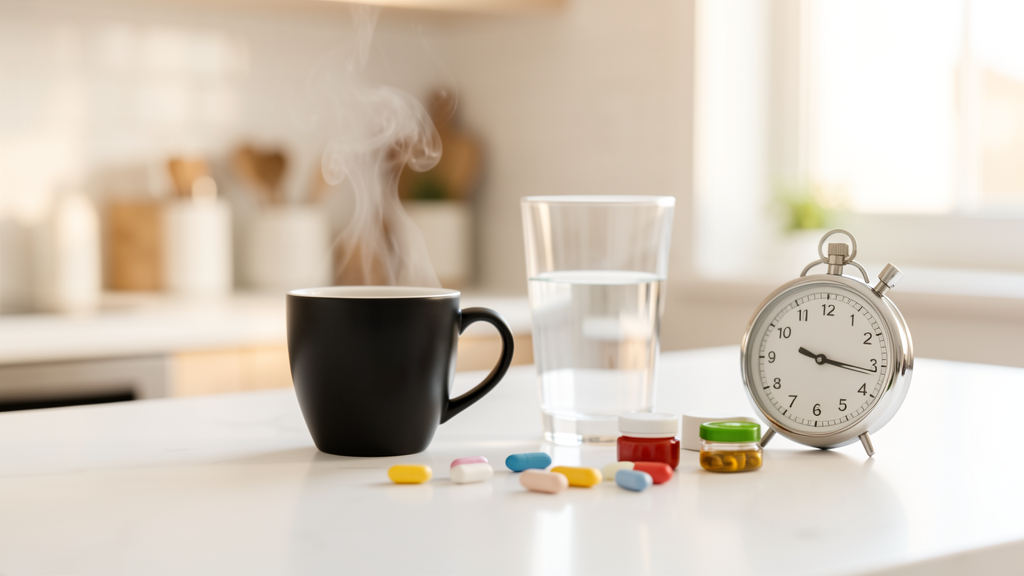
Yes, most supplements are fine during a fast — but the type matters. Water-soluble vitamins (B-complex, vitamin C, D3) and minerals (magnesium, potassium, zinc) are generally safe and won’t break your fast. They absorb quickly and contain negligible calories.
Fat-soluble vitamins (A, D, E, K) are a gray area. They need fat for absorption, so taking them on an empty stomach reduces their effectiveness. Some practitioners recommend taking them during your eating window with a small amount of fat for better bioavailability.
A few supplements to be careful with during fasting:
- Protein powders — These contain significant calories and amino acids that will break your fast and stimulate mTOR (the growth pathway that fasting suppresses).
- Gummy vitamins — Most contain sugar or sugar alcohols, adding 5-15 calories per gummy.
- Collagen peptides — Even unflavored collagen contains about 35-40 calories per scoop and will trigger a mild insulin response.
Electrolyte supplements are especially important during longer fasts. Low sodium, potassium, and magnesium are the primary cause of fasting headaches and fatigue. A quality electrolyte powder with no sugar keeps you hydrated and energized without breaking your fast.
3. Does Exercise Break a Fast?
No — exercise does not break a fast. In fact, exercising in a fasted state can amplify fat burning. When glycogen stores are low (after 12+ hours without food), your body shifts to burning stored fat for fuel. This is the basis of “fasted cardio,” a popular strategy for accelerating weight loss.
A 2025 study in the British Journal of Sports Medicine found that participants who exercised in a fasted state lost 20% more fat over 12 weeks compared to those who exercised after eating. However, the researchers noted that performance on high-intensity workouts suffered without fuel.
Here is a practical breakdown:
- Light to moderate cardio (walking, yoga, cycling) — ideal during a fast. No fuel needed, maximal fat oxidation.
- Resistance training — possible during a fast, but heavy lifting may suffer. Consider training during your eating window for best strength gains.
- High-intensity interval training (HIIT) — better performed fed. HIIT demands glycogen, and fasted HIIT can increase cortisol and reduce performance.
The key is listening to your body. If you feel dizzy, weak, or unusually fatigued during a fasted workout, break your fast with a small protein-rich snack. A good pair of wireless workout earbuds makes the time pass faster during fasted cardio sessions.
4. Will Diet Soda or Artificial Sweeteners Break a Fast?
This is one of the most debated questions in the fasting community. The answer depends on what you are fasting for.
For weight loss: Zero-calorie diet sodas (Coke Zero, Diet Coke, Diet Mountain Dew) will not break your fast in terms of calories. They contain no sugar, no protein, and negligible calories. However, some research suggests that artificial sweeteners may trigger a cephalic phase insulin response — your brain anticipates sugar and releases a small amount of insulin. This effect is generally considered minimal for weight loss purposes.
For autophagy: The picture is murkier. A 2024 study in Nature Metabolism found that certain artificial sweeteners (particularly sucralose) may activate mTOR signaling, which could theoretically suppress autophagy. If your primary goal is cellular cleanup through autophagy, plain water, black coffee, and unsweetened tea are safer choices.
For gut rest: Carbonated diet sodas may cause bloating and stimulate digestive activity, which defeats the purpose of a gut-focused fast.
The bottom line: if you are fasting for weight loss and a Diet Coke helps you get through your fasting window without eating, it is probably fine. If you are fasting for autophagy or deep cellular repair, stick to zero-calorie, zero-sweetener beverages.
5. Does Fasting Cause Muscle Loss?
Short-term fasting (16-48 hours) does not cause significant muscle loss — this is one of the most persistent myths in the fitness world. A 2024 systematic review in the Journal of the International Society of Sports Nutrition analyzed 15 studies and concluded that intermittent fasting protocols lasting up to 8 weeks showed no significant difference in lean muscle mass compared to continuous calorie restriction.
Your body is smart. During a fast, it primarily burns stored glycogen and then shifts to fat for fuel. It does not start catabolizing muscle until glycogen and fat stores are severely depleted — typically after 72+ hours of continuous fasting. Even then, growth hormone levels rise dramatically during fasting, which helps preserve lean tissue.
That said, you can lose muscle during intermittent fasting if you:
- Eat too little protein during your eating window (aim for 0.7-1g per pound of body weight)
- Skip resistance training entirely
- Fast for extended periods (72+ hours) without medical supervision
The combination of adequate protein intake and regular strength training is the most reliable muscle-preservation strategy during any fasting protocol. A quality whey protein powder makes it easier to hit your protein targets during eating windows.
6. Can You Fast While Taking Medication?
It depends entirely on the medication — and this is one area where you should always consult your doctor before making changes.
Some common scenarios:
- Blood pressure medications — Most can be taken during a fasted state. Some (like ACE inhibitors) are actually recommended on an empty stomach for better absorption.
- Thyroid medications (levothyroxine) — Must be taken on an empty stomach, typically 30-60 minutes before eating. Fasting actually supports optimal thyroid medication absorption.
- Diabetes medications — This requires careful management. Fasting lowers blood sugar, and combining it with insulin or sulfonylureas can cause dangerous hypoglycemia. Always work with your doctor to adjust doses.
- Metformin — Often taken with food to reduce stomach upset, but some practitioners take it during fasting for enhanced autophagy benefits. Discuss with your doctor.
- NSAIDs (ibuprofen, aspirin) — Best taken with food to protect your stomach lining. Avoid during extended fasts.
The general rule: if your medication says “take with food,” breaking your fast to take it is the safer choice. If it says “take on an empty stomach,” fasting actually supports proper absorption.
7. How Long Should You Fast to See Results?
Results depend on what you are looking for:
- Weight loss — Most people see noticeable results within 2-4 weeks of consistent 16:8 intermittent fasting. A 2025 meta-analysis found an average weight loss of 3-8% of body weight over 8-12 weeks.
- Improved energy and mental clarity — Many fasters report increased focus and energy within the first week. This is partly due to stabilized blood sugar and partly due to ketone production.
- Autophagy — Cellular cleanup begins around 18-20 hours of fasting and peaks around 48-72 hours. For most people practicing daily 16:8 or 18:6 fasting, autophagy benefits accumulate over weeks and months.
- Metabolic health improvements — Blood markers (fasting insulin, HbA1c, triglycerides) typically show improvement after 8-12 weeks of consistent fasting.
The most important factor is consistency, not duration. A sustainable 16:8 protocol practiced daily will produce better long-term results than occasional 24-hour fasts followed by weeks of inconsistency.
Frequently Asked Questions
Does gum break a fast?
Sugar-free gum contains negligible calories (typically 5 or fewer per piece) and is unlikely to break your fast for weight loss purposes. However, the act of chewing stimulates saliva and digestive enzymes, which may slightly reduce the gut-rest benefits of fasting. If you are fasting primarily for digestive rest, skip the gum.
Can I drink bone broth while fasting?
A small cup of bone broth (roughly 40-50 calories) is considered acceptable during “dirty fasting” or fasting-mimicking protocols. It provides electrolytes and collagen without a large insulin spike. However, it does technically break a strict fast. Bone broth fasting is a separate protocol used for gut healing and is not the same as intermittent fasting for weight loss.
Will Apple Cider Vinegar break my fast?
No. Apple cider vinegar contains essentially zero calories and may actually support fasting benefits. Some research suggests it can improve insulin sensitivity and slow gastric emptying, helping you feel fuller longer during your fasting window. Mix 1-2 tablespoons in water and drink it during your fast if you enjoy it.
How do I break a fast properly?
Break your fast gently. Start with small, easily digestible foods — a handful of nuts, bone broth, steamed vegetables, or a small salad. Avoid large meals, refined carbs, and sugary foods immediately after fasting, as they can cause a blood sugar spike and digestive discomfort. Gradually increase food volume over 30-60 minutes.
Can I fast while breastfeeding?
Extended fasting is generally not recommended during breastfeeding, as it can reduce milk supply and affect nutrient density. Some practitioners do gentle 12-14 hour overnight fasts (which most nursing mothers do naturally). Always consult your healthcare provider before fasting during pregnancy or breastfeeding.
Final Thoughts
Fasting does not have to be confusing. The core principle is simple: if it has calories, it technically breaks your fast. But the rigidity of your fast should match your goals. Weight loss allows for more flexibility; autophagy and gut rest require stricter adherence.
Start with the basics — water, black coffee, and unsweetened tea during your fasting window. Get your electrolytes in (especially sodium, potassium, and magnesium). Eat enough protein during your eating window. And most importantly, find a fasting schedule that fits your life, not someone else’s Instagram highlight reel.
As an Amazon Associate, I earn from qualifying purchases. Product recommendations are based on research and personal experience.
Related Reading:
- Can You Take Supplements While Fasting? 10 Answers
- How to Beat Fasting Brain Fog in 2026
- Best Water Filters and Mineral Drops for Fasting 2026
Related posts:
 Can You Drink Protein Shakes While Fasting? What Actually Breaks a Fast (2026)
 Can You Take Supplements While Fasting? What Breaks Your Fast and What Doesn’t
 How To Avoid Common Mistakes While Fasting
 Fasting And Mental Clarity: Common Myths Debunked
 How To Address Common Myths And Misconceptions About Intermittent Fasting